Boguszewicz Łukasz
Department of Medical Physics, Maria Sklodowska-Curie National Research Institute of Oncology, Gliwice Branch, Warszawa, Poland.
Front Oncol. 2022 Jul 6;12:900903. doi: 10.3389/fonc.2022.900903. eCollection 2022.
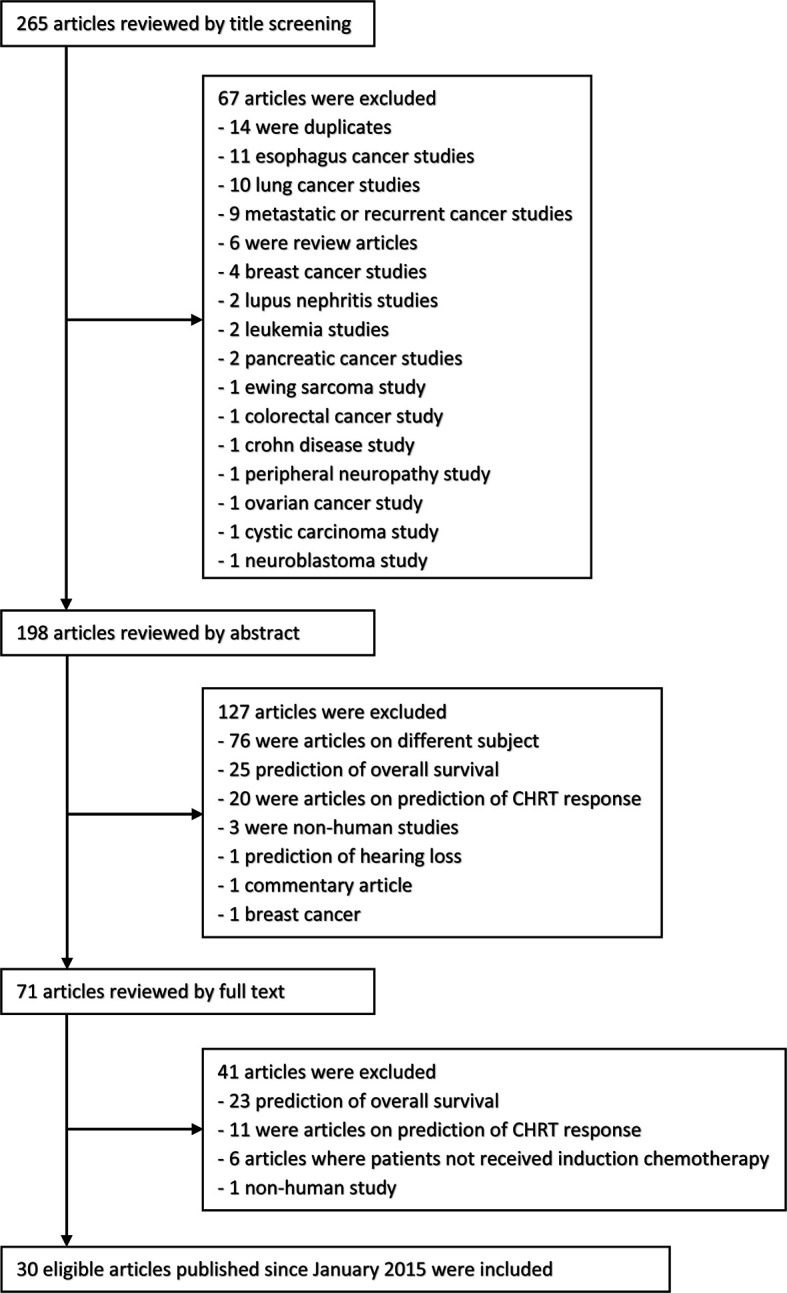
This review focuses on the molecular biology of head and neck squamous cell carcinomas and presents current and emerging biomarkers of the response of patients to induction chemotherapy. The usefulness of genes, proteins, and parameters from diagnostic clinical imaging as well as other clinicopathological parameters is thoroughly discussed. The role of induction chemotherapy before radiotherapy or before chemo-radiotherapy is still debated, as the data on its efficacy are somehow confusing. Despite the constant improvement of treatment protocols and the introduction of new cytostatics, there is still no consensus regarding the use of induction chemotherapy in the treatment of head and neck cancer, with the possible exception of larynx preservation. Such difficulties indicate that potential future treatment strategies should be personalized. Personalized medicine, in which individual tumor genetics drive the selection of targeted therapies and treatment plans for each patient, has recently emerged as the next generation of cancer therapy. Early prediction of treatment outcome or its toxicity may be highly beneficial for those who are at risk of the development of severe toxicities or treatment failure-a different treatment strategy may be applied to these patients, sparing them unnecessary pain. The literature search was carried out in the PubMed and ScienceDirect databases as well as in the selected conference proceedings repositories. Of the 265 articles and abstracts found, only 30 met the following inclusion criteria: human studies, analyzing prediction of induction chemotherapy outcome or toxicity based on the pretreatment (or after the first cycle, if more cycles of induction were administered) data, published after the year 2015. The studies regarding metastatic and recurrent cancers as well as the prognosis of overall survival or the outcome of consecutive treatment were not taken into consideration. As revealed from the systematic inspection of the papers, there are over 100 independent parameters analyzed for their suitability as prognostic markers in HNSCC patients undergoing induction chemotherapy. Some of them are promising, but usually they lack important features such as high specificity and sensitivity, low cost, high positive predictive value, clinical relevance, short turnaround time, etc. Subsequent studies are necessary to confirm the usability of the biomarkers for personal medicine.
本综述聚焦于头颈部鳞状细胞癌的分子生物学,并介绍了目前以及新出现的患者对诱导化疗反应的生物标志物。文中对基因、蛋白质、诊断性临床影像参数以及其他临床病理参数的实用性进行了深入讨论。诱导化疗在放疗前或放化疗前的作用仍存在争议,因为其疗效数据在某种程度上令人困惑。尽管治疗方案不断改进且引入了新的细胞抑制剂,但对于诱导化疗在头颈部癌治疗中的应用仍未达成共识,喉癌保留治疗可能是个例外。这些困难表明,未来潜在的治疗策略应实现个性化。个性化医疗,即根据个体肿瘤遗传学为每位患者选择靶向治疗和治疗方案,最近已成为下一代癌症治疗方式。对治疗结果或其毒性进行早期预测,对于那些有发生严重毒性或治疗失败风险的患者可能非常有益——可以为这些患者应用不同的治疗策略,使他们免受不必要的痛苦。我们在PubMed和ScienceDirect数据库以及选定的会议论文库中进行了文献检索。在找到的265篇文章和摘要中,只有30篇符合以下纳入标准:人体研究,基于预处理(或如果进行了多个诱导周期,则在第一个周期后)数据分析诱导化疗结果或毒性的预测,发表于2015年之后。关于转移性和复发性癌症以及总生存预后或连续治疗结果的研究未被纳入考虑。通过对这些论文的系统审查发现,有超过100个独立参数被分析其作为接受诱导化疗的头颈部鳞状细胞癌患者预后标志物的适用性。其中一些参数很有前景,但通常它们缺乏高特异性和敏感性、低成本、高阳性预测值、临床相关性、短周转时间等重要特征。后续研究有必要确认这些生物标志物在个性化医疗中的可用性。