Soler Xavier, Siddall James, Small Mark, Stiegler Marjorie, Bogart Michael
Value Evidence and Outcomes, GSK, 5 Moore Drive, PO Box 13398, Research Triangle Park, NC, 27709-3398, USA.
Adelphi Real World, Bollington, UK.
Pulm Ther. 2022 Sep;8(3):269-282. doi: 10.1007/s41030-022-00196-7. Epub 2022 Jul 25.
Patients with chronic obstructive pulmonary disease (COPD) often have poor sleep quality and report a worsening of respiratory symptoms during night-time. However, current clinical guidelines for COPD management do not specifically consider nocturnal symptoms when recommending pharmacological treatment. This study aimed to better understand the burden of nocturnal symptoms in patients with COPD, and to evaluate the importance of nocturnal symptom control compared with daytime and overall symptom control.
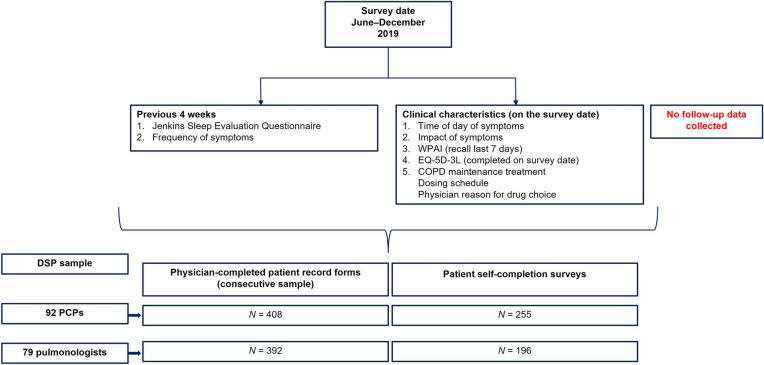
Data were analyzed from the Adelphi Respiratory Disease Specific Programme, a point-in-time survey of physicians and their patients, conducted in the USA in 2019. Primary care physicians and pulmonologists who managed three or more patients with COPD per month were eligible for inclusion; eligible patients were ≥ 18 years old, with a physician-confirmed diagnosis of COPD.
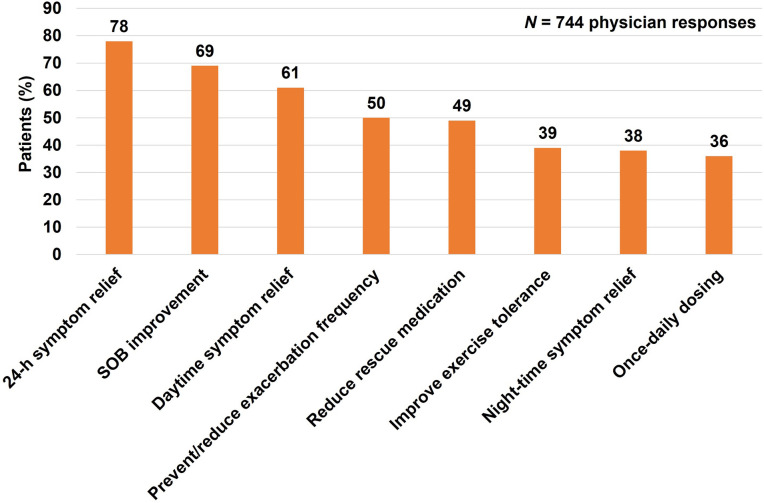
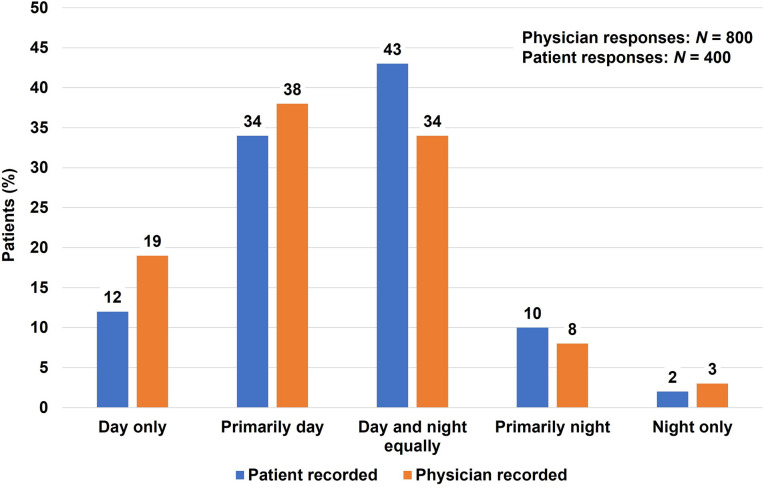
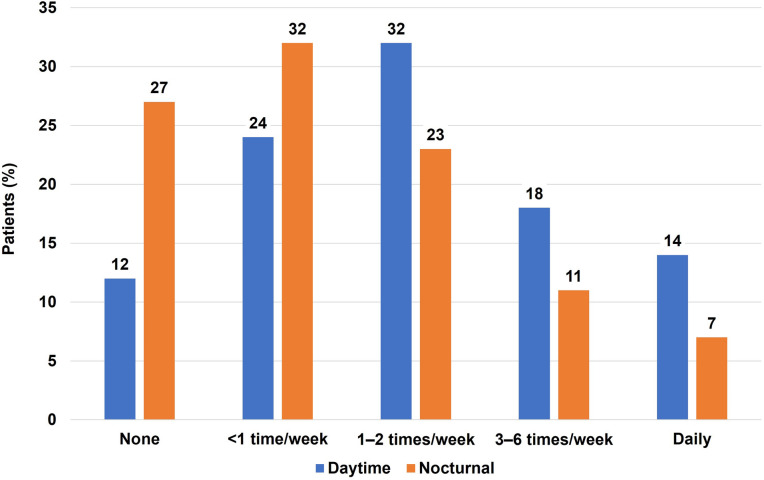
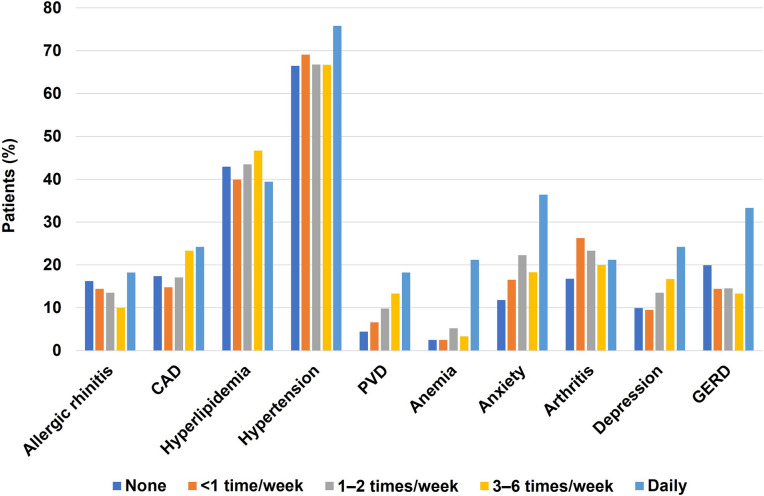
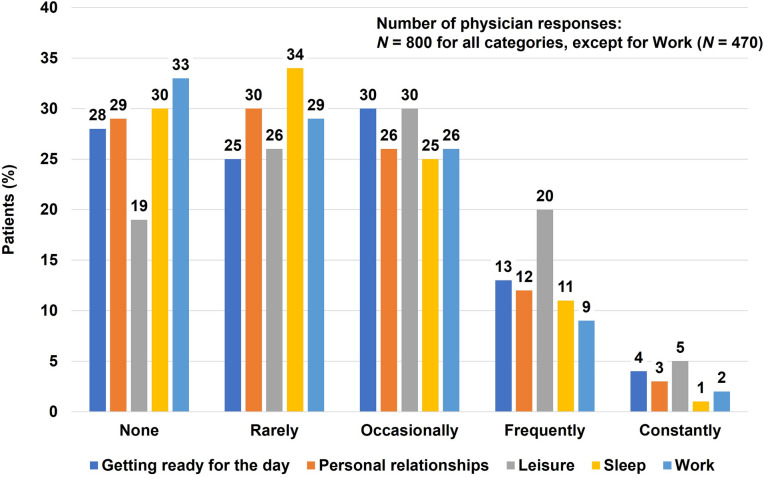
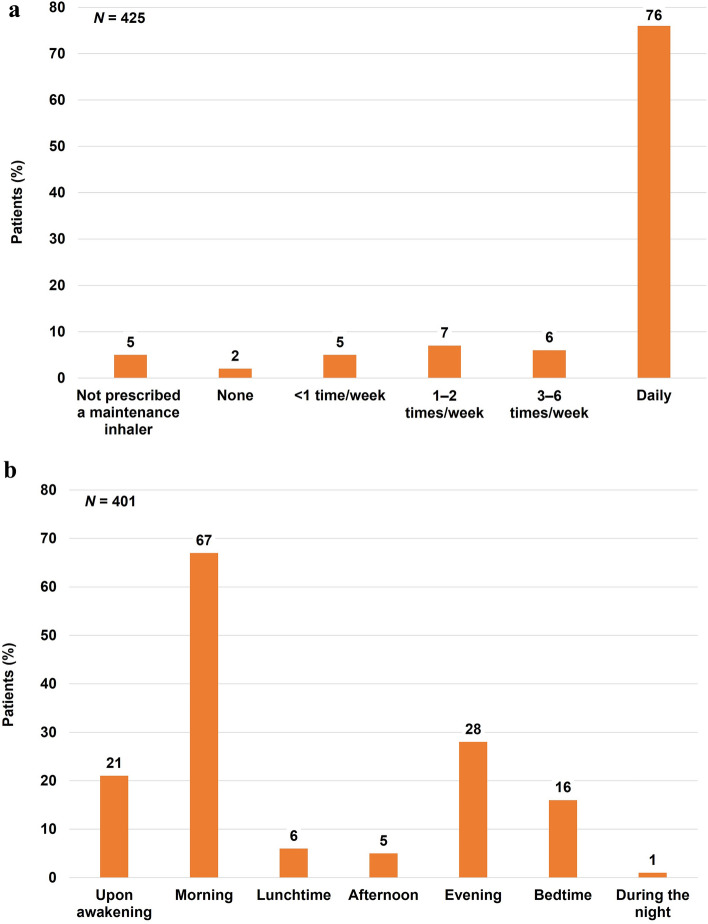
Surveys from 171 physicians and 800 patients were analyzed. Everyday symptoms were reported in 14% of patients. In total, 88% of patients reported daytime symptoms, and 74% of patients experienced nocturnal symptoms, with 7% reporting daily nocturnal symptoms. Patients experiencing nocturnal symptoms every day had the greatest impairment in their activity as per the Work Productivity and Activity Impairment questionnaire (mean total activity impairment, 66.9%; nocturnal symptoms once or twice a week, 41.1%; no nocturnal symptoms, 26.4%). Patients experiencing daily nocturnal symptoms also had the lowest quality of life (QoL) as per the EuroQoL 5-Dimension 3-Level score. Physicians reported prescribing therapy based on sustained 24-h symptomatic relief for the majority of patients (78%). They reported nocturnal symptom control as a factor in their choice of therapy for 38% of patients, and daytime symptom control as a reason for 61% of patients.
Daytime and nocturnal symptoms are common among patients with COPD. Frequency of nocturnal symptoms is related to a significant impairment in activity and health-related QoL.
慢性阻塞性肺疾病(COPD)患者常常睡眠质量较差,且报告夜间呼吸症状会加重。然而,当前COPD管理的临床指南在推荐药物治疗时并未特别考虑夜间症状。本研究旨在更好地了解COPD患者夜间症状的负担,并评估与日间及总体症状控制相比,夜间症状控制的重要性。
对2019年在美国开展的阿德尔菲呼吸系统疾病专项计划的数据进行分析,这是一项针对医生及其患者的时间点调查。每月管理三名或更多COPD患者的初级保健医生和肺科医生符合纳入条件;符合条件的患者年龄≥18岁,经医生确诊为COPD。
分析了来自171名医生和800名患者的调查。14%的患者报告有日常症状。总体而言,88%的患者报告有日间症状,74%的患者有夜间症状,其中7%报告每天有夜间症状。根据工作效率和活动障碍问卷,每天出现夜间症状的患者活动能力受损最大(平均总活动障碍,66.9%;每周出现一到两次夜间症状,41.1%;无夜间症状,26.4%)。根据欧洲五维健康量表3级评分,每天出现夜间症状的患者生活质量(QoL)也最低。医生报告称,大多数患者(78%)的治疗处方是基于24小时持续的症状缓解。他们报告称,38%的患者将夜间症状控制作为选择治疗方法的一个因素,61%的患者将日间症状控制作为选择治疗方法的一个因素。
日间和夜间症状在COPD患者中很常见。夜间症状的频率与活动能力以及与健康相关的生活质量的显著受损有关。