Simioli Federico R, Bouzas Maria B, Mijalovsky Dana, Pineda Maria V, Mammana Lilia, Mangano Andrea, Orduna Tomas A
Centro Municipal de Patología Regional Argentina y Medicina Tropical (CEMPRA-MT), Hospital de Infecciosas F.J. Muñiz, Ciudad Autónoma de Buenos Aires, Argentina.
Division Análisis Clínicos, Hospital de Infecciosas F.J. Muñiz, Ciudad Autónoma de Buenos Aires, Argentina.
Front Med (Lausanne). 2022 Jul 8;9:892159. doi: 10.3389/fmed.2022.892159. eCollection 2022.
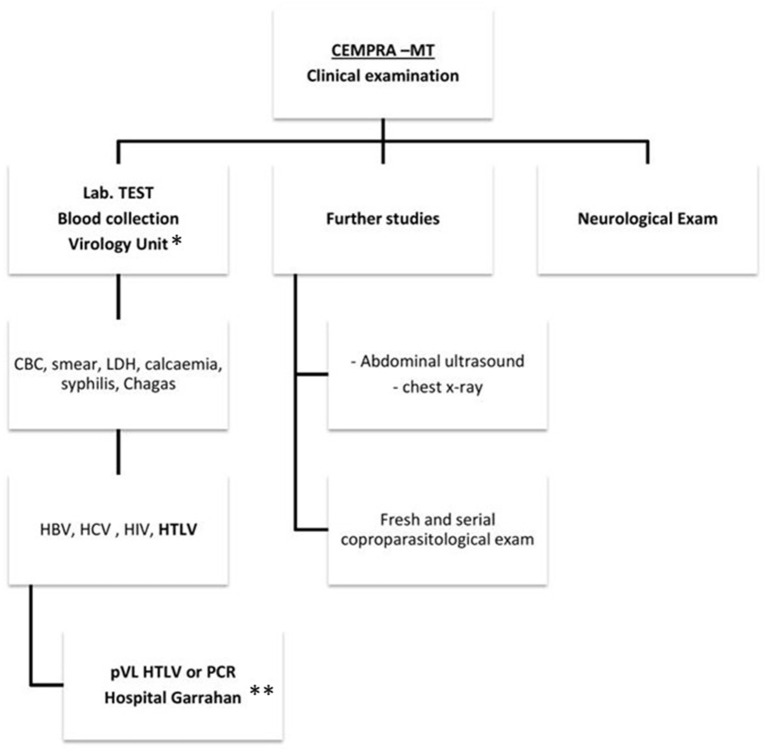
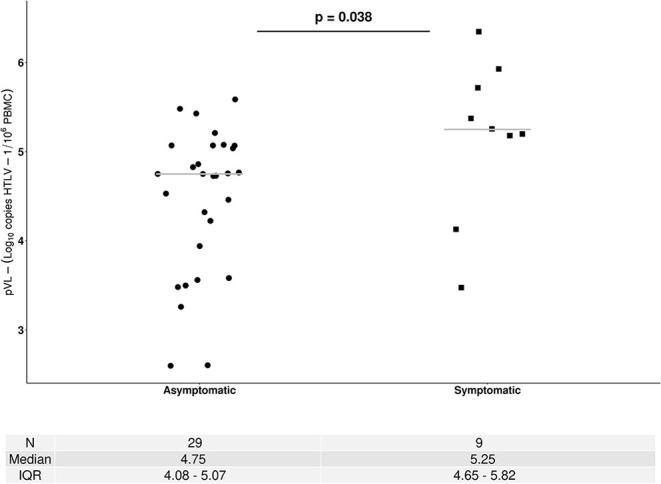
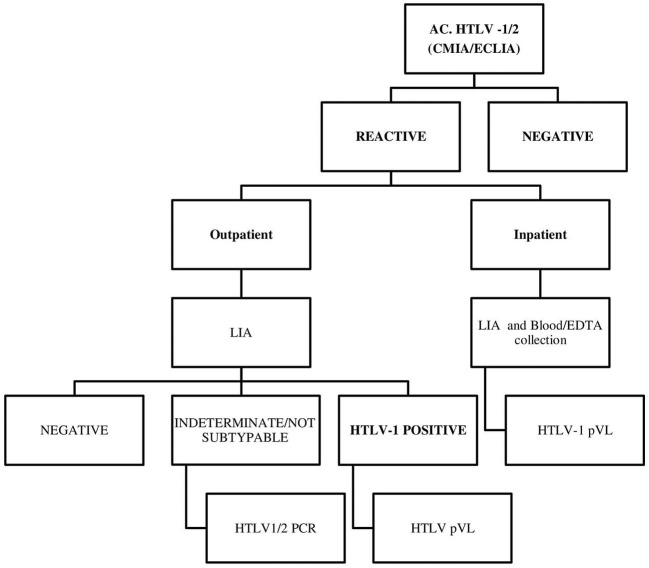
In Argentina, the human T-cell lymphotropic virus type 1 (HTLV-1) infection has been documented mainly among blood banks with a prevalence of ~0.02-0.046% for Buenos Aires city, 0.8% for the northeast, and 1% for the northwest; both areas are considered endemic for HTLV-2 and 1, respectively. Policies and specific guidelines for testing blood donors for HTLV are included since 2005. Screening for antibodies is performed at blood banks and confirmatory testing is performed at reference laboratories. There are no specific recommendations for the assistance of communities and individuals affected, nor referral to specialized clinics on the HTLV infection. In 2016, as a strategy of intervention, we opened a specialized clinical attendance in a referral infectious diseases public hospital for the comprehensive approach to patients with HTLV, offering follow-up and counseling for patients and their families for the early diagnosis of HTLV-1/2 and related diseases. During the study, 124 patients with presumptive HTLV positive diagnosis from blood bank, symptomatic patients (SPs), relatives, and descendants visited the unit. A total of 46 patients were HTLV positive (38 HTLV-1 and 8 HTLV-2). There were nine SPs (2 adult T-cell leukemia/lymphoma [ATL] and 7 HTLV-1-associated myelopathy/tropical spastic paraparesis [HAM/TSP]). All patients with HTLV-1 and-2 were offered to study their relatives. Two out of 37 (5.4%) descendants tested were positive for HTLV-1. Sexual partners were studied; among 6 out of 11 couples (54.5%) were found positive (5 HTLV-1 and 1 HTLV-2). Other relatives, such as mothers (1/2) and siblings (1/6), were positive for HTLV-1. According to the place of birth among HTLV-1 carriers, 58% were born in an endemic area or in countries where HTLV infection is considered endemic while for HTLV-2 carriers, 12.5% were born in an endemic area of Argentina. The proviral load (pVL) was measured in all, patients with HTLV-1 being higher in symptomatic compared with asymptomatic carriers. In addition, two pregnant women were early diagnosed during their puerperium and breastmilk replacement by formula was indicated. Inhibition of lactation was also indicated. Our study provides tools for a multidisciplinary approach to the infection and reinforces the importance of having specialized clinical units in neglected diseases, such as HTLV for counseling, clinical and laboratory follow-up, and providing useful information for patients for self-care and that of their families.
在阿根廷,已记录到人类嗜T细胞病毒1型(HTLV - 1)感染情况,主要存在于血库中。布宜诺斯艾利斯市的感染率约为0.02 - 0.046%,东北部为0.8%,西北部为1%;这两个地区分别被视为HTLV - 2和HTLV - 1的地方性流行区。自2005年起,就已纳入针对献血者进行HTLV检测的政策和具体指导方针。血库进行抗体筛查,参考实验室进行确证检测。对于受影响的社区和个人,没有关于援助的具体建议,也没有关于将HTLV感染患者转诊至专科诊所的建议。2016年,作为一项干预策略,我们在一家转诊传染病公立医院开设了专门的临床服务,以全面诊治HTLV患者,为患者及其家属提供随访和咨询,以便早期诊断HTLV - 1/2及相关疾病。在研究期间,有124名来自血库初步诊断为HTLV阳性的患者、有症状患者(SPs)、亲属和后代前来该科室就诊。共有46名患者HTLV呈阳性(38例HTLV - 1和8例HTLV - 2)。有9名有症状患者(2例成人T细胞白血病/淋巴瘤[ATL]和7例HTLV - 1相关脊髓病/热带痉挛性截瘫[HAM/TSP])。所有HTLV - 1和 - 2患者均被建议对其亲属进行检查。37名接受检测的后代中有2名(5.4%)HTLV - 1呈阳性。对性伴侣进行了检查;在11对伴侣中有6对(54.5%)呈阳性(5例HTLV - 1和1例HTLV - 2)。其他亲属,如母亲(1/2)和兄弟姐妹(1/6),HTLV - 1呈阳性。根据HTLV - 1携带者的出生地,58%出生在地方性流行区或被认为是HTLV感染地方性流行的国家,而对于HTLV - 2携带者,12.5%出生在阿根廷的地方性流行区。对所有患者均检测了前病毒载量(pVL),有症状的HTLV - 1携带者的前病毒载量高于无症状携带者。此外,有两名孕妇在产褥期被早期诊断出感染,建议用配方奶替代母乳喂养。同时也建议抑制泌乳。我们的研究为该感染的多学科治疗提供了工具,并强化了设立针对被忽视疾病(如HTLV)的专门临床科室的重要性,以便进行咨询、临床和实验室随访,并为患者及其家庭的自我护理提供有用信息。