Wang Junwei, Mao Shuxiang, Liang Mantian, Zhang Wenxia, Chen Fangzhen, Huang Ke, Wu Qiuyun
College of Horticulture, Hunan Agricultural University, Changsha 410128, China.
Engineering Research Center for Horticultural Crop Germplasm Creation and New Variety Breeding, Ministry of Education, Changsha 410128, China.
Antioxidants (Basel). 2022 Jun 29;11(7):1298. doi: 10.3390/antiox11071298.
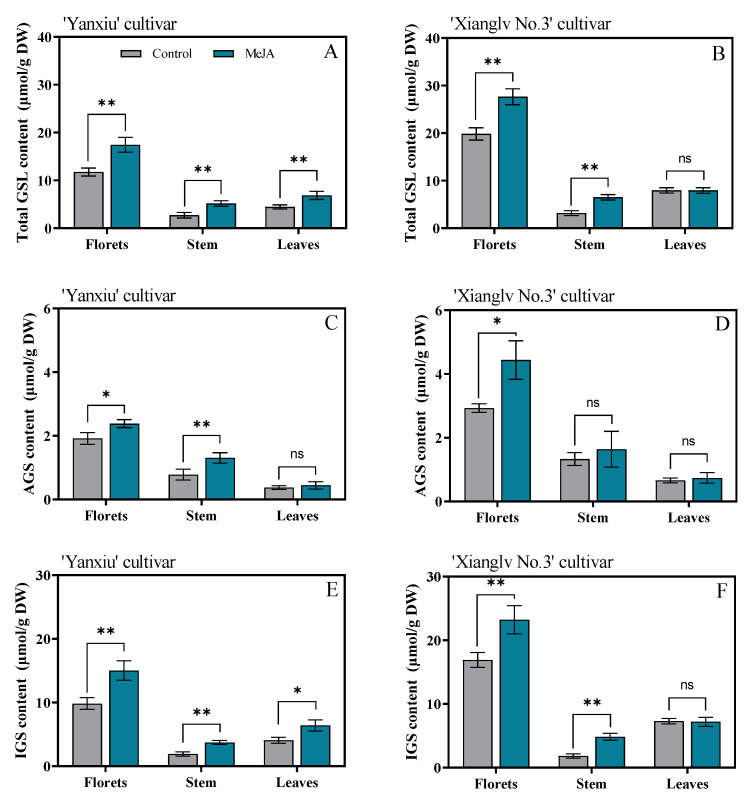
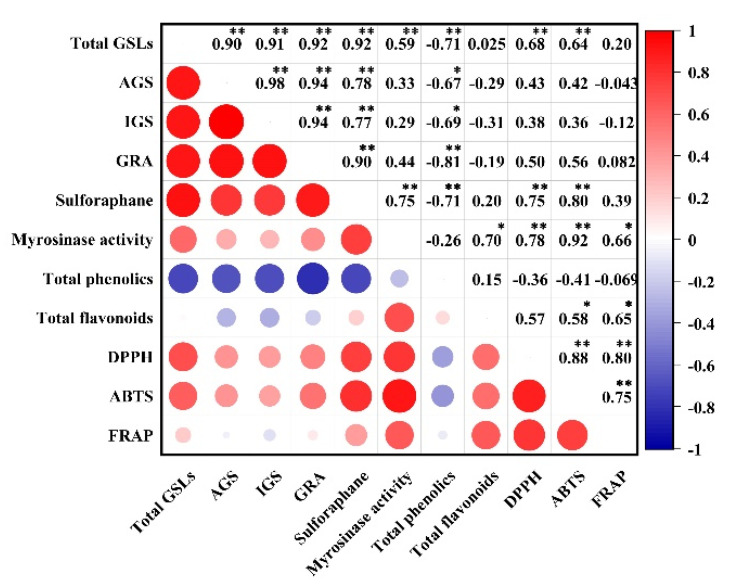
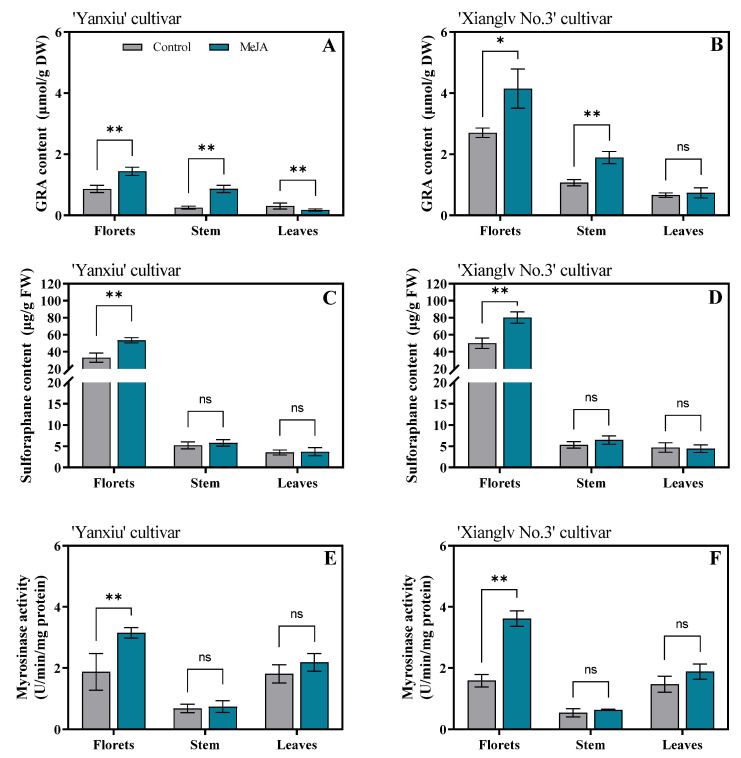
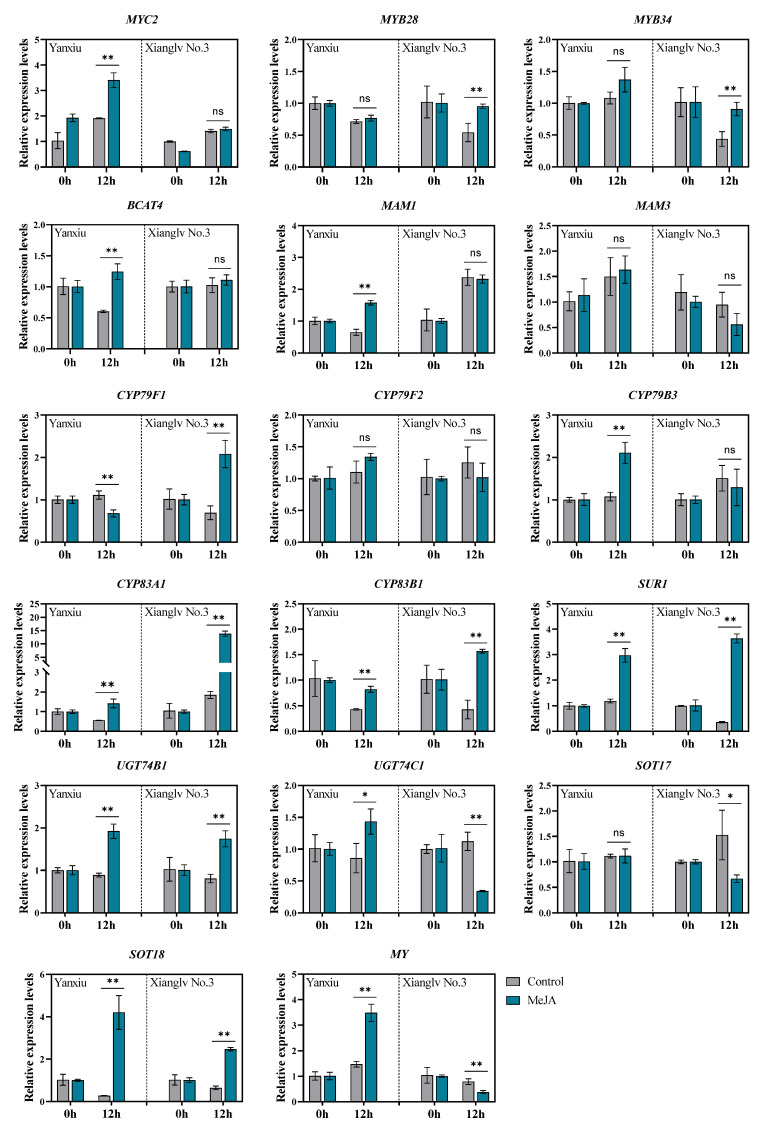
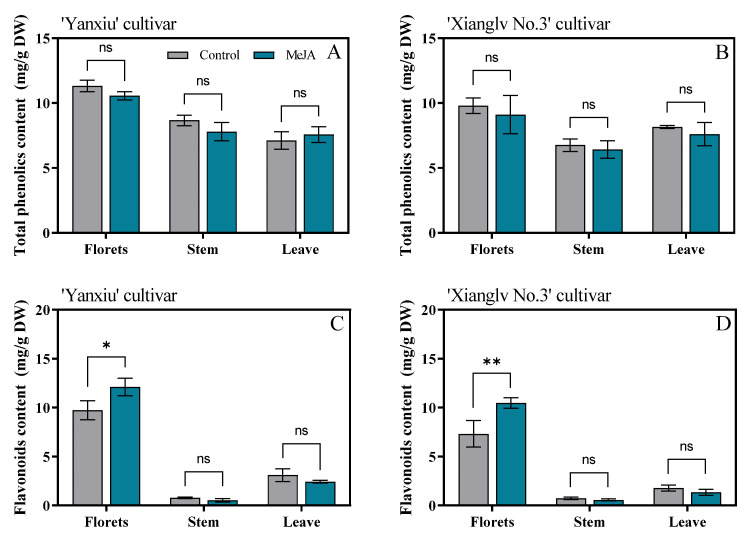
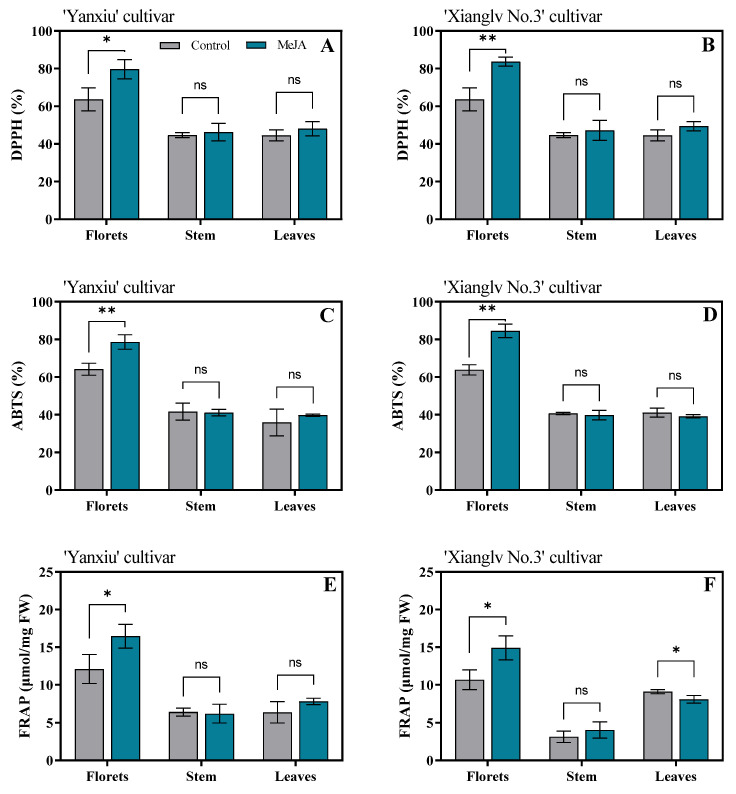
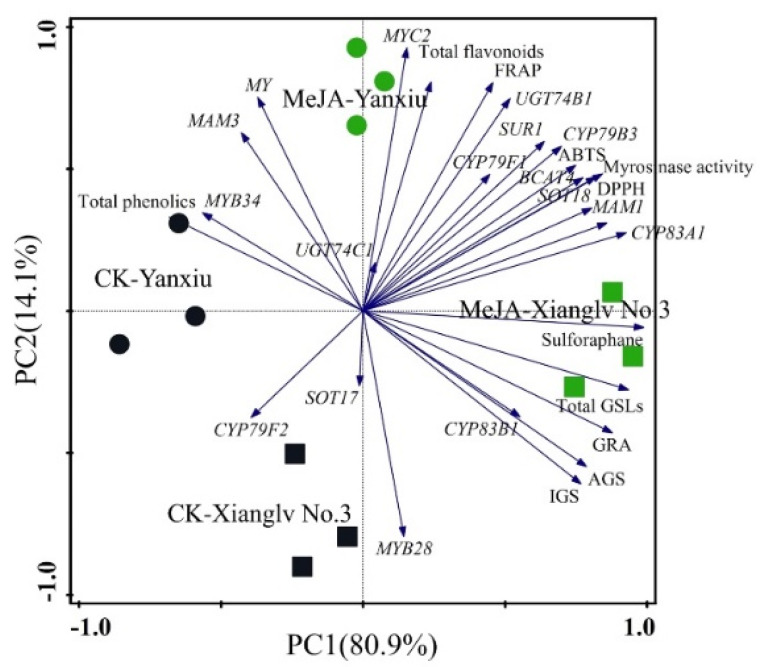
Broccoli is becoming increasingly popular among consumers owing to its nutritional value and rich bioactive compounds, such glucosinolates (GSLs) and hydrolysis products, which are secondary metabolites for plant defense, cancer prevention, and higher antioxidant activity for humans. In this study, 40 μmol/L methyl jasmonate (MeJA) was sprayed onto broccoli from budding until harvest. The harvested broccoli florets, stem, and leaves were used to measure the contents of GSLs, sulforaphane, total phenolics, and flavonoids, as well as myrosinase activity, antioxidant activity, and gene expression involved in GSL biosynthesis. The overall results revealed that GSL biosynthesis and sulforaphane accumulation were most likely induced by exogenous MeJA treatment by upregulating the expression of , , , and genes. Exogenous MeJA treatment more remarkably contributed to the increased GSL biosynthesis in broccoli cultivars with low-level GSL content (Yanxiu) than that with high-level GSLs (Xianglv No.3). Moreover, MeJA treatment had a more remarkable increasing effect in broccoli florets than stem and leaves. Interestingly, total flavonoid content substantially increased in broccoli florets after MeJA treatment, but total phenolics did not. Similarly, 2,2-diphenyl-1-picrylhydrazyl (DPPH) radical scavenging capacity, trolox-equivalent antioxidant capacity (ABTS), and ferric-reducing antioxidant power (FRAP) were higher in broccoli floret after MeJA treatment. In conclusion, MeJA mediated bioactive compound metabolism, had positive effects on GSL biosynthesis, sulforaphane, and flavonoids accumulation, and showed positive correlation on inducing higher antioxidant activities in broccoli floret. Hence, preharvest supplementation with 40 μM MeJA could be a good way to improve the nutritional value of broccoli florets.
西兰花因其营养价值和丰富的生物活性化合物(如硫代葡萄糖苷(GSLs)及其水解产物)而在消费者中越来越受欢迎,这些化合物是植物防御、预防癌症的次生代谢产物,对人类具有较高的抗氧化活性。在本研究中,从现蕾期到收获期,对西兰花喷施40 μmol/L茉莉酸甲酯(MeJA)。将收获的西兰花小花、茎和叶用于测定GSLs、萝卜硫素、总酚和类黄酮的含量,以及黑芥子酶活性、抗氧化活性和参与GSL生物合成的基因表达。总体结果表明,外源MeJA处理最有可能通过上调、、和基因的表达来诱导GSL生物合成和萝卜硫素积累。外源MeJA处理对低水平GSL含量的西兰花品种(延秀)GSL生物合成增加的贡献比对高水平GSLs品种(湘绿3号)更显著。此外,MeJA处理对西兰花小花的增加效果比对茎和叶更显著。有趣的是,MeJA处理后西兰花小花中的总黄酮含量大幅增加,但总酚含量没有增加。同样,MeJA处理后的西兰花小花对2,2-二苯基-1-苦基肼(DPPH)自由基的清除能力、特洛克斯等效抗氧化能力(ABTS)和铁还原抗氧化能力(FRAP)更高。总之,MeJA介导生物活性化合物代谢,对GSL生物合成、萝卜硫素和类黄酮积累有积极影响,并且与诱导西兰花小花更高的抗氧化活性呈正相关。因此,收获前补充40 μM MeJA可能是提高西兰花小花营养价值的好方法。