Li Yang, Mai Yiying, Cao Peihua, Wen Xin, Fan Tianxiang, Wang Xiaoshuai, Ruan Guangfeng, Tang Su'an, Ding Changhai, Zhu Zhaohua
Clinical Research Centre, Zhujiang Hospital, Southern Medical University, Guangzhou 510280, China.
Department of Rheumatology and Clinical Immunology, Zhujiang Hospital, Southern Medical University, Guangzhou 510280, China.
J Clin Med. 2022 Jul 7;11(14):3958. doi: 10.3390/jcm11143958.
Previous studies have consistently revealed that both local and systemic inflammations are the key to the onset and progression of osteoarthritis (OA). Thus, anti-inflammatory biologic agents could potentially attenuate the progression of OA. We conducted this meta-analysis to examine the efficacy and safety of ant-inflammatory biologic agents among OA patients.
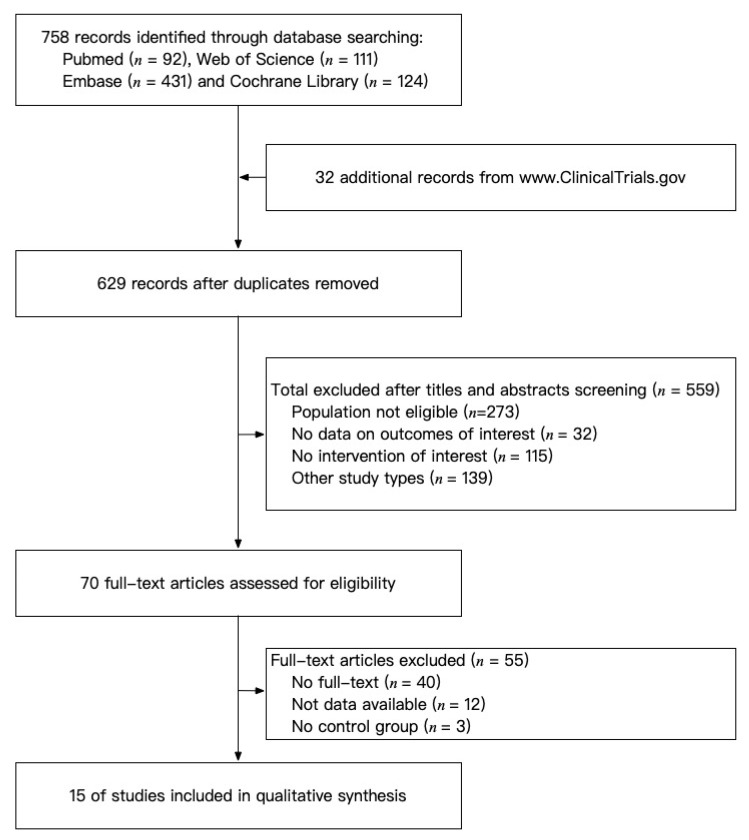
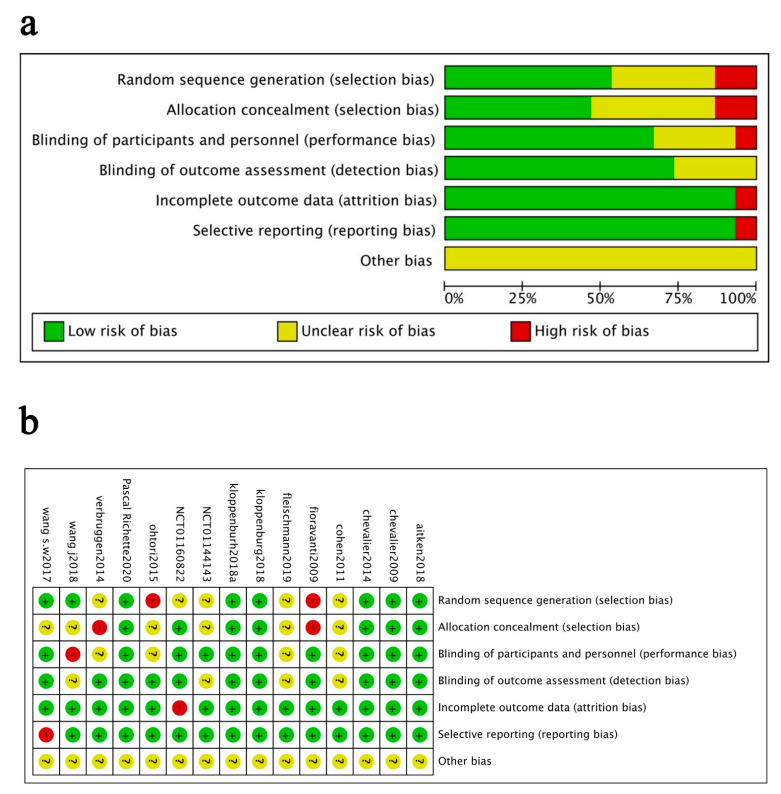
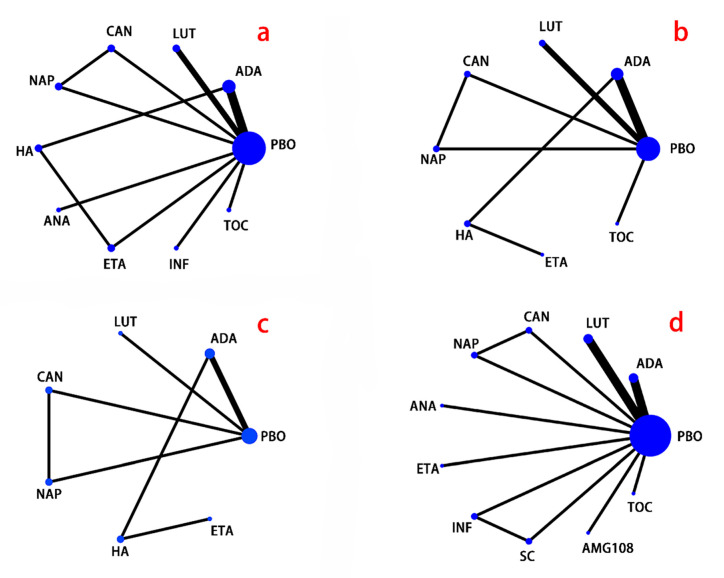
Five databases were searched for randomized controlled trials (RCTs) comparing biologics with placebo or each other in OA patients. Data of pain, physical function, stiffness, and adverse events (AEs) were extracted for a conventional and a Bayesian network meta-analysis.
15 studies with data for 1566 patients were analyzed. In the conventional meta-analysis, etanercept (SMD -0.47; 95% CI -0.89, -0.05) and infliximab (SMD -2.04; CI -2.56, -1.52) were superior to placebo for knee pain. In the network meta-analysis, infliximab was superior to all the other biologic agents in improving pain (vs. hyaluronic acid (SMD -22.95; CI -34.21, -10.43), vs. adalimumab (SMD -21.71; CI -32.65, -11.00), vs. anakinra (SMD -24.63; CI -38.79, -10.05), vs. canakinumab (SMD -32.83; CI -44.45, -20.68), vs. etanercept (SMD -18.40; CI -29.93, -5.73), vs. lutikizumab (SMD -25.11; CI -36.47, -14.78), vs. naproxen (SMD -30.16; CI -41.78, -17.38), vs. tocilizumab (SMD -24.02; CI -35.63, -11.86) and vs. placebo (SMD -25.88; CI -34.87, -16.60)). No significant differences were observed between biologics and placebo regarding physical function, stiffness, and risk of AEs.
The findings suggest that infliximab may relieve pain more than other biological agents in OA patients. No significant differences were observed between biologics and placebo regarding physical function, stiffness, and risk of AEs. The results must be interpreted cautiously; therefore, further randomized controlled trials are warranted.
以往研究一致表明,局部和全身炎症都是骨关节炎(OA)发病和进展的关键因素。因此,抗炎生物制剂可能会减缓OA的进展。我们进行了这项荟萃分析,以研究抗炎生物制剂在OA患者中的疗效和安全性。
检索了五个数据库,查找在OA患者中比较生物制剂与安慰剂或相互比较的随机对照试验(RCT)。提取疼痛、身体功能、僵硬程度和不良事件(AE)的数据,进行传统和贝叶斯网络荟萃分析。
分析了15项研究,涉及1566例患者的数据。在传统荟萃分析中,依那西普(标准化均值差[SMD] -0.47;95%置信区间[CI] -0.89,-0.05)和英夫利昔单抗(SMD -2.04;CI -2.56,-1.52)在缓解膝关节疼痛方面优于安慰剂。在网络荟萃分析中,英夫利昔单抗在改善疼痛方面优于所有其他生物制剂(与透明质酸相比[SMD -22.95;CI -34.21,-10.43],与阿达木单抗相比[SMD -21.71;CI -32.65,-11.00],与阿那白滞素相比[SMD -24.63;CI -38.79,-10.05],与卡那单抗相比[SMD -32.83;CI -44.45,-20.68],与依那西普相比[SMD -18.40;CI -29.93,-5.73],与鲁替珠单抗相比[SMD -25.11;CI -36.47,-14.78],与萘普生相比[SMD -30.16;CI -41.78,-17.38],与托珠单抗相比[SMD -24.02;CI -35.63,-11.86]以及与安慰剂相比[SMD -25.88;CI -34.87,-16.60])。在身体功能、僵硬程度和AE风险方面,生物制剂与安慰剂之间未观察到显著差异。
研究结果表明,在OA患者中,英夫利昔单抗可能比其他生物制剂更能缓解疼痛。在身体功能、僵硬程度和AE风险方面,生物制剂与安慰剂之间未观察到显著差异。必须谨慎解读这些结果;因此,有必要进行进一步的随机对照试验。