Fu Pengfei, Zhang Yi, Zhang Jun, Hu Jin, Sun Yirui
Department of Neurosurgery, Huashan Hospital, Fudan University, Shanghai 200040, China.
Engineering Research Center of Traditional Chinese Medicine Intelligent Rehabilitation Ministry of Education, Shanghai University of Traditional Chinese Medicine, Shanghai 201203, China.
J Clin Med. 2022 Jul 8;11(14):3973. doi: 10.3390/jcm11143973.
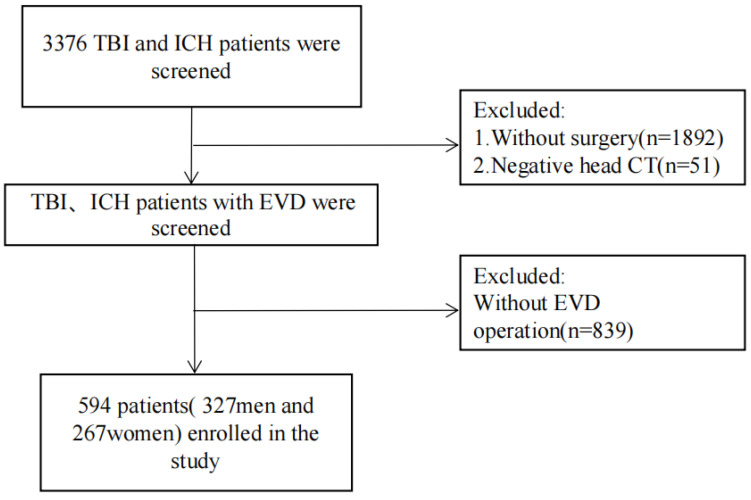
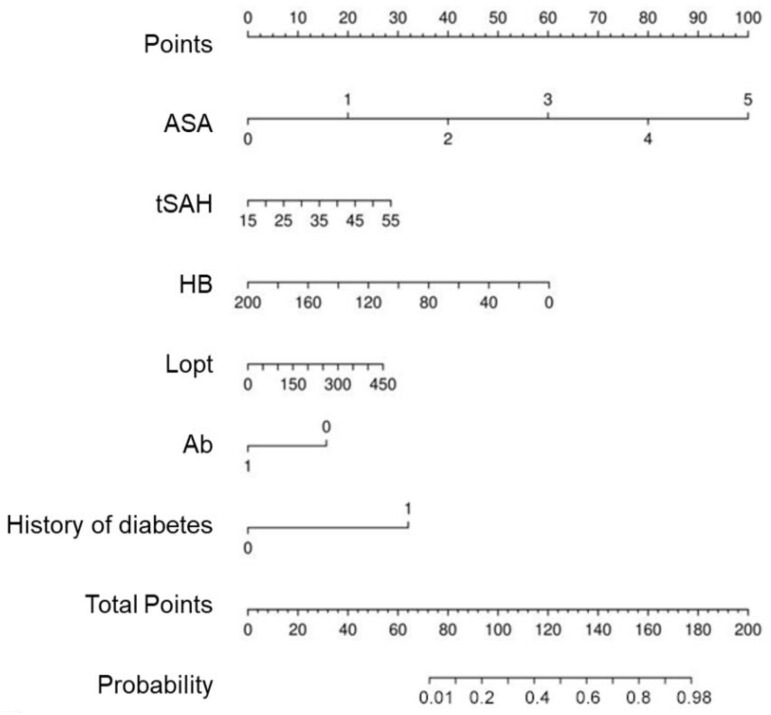
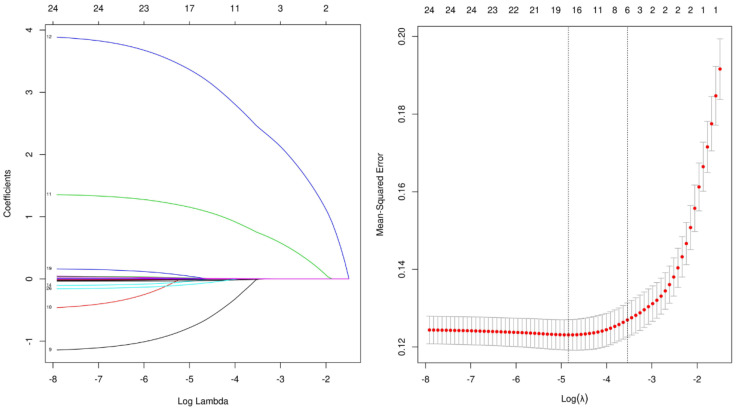
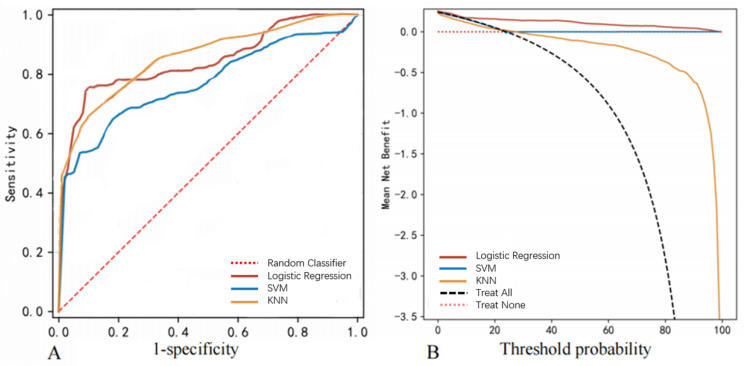
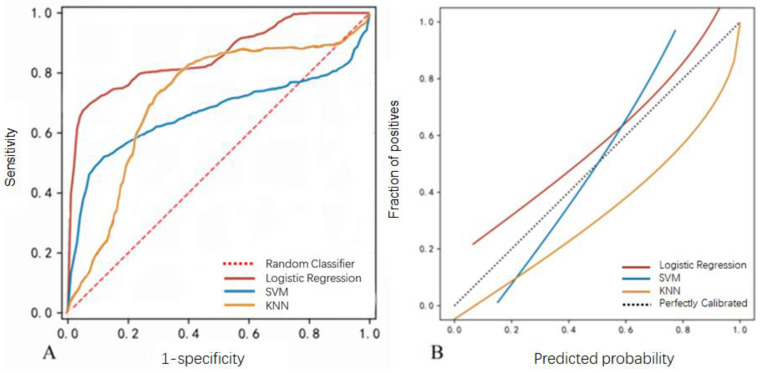
: To generate an optimal prediction model along with identifying major contributors to intracranial infection among patients under external ventricular drainage and neurological intensive care. : A retrospective cohort study was conducted among patients admitted into neurointensive care units between 1 January 2015 and 31 December 2020 who underwent external ventricular drainage due to traumatic brain injury, hydrocephalus, and nonaneurysmal spontaneous intracranial hemorrhage. Multivariate logistic regression in combination with the least absolute shrinkage and selection operator regression was applied to derive prediction models and optimize variable selections. Other machine-learning algorithms, including the support vector machine and K-nearest neighbor, were also applied to derive alternative prediction models. Five-fold cross-validation was used to train and validate each model. Model performance was assessed by calibration plots, receiver operating characteristic curves, and decision curves. A nomogram analysis was developed to explicate the weights of selected features for the optimal model. : Multivariate logistic regression showed the best performance among the three tested models with an area under curve of 0.846 ± 0.006. Six variables, including hemoglobin, albumin, length of operation time, American Society of Anesthesiologists grades, presence of traumatic subarachnoid hemorrhage, and a history of diabetes, were selected from 37 variable candidates as the top-weighted prediction features. The decision curve analysis showed that the nomogram could be applied clinically when the risk threshold is between 20% and 100%. : The occurrence of external ventricular-drainage-associated intracranial infections could be predicted using optimal models and feature-selection approaches, which would be helpful for the prevention and treatment of this complication in neurointensive care units.
为生成一个最佳预测模型,并确定接受体外脑室引流和神经重症监护的患者发生颅内感染的主要影响因素。
进行了一项回顾性队列研究,研究对象为2015年1月1日至2020年12月31日期间入住神经重症监护病房、因创伤性脑损伤、脑积水和非动脉瘤性自发性颅内出血而接受体外脑室引流的患者。采用多变量逻辑回归结合最小绝对收缩和选择算子回归来推导预测模型并优化变量选择。还应用了其他机器学习算法,包括支持向量机和K近邻算法,以推导替代预测模型。使用五折交叉验证来训练和验证每个模型。通过校准图、受试者工作特征曲线和决策曲线评估模型性能。开发了列线图分析以阐明最佳模型所选特征的权重。
在三个测试模型中,多变量逻辑回归表现最佳,曲线下面积为0.846±0.006。从37个候选变量中选出6个变量,包括血红蛋白、白蛋白、手术时间、美国麻醉医师协会分级、创伤性蛛网膜下腔出血的存在情况以及糖尿病史,作为权重最高的预测特征。决策曲线分析表明,当风险阈值在20%至100%之间时,列线图可用于临床。
使用最佳模型和特征选择方法可以预测体外脑室引流相关颅内感染的发生,这将有助于神经重症监护病房中该并发症的预防和治疗。