di Biase Lazzaro, Di Santo Alessandro, Caminiti Maria Letizia, Pecoraro Pasquale Maria, Carbone Simona Paola, Di Lazzaro Vincenzo
Neurology Unit, Campus Bio-Medico University Hospital Foundation, Via Álvaro del Portillo 200, 00128 Rome, Italy.
Unit of Neurology, Neurophysiology, Neurobiology, Department of Medicine, Campus Bio-Medico University of Rome, Via Álvaro del Portillo 21, 00128 Rome, Italy.
J Clin Med. 2022 Jul 19;11(14):4184. doi: 10.3390/jcm11144184.
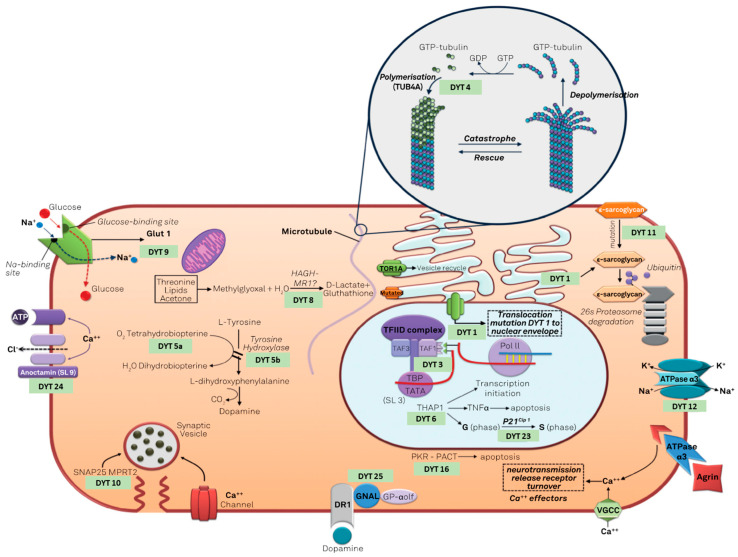
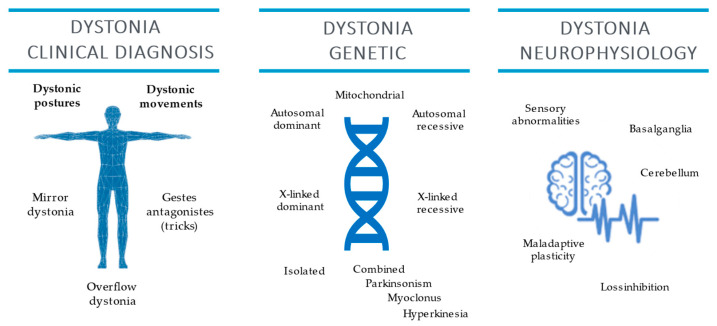
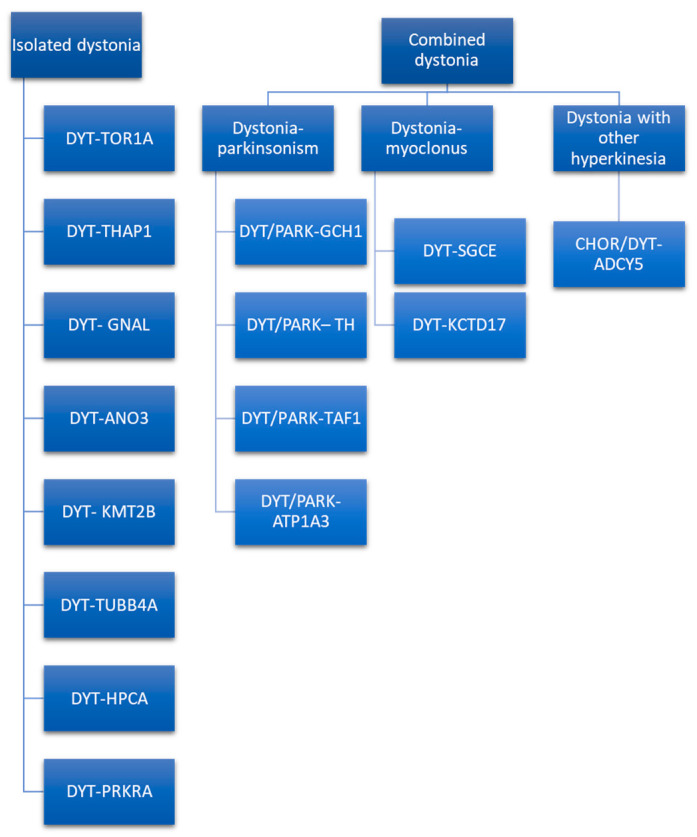
Dystonia diagnosis is based on clinical examination performed by a neurologist with expertise in movement disorders. Clues that indicate the diagnosis of a movement disorder such as dystonia are dystonic movements, dystonic postures, and three additional physical signs (mirror dystonia, overflow dystonia, and geste antagonists/sensory tricks). Despite advances in research, there is no diagnostic test with a high level of accuracy for the dystonia diagnosis. Clinical neurophysiology and genetics might support the clinician in the diagnostic process. Neurophysiology played a role in untangling dystonia pathophysiology, demonstrating characteristic reduction in inhibition of central motor circuits and alterations in the somatosensory system. The neurophysiologic measure with the greatest evidence in identifying patients affected by dystonia is the somatosensory temporal discrimination threshold (STDT). Other parameters need further confirmations and more solid evidence to be considered as support for the dystonia diagnosis. Genetic testing should be guided by characteristics such as age at onset, body distribution, associated features, and coexistence of other movement disorders (parkinsonism, myoclonus, and other hyperkinesia). The aim of the present review is to summarize the state of the art regarding dystonia diagnosis focusing on the role of neurophysiology and genetic testing.
肌张力障碍的诊断基于由运动障碍领域的神经科专家进行的临床检查。提示肌张力障碍等运动障碍诊断的线索包括肌张力障碍性运动、肌张力障碍性姿势以及另外三个体征(镜像肌张力障碍、溢出性肌张力障碍和姿势对抗/感觉技巧)。尽管研究取得了进展,但尚无对肌张力障碍诊断具有高度准确性的诊断测试。临床神经生理学和遗传学可能会在诊断过程中为临床医生提供支持。神经生理学在阐明肌张力障碍的病理生理学方面发挥了作用,显示出中枢运动回路抑制的特征性降低以及体感系统的改变。在识别受肌张力障碍影响的患者方面最具证据的神经生理学测量方法是体感时间辨别阈值(STDT)。其他参数需要进一步证实并有更确凿的证据才能被视为对肌张力障碍诊断的支持。基因检测应以发病年龄、身体分布、相关特征以及其他运动障碍(帕金森综合征、肌阵挛和其他运动亢进)的共存等特征为指导。本综述的目的是总结关于肌张力障碍诊断的最新进展,重点关注神经生理学和基因检测的作用。