Rivet Tyler R, Lalonde Christine, Tai T C
School of Natural Sciences, Laurentian University, Sudbury, ON P3E 2C6, Canada.
Department of Psychology, Nipissing University, North Bay, ON P1B 8L7, Canada.
Life (Basel). 2022 Jul 19;12(7):1077. doi: 10.3390/life12071077.
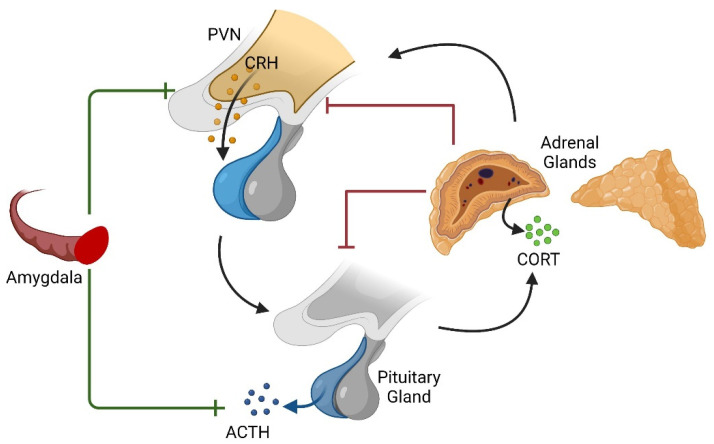
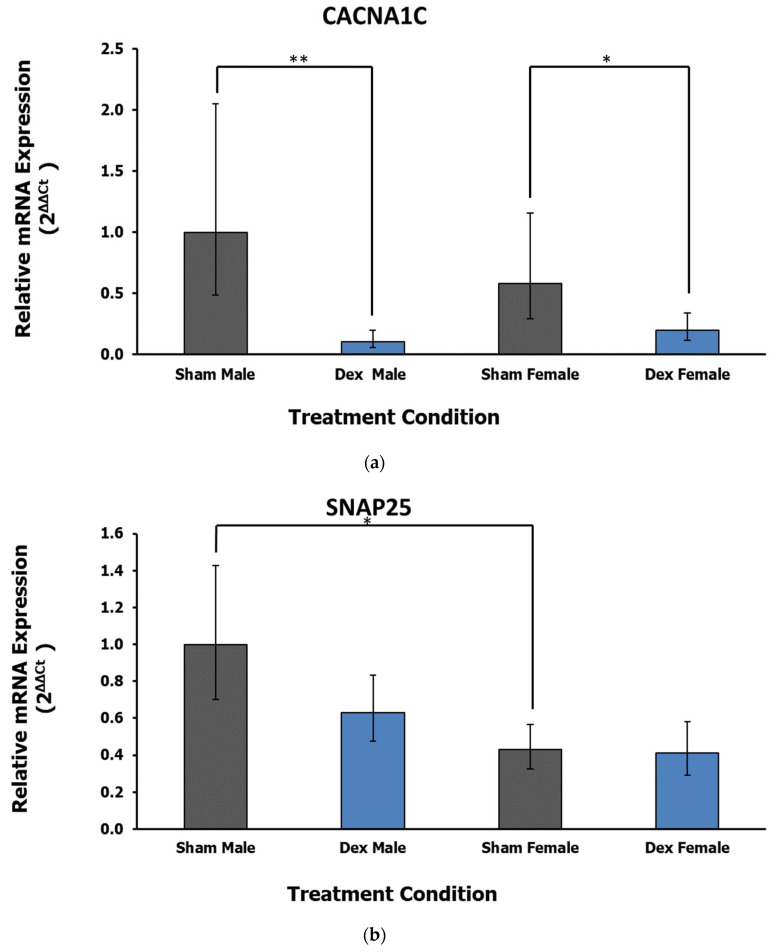
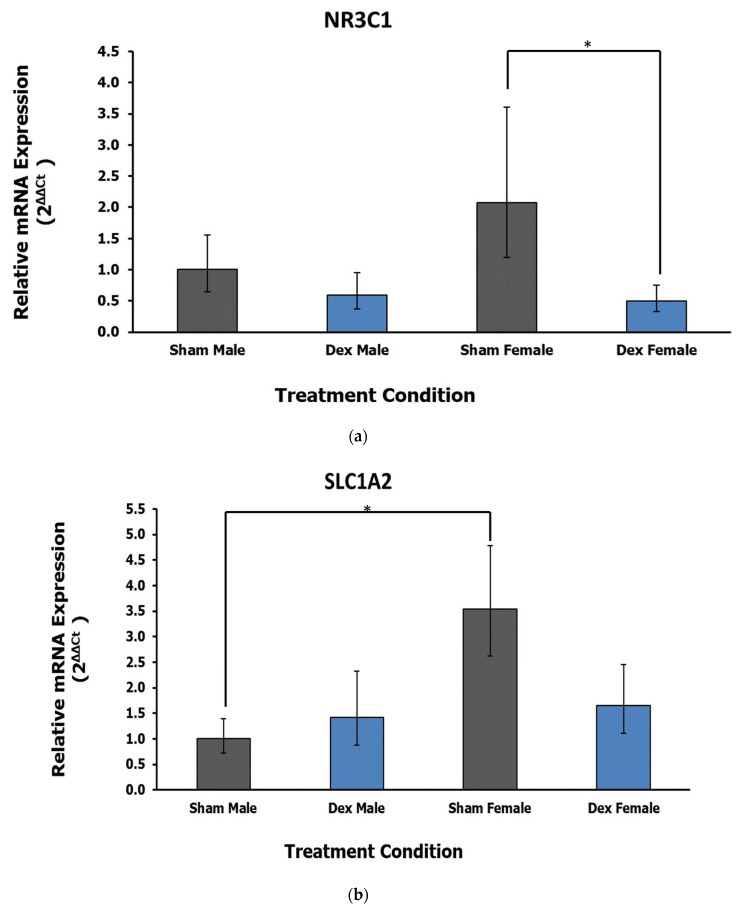
Fetal programming is the concept that maternal stressors during critical periods of fetal development can alter offspring phenotypes postnatally. Excess glucocorticoids can interact with the fetus to effect genetic and epigenetic changes implicated in adverse developmental outcomes. The present study investigates how chronic exposure to the synthetic glucocorticoid dexamethasone during late gestation alters the expression of genes related to behavior in brain areas relevant to the regulation and function of the hypothalamic-pituitary-adrenal axis. Pregnant Wistar Kyoto rats received subcutaneous injections of dexamethasone (100 μg/kg) daily from gestational day 15-21 or vehicle only as sham controls. The amygdala and paraventricular nucleus (PVN) were micro-punched to extract mRNA for reverse transcription and quantitative polymerase chain reaction for the analysis of the expression of specific genes. In the PVN, the expression of the glucocorticoid receptor was downregulated in female rats in response to programming. The expression of encoding the Ca1.2 pore subunit of L-type voltage-gated calcium channels was downregulated in male and female rats prenatally exposed to dexamethasone. Collectively, the results suggest that prenatal exposure to elevated levels of glucocorticoids plays a role in the dysregulation of the hypothalamic-pituitary-adrenal axis and potentially learning and memory by altering the expression of specific genes within the amygdala and PVN.
胎儿编程是指在胎儿发育的关键时期,母体应激源可改变子代出生后的表型。过量的糖皮质激素可与胎儿相互作用,影响与不良发育结局相关的基因和表观遗传变化。本研究调查了妊娠晚期长期暴露于合成糖皮质激素地塞米松如何改变与下丘脑-垂体-肾上腺轴调节和功能相关脑区中与行为有关的基因表达。怀孕的Wistar Kyoto大鼠从妊娠第15天至21天每天皮下注射地塞米松(100μg/kg),或仅注射溶剂作为假对照。对杏仁核和室旁核(PVN)进行微量打孔以提取mRNA,用于逆转录和定量聚合酶链反应,以分析特定基因的表达。在PVN中,糖皮质激素受体的表达在接受编程的雌性大鼠中下调。编码L型电压门控钙通道Ca1.2孔亚基的基因表达在产前暴露于地塞米松的雄性和雌性大鼠中均下调。总体而言,结果表明产前暴露于高水平糖皮质激素通过改变杏仁核和PVN内特定基因的表达,在下丘脑-垂体-肾上腺轴失调以及潜在的学习和记忆方面发挥作用。