Aldhafeeri Thamer, Alotaibi Mansour, Barry Carol Forance
Department of Plastics Engineering, University of Massachusetts Lowell, Lowell, MA 01854, USA.
Polymers (Basel). 2022 Jul 8;14(14):2790. doi: 10.3390/polym14142790.
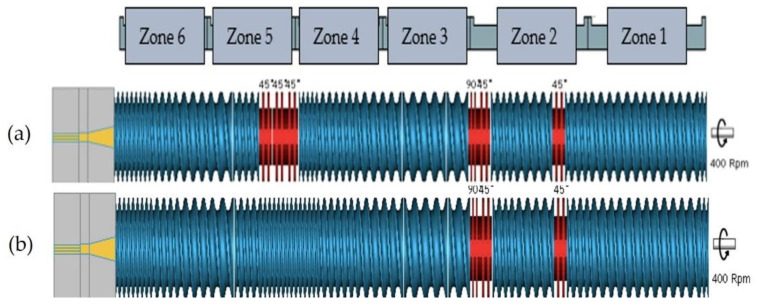
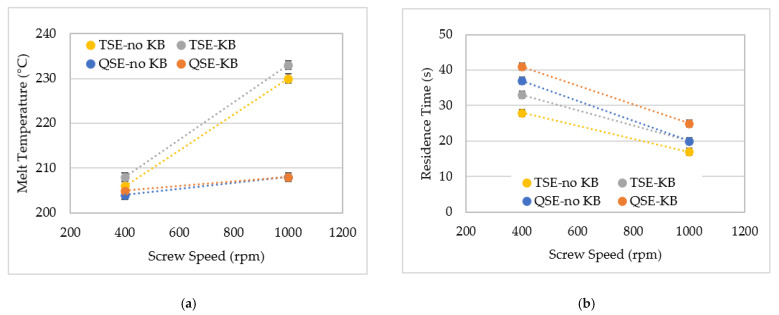
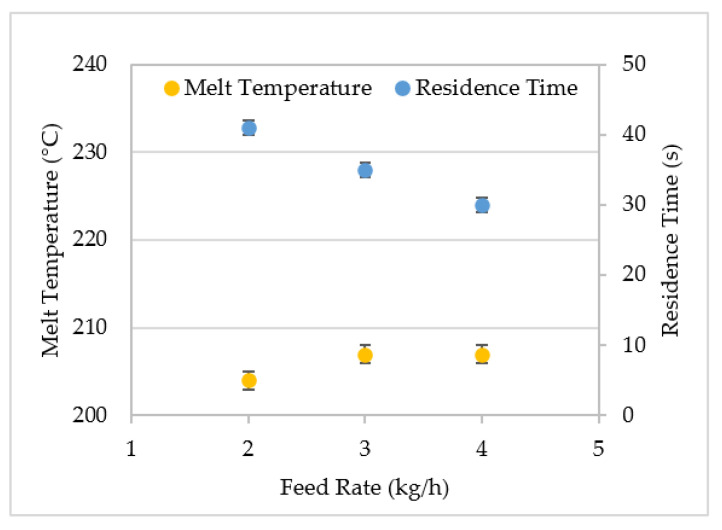
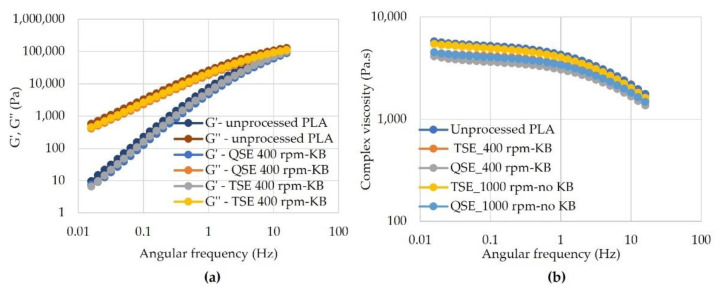
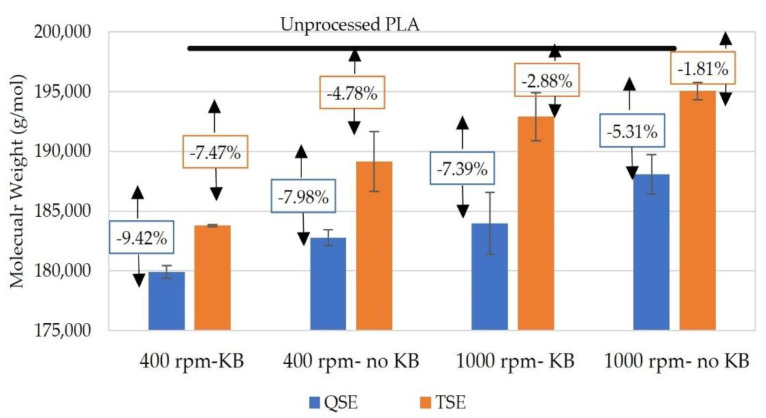
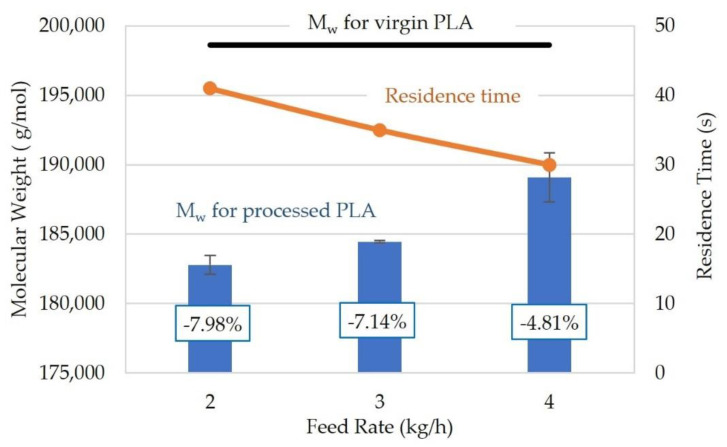
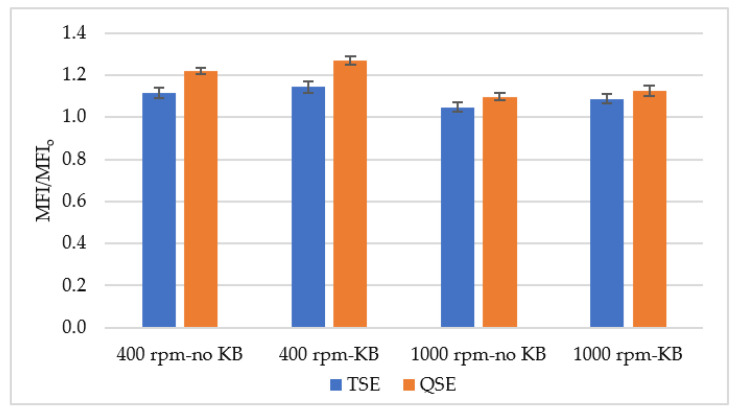
To reduce the degradation of polylactic acid (PLA) during processing, which reduces the molecular weight of PLA and its properties, prior studies have recommended low processing temperatures. In contrast, this work investigated the impact of four factors affecting shear heating (extruder type, screw configuration, screw speed, and feed rate) on the degradation of PLA. The polylactic acid was processed using a quad screw extruder (QSE) and a comparable twin screw extruder (TSE), two screw configurations, higher screw speeds, and several feed rates. The processed PLA was characterized by its rheological, thermal, and material composition properties. In both screw configurations, the QSE (which has a greater free volume) produced 3-4 °C increases in melt temperature when the screw speed was increased from 400 rpm to 1000 rpm, whereas the temperature rise was 24-25 °C in the TSE. PLA processed at low screw speeds, however, exhibited greater reductions in molecular weight-i.e., 9% in the QSE and 7% in the TSE. Screw configurations with fewer kneading blocks, and higher feed rates in the QSE, reduced degradation of PLA. At lower processing temperatures, it was found that an increase in melt temperature and shear rate did not significantly contribute to the degradation of PLA. Reducing the residence time during processing minimized the degradation of PLA in a molten state.
为减少聚乳酸(PLA)在加工过程中的降解(这种降解会降低PLA的分子量及其性能),先前的研究建议采用较低的加工温度。相比之下,本研究调查了影响剪切加热的四个因素(挤出机类型、螺杆构型、螺杆转速和进料速率)对PLA降解的影响。使用四螺杆挤出机(QSE)和类似的双螺杆挤出机(TSE)、两种螺杆构型、更高的螺杆转速以及几种进料速率对聚乳酸进行加工。通过流变学、热学和材料组成特性对加工后的PLA进行表征。在两种螺杆构型中,当螺杆转速从400转/分钟提高到1000转/分钟时,具有更大自由体积的QSE使熔体温度升高3 - 4°C,而TSE中的温度升高为24 - 25°C。然而,在低螺杆转速下加工的PLA分子量降低幅度更大,即在QSE中降低了9%,在TSE中降低了7%。具有较少捏合块的螺杆构型以及QSE中较高的进料速率减少了PLA的降解。在较低的加工温度下,发现熔体温度和剪切速率的增加对PLA的降解没有显著影响。减少加工过程中的停留时间可使处于熔融状态的PLA降解最小化。