Leancă Sabina Andreea, Crișu Daniela, Petriș Antoniu Octavian, Afrăsânie Irina, Genes Antonia, Costache Alexandru Dan, Tesloianu Dan Nicolae, Costache Irina Iuliana
Department of Cardiology, Emergency Clinical Hospital "Sf. Spiridon", Bd. Independentei nr. 1, 700111 Iasi, Romania.
Department of Internal Medicine, "Grigore T. Popa" University of Medicine and Pharmacy, Str. University nr. 16, 700083 Iasi, Romania.
Life (Basel). 2022 Jul 24;12(8):1111. doi: 10.3390/life12081111.
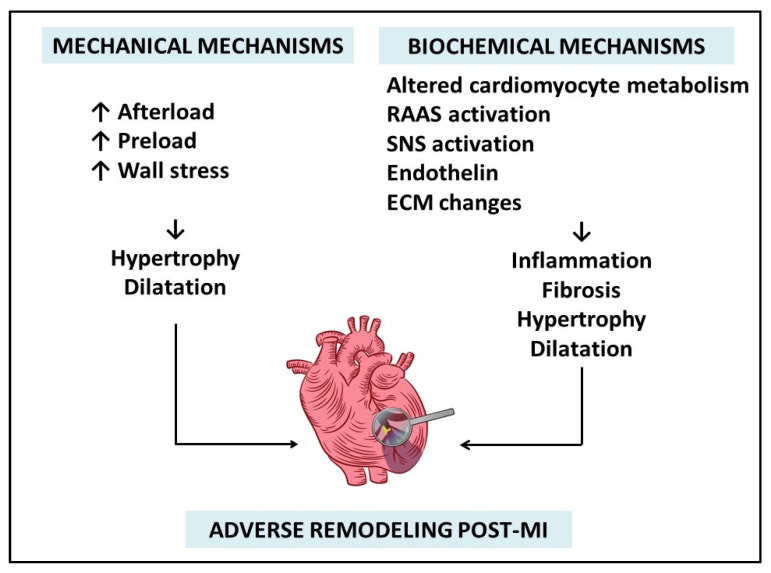
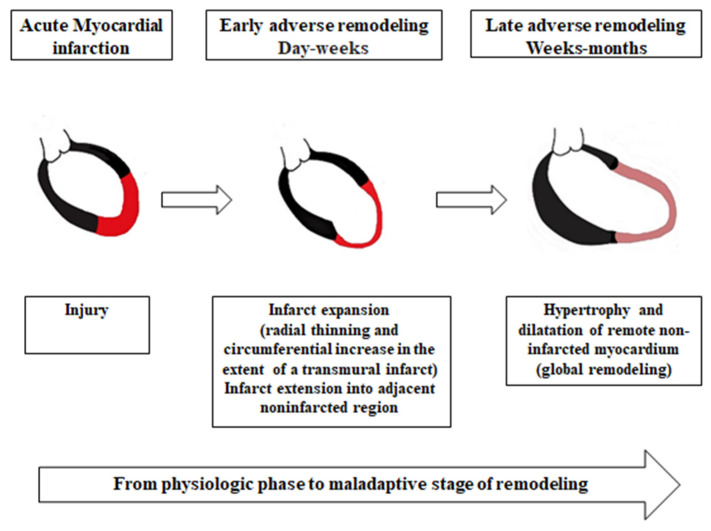
Myocardial infarction (MI) is the leading cause of death and morbidity worldwide, with an incidence relatively high in developed countries and rapidly growing in developing countries. The most common cause of MI is the rupture of an atherosclerotic plaque with subsequent thrombotic occlusion in the coronary circulation. This causes cardiomyocyte death and myocardial necrosis, with subsequent inflammation and fibrosis. Current therapies aim to restore coronary flow by thrombus dissolution with pharmaceutical treatment and/or intravascular stent implantation and to counteract neurohormonal activation. Despite these therapies, the injury caused by myocardial ischemia leads to left ventricular remodeling; this process involves changes in cardiac geometry, dimension and function and eventually progression to heart failure (HF). This review describes the pathophysiological mechanism that leads to cardiac remodeling and the therapeutic strategies with a role in slowing the progression of remodeling and improving cardiac structure and function.
心肌梗死(MI)是全球范围内死亡和发病的主要原因,在发达国家发病率相对较高,在发展中国家则迅速增长。MI最常见的原因是动脉粥样硬化斑块破裂,随后在冠状动脉循环中形成血栓性阻塞。这会导致心肌细胞死亡和心肌坏死,随后引发炎症和纤维化。目前的治疗方法旨在通过药物治疗溶解血栓和/或植入血管内支架来恢复冠状动脉血流,并对抗神经激素激活。尽管有这些治疗方法,但心肌缺血造成的损伤会导致左心室重塑;这个过程涉及心脏几何形状、尺寸和功能的变化,最终发展为心力衰竭(HF)。本综述描述了导致心脏重塑的病理生理机制以及在减缓重塑进程和改善心脏结构与功能方面发挥作用的治疗策略。