Ekanayaka Anusha H, Tibpromma Saowaluck, Dai Donqin, Xu Ruifang, Suwannarach Nakarin, Stephenson Steven L, Dao Chengjiao, Karunarathna Samantha C
Center for Yunnan Plateau Biological Resources Protection and Utilization, Yunnan Engineering Research Center of Fruit Wine, College of Biological Resource and Food Engineering, Qujing Normal University, Qujing 655011, China.
Department of Botany, Faculty of Applied Sciences, University of Sri Jayewardenepura, Gangodawila, Nugegoda 10250, Sri Lanka.
J Fungi (Basel). 2022 Jul 25;8(8):772. doi: 10.3390/jof8080772.
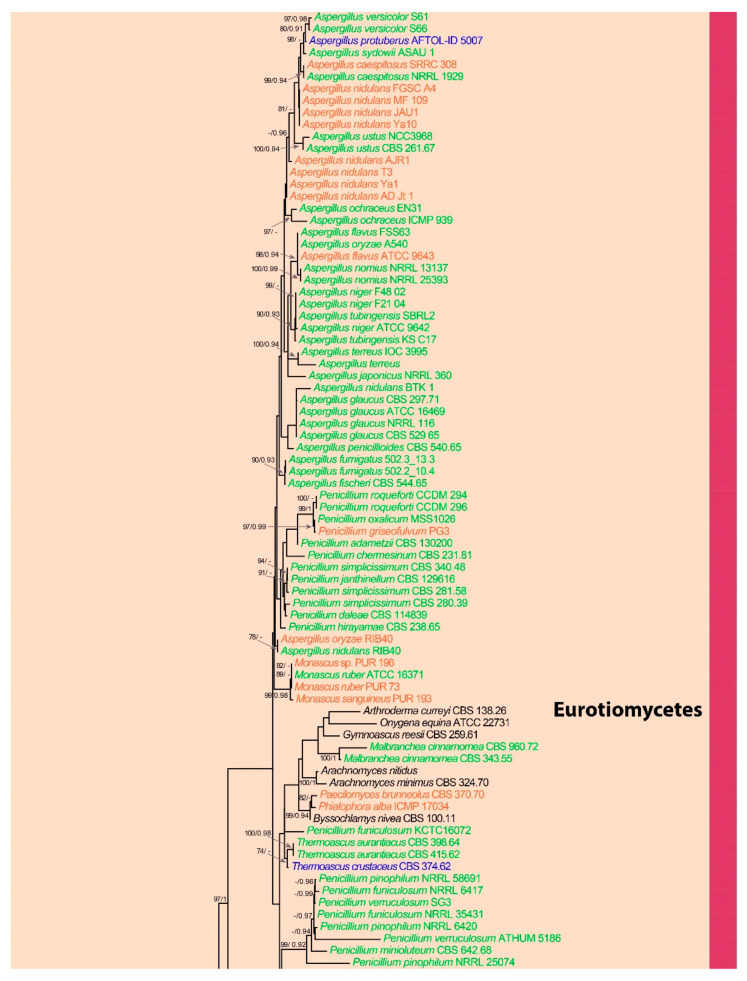
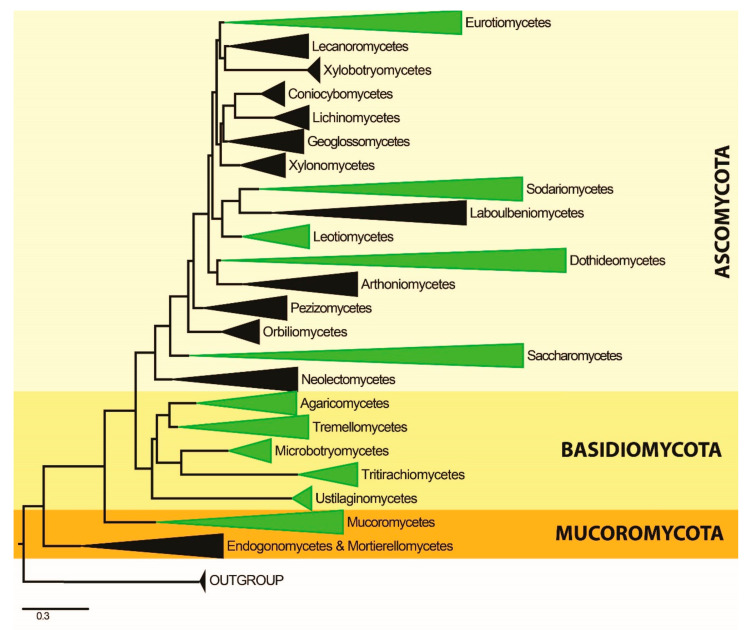
Plastic has become established over the world as an essential basic need for our daily life. Current global plastic production exceeds 300 million tons annually. Plastics have many characteristics such as low production costs, inertness, relatively low weight, and durability. The primary disadvantage of plastics is their extremely slow natural degradation. The latter results in an accumulation of plastic waste in nature. The amount of plastic waste as of 2015 was 6300 million tons worldwide, and 79% of this was placed in landfills or left in the natural environment. Moreover, recent estimates report that 12,000 million tons of plastic waste will have been accumulated on the earth by 2050. Therefore, it is necessary to develop an effective plastic biodegradation process to accelerate the natural degradation rate of plastics. More than 400 microbes have been identified as capable of plastic degradation. This is the first paper of the series on plastic-degrading fungi. This paper provides a summary of the current global production of plastic and plastic waste accumulation in nature. A list is given of all the plastic-degrading fungi recorded thus far, based on the available literature, and comments are made relating to the major fungal groups. In addition, the phylogenetic relationships of plastic-degrading fungi were analyzed using a combined ITS, LSU, SSU, TEF, RPB1, and RPB2 dataset consisting of 395 strains. Our results confirm that plastic-degrading fungi are found in eleven classes in the fungal phyla Ascomycota (Dothideomycetes, Eurotiomycetes, Leotiomycetes, Saccharomycetes, and Sordariomycetes), Basidiomycota (Agaricomycetes, Microbotryomycetes, Tremellomycetes, Tritirachiomycetes, and Ustilaginomy-cetes), and Mucoromycota (Mucoromycetes). The taxonomic placement of plastic-degrading fungal taxa is briefly discussed. The Eurotiomycetes include the largest number of plastic degraders in the kingdom Fungi. The results presented herein are expected to influence the direction of future research on similar topics in order to find effective plastic-degrading fungi that can eliminate plastic wastes. The next publication of the series on plastic-degrading fungi will be focused on major metabolites, degradation pathways, and enzyme production in plastic degradation by fungi.
塑料已在全球范围内成为我们日常生活中必不可少的基本需求。当前全球塑料年产量超过3亿吨。塑料具有许多特性,如生产成本低、惰性、重量相对较轻和耐用性强。塑料的主要缺点是其天然降解极其缓慢。这导致自然界中塑料垃圾的积累。截至2015年,全球塑料垃圾量为63亿吨,其中79%被填埋或留在自然环境中。此外,最近的估计报告称,到2050年地球上将积累120亿吨塑料垃圾。因此,有必要开发一种有效的塑料生物降解过程,以加快塑料的自然降解速度。已鉴定出400多种能够降解塑料的微生物。这是关于塑料降解真菌系列论文的第一篇。本文概述了当前全球塑料产量以及自然界中塑料垃圾的积累情况。根据现有文献列出了迄今为止记录的所有塑料降解真菌,并对主要真菌类群进行了评论。此外,使用由395个菌株组成的ITS、LSU、SSU、TEF、RPB1和RPB2数据集组合分析了塑料降解真菌的系统发育关系。我们的结果证实,塑料降解真菌存在于真菌门子囊菌门(座囊菌纲、散囊菌纲、锤舌菌纲、酵母纲和粪壳菌纲)、担子菌门(伞菌纲、微球黑粉菌纲、银耳纲、裂褶菌纲和黑粉菌纲)和毛霉门(毛霉纲)的11个纲中。简要讨论了塑料降解真菌分类单元的分类地位。散囊菌纲在真菌界中包含最多的塑料降解菌。本文给出的结果有望影响未来类似主题的研究方向,以便找到能够消除塑料垃圾的有效塑料降解真菌。塑料降解真菌系列的下一篇出版物将聚焦于真菌降解塑料过程中的主要代谢产物、降解途径和酶的产生。