Fonseca Maria Inês, Lorigo Margarida, Cairrao Elisa
CICS-UBI, Health Sciences Research Centre, University of Beira Interior, 6200-506 Covilhã, Portugal.
FCS-UBI, Faculty of Health Sciences, University of Beira Interior, 6200-506 Covilhã, Portugal.
J Xenobiot. 2022 Jul 13;12(3):181-213. doi: 10.3390/jox12030015.
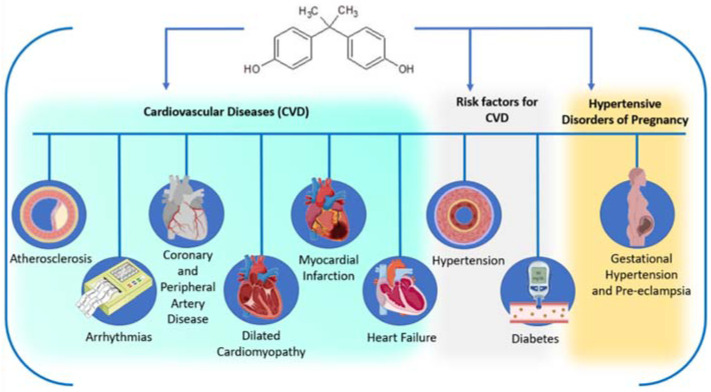
Currently, the plastic monomer and plasticizer bisphenol A (BPA) is one of the most widely used chemicals. BPA is present in polycarbonate plastics and epoxy resins, commonly used in food storage and industrial or medical products. However, the use of this synthetic compound is a growing concern, as BPA is an endocrine-disrupting compound and can bind mainly to estrogen receptors, interfering with different functions at the cardiovascular level. Several studies have investigated the disruptive effects of BPA; however, its cardiotoxicity remains unclear. Therefore, this review's purpose is to address the most recent studies on the implications of BPA on the cardiovascular system. Our findings suggest that BPA impairs cardiac excitability through intracellular mechanisms, involving the inhibition of the main ion channels, changes in Ca handling, the induction of oxidative stress, and epigenetic modifications. Our data support that BPA exposure increases the risk of developing cardiovascular diseases (CVDs) including atherosclerosis and its risk factors such as hypertension and diabetes. Furthermore, BPA exposure is also particularly harmful in pregnancy, promoting the development of hypertensive disorders during pregnancy. In summary, BPA exposure compromises human health, promoting the development and progression of CVDs and risk factors. Further studies are needed to clarify the human health effects of BPA-induced cardiotoxicity.
目前,塑料单体和增塑剂双酚A(BPA)是使用最为广泛的化学品之一。双酚A存在于聚碳酸酯塑料和环氧树脂中,常用于食品储存以及工业或医疗产品。然而,这种合成化合物的使用日益受到关注,因为双酚A是一种内分泌干扰化合物,主要可与雌激素受体结合,干扰心血管系统的不同功能。多项研究调查了双酚A的干扰作用;然而,其心脏毒性仍不明确。因此,本综述的目的是阐述关于双酚A对心血管系统影响的最新研究。我们的研究结果表明,双酚A通过细胞内机制损害心脏兴奋性,包括抑制主要离子通道、改变钙处理、诱导氧化应激和表观遗传修饰。我们的数据支持,接触双酚A会增加患心血管疾病(CVD)的风险,包括动脉粥样硬化及其风险因素,如高血压和糖尿病。此外,孕期接触双酚A也特别有害,会促使孕期高血压疾病的发展。总之,接触双酚A会损害人类健康,促进心血管疾病及其风险因素的发展和进展。需要进一步研究以阐明双酚A诱导的心脏毒性对人类健康的影响。