O'Neal Teri B, Shrestha Sanjay, Singh Harsimar, Osagie Ihianle, Ben-Okafor Kenechukwu, Cornett Elyse M, Kaye Alan D
Department of Family Medicine, LSU Health Shreveport/Monroe Medical Center, Monroe, LA 71202, USA.
Department of Anesthesiology, Louisiana State University Health Shreveport, Shreveport, LA 71103, USA.
Neurol Int. 2022 Jul 18;14(3):600-613. doi: 10.3390/neurolint14030048.
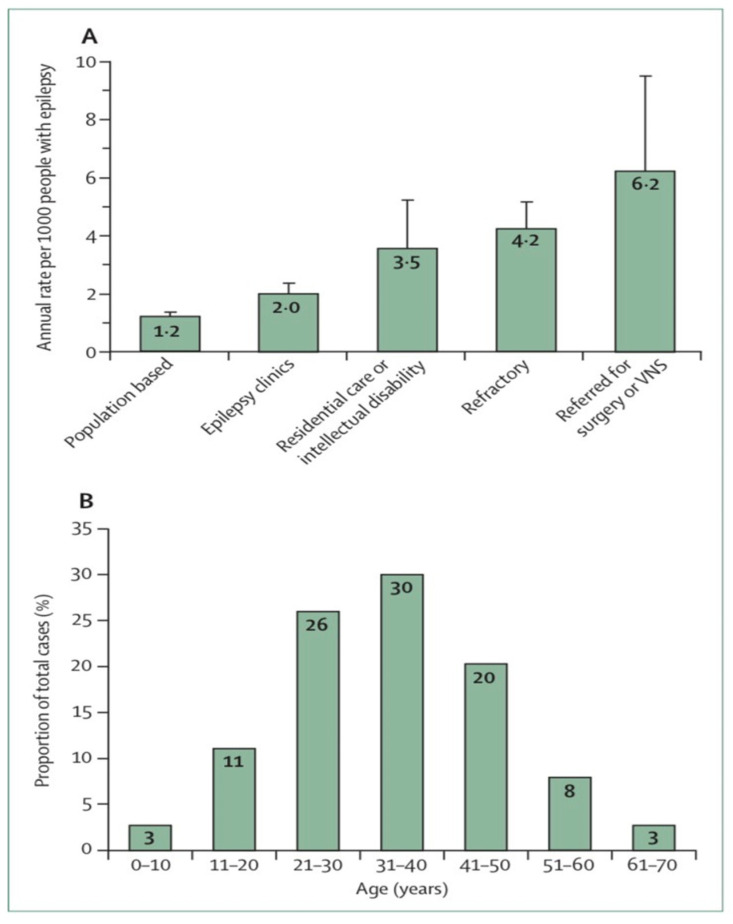
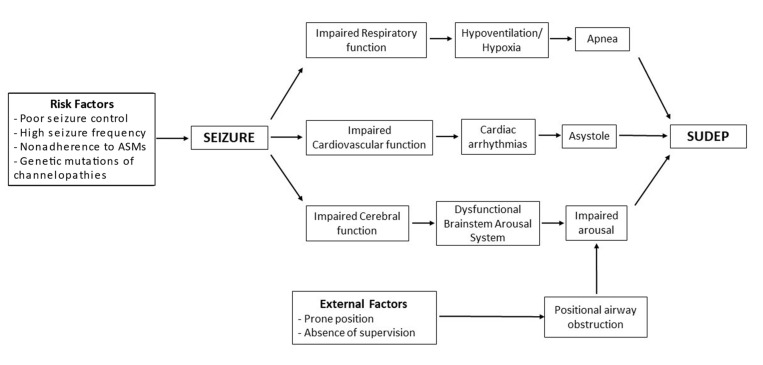
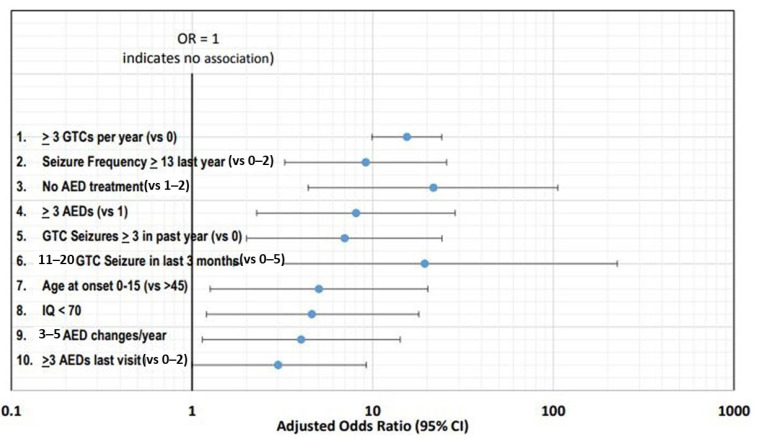
Epilepsy is a complex neurological condition with numerous etiologies and treatment options. In a subset of these patients, sudden unexpected death can occur, and to date, there are numerous explanations as to the pathophysiological mechanisms and how to mitigate these catastrophic outcomes. Approximately 2.3 million Americans have epilepsy, and nearly 150,000 people develop the condition each year. Sudden unexpected death in epilepsy (SUDEP) accounts for 2-18% of all epilepsy-related deaths and this is equivalent to one death in 1000 person-years of diagnosed epilepsy. It is more common in young adults aged 20-45. Seizures in the past year; the absence of terminal remission in the last five years; increased seizure frequency, particularly GTCS; and nocturnal seizures are the most potent modifiable risk factors for SUDEP. Patients not receiving any antiepileptic drug therapy are at higher risk of SUDEP. Patient education on medication compliance; care plans for seizure clusters (rescue medicines); epilepsy self-management programs; and lifestyle changes to avoid seizure-triggering factors, including avoiding excessive alcohol use and sleep deprivation, should be provided by health care providers. Continued research into SUDEP will hopefully lead to effective interventions to minimize occurrences. At present, aggressive control of epilepsy and enhanced education for individuals and the public are the most effective weapons for combating SUDEP. This narrative review focuses on updated information related to SUDEP epidemiology; pathophysiology; risk factor treatment options; and finally, a discussion of important clinical studies. We seek to encourage clinicians who care for patients with epilepsy to be aggressive in controlling seizure activity and diligent in their review of risk factors and education of patients and their families about SUDEP.
癫痫是一种复杂的神经系统疾病,有多种病因和治疗选择。在这些患者的一个亚组中,可能会发生意外猝死,迄今为止,关于其病理生理机制以及如何减轻这些灾难性后果有多种解释。大约230万美国人患有癫痫,每年有近15万人患上这种疾病。癫痫猝死(SUDEP)占所有癫痫相关死亡的2%-18%,这相当于每1000人年的确诊癫痫中有1人死亡。它在20-45岁的年轻人中更为常见。过去一年有癫痫发作;过去五年未达到末期缓解;癫痫发作频率增加,尤其是全身强直阵挛发作;以及夜间发作是SUDEP最有力的可改变风险因素。未接受任何抗癫痫药物治疗的患者发生SUDEP的风险更高。医疗保健提供者应提供关于药物依从性的患者教育;癫痫发作群集的护理计划(急救药物);癫痫自我管理项目;以及改变生活方式以避免诱发癫痫发作的因素,包括避免过度饮酒和睡眠不足。对SUDEP的持续研究有望带来有效的干预措施,以尽量减少其发生。目前,积极控制癫痫以及加强对个人和公众的教育是对抗SUDEP最有效的武器。这篇叙述性综述重点关注与SUDEP流行病学、病理生理学、危险因素、治疗选择相关的最新信息,最后讨论重要的临床研究。我们旨在鼓励照顾癫痫患者的临床医生积极控制癫痫发作活动,并认真审查危险因素,以及对患者及其家属进行关于SUDEP的教育。