Department of Surgery, School of Medicine and Public Health, University of Wisconsin, 600 Highland Ave, Madison, WI 53792, USA.
McArdle Laboratory for Cancer Research, School of Medicine and Public Health, University of Wisconsin, 1111 Highland Ave, Madison WI 53705, USA.
Viruses. 2022 Jul 26;14(8):1632. doi: 10.3390/v14081632.
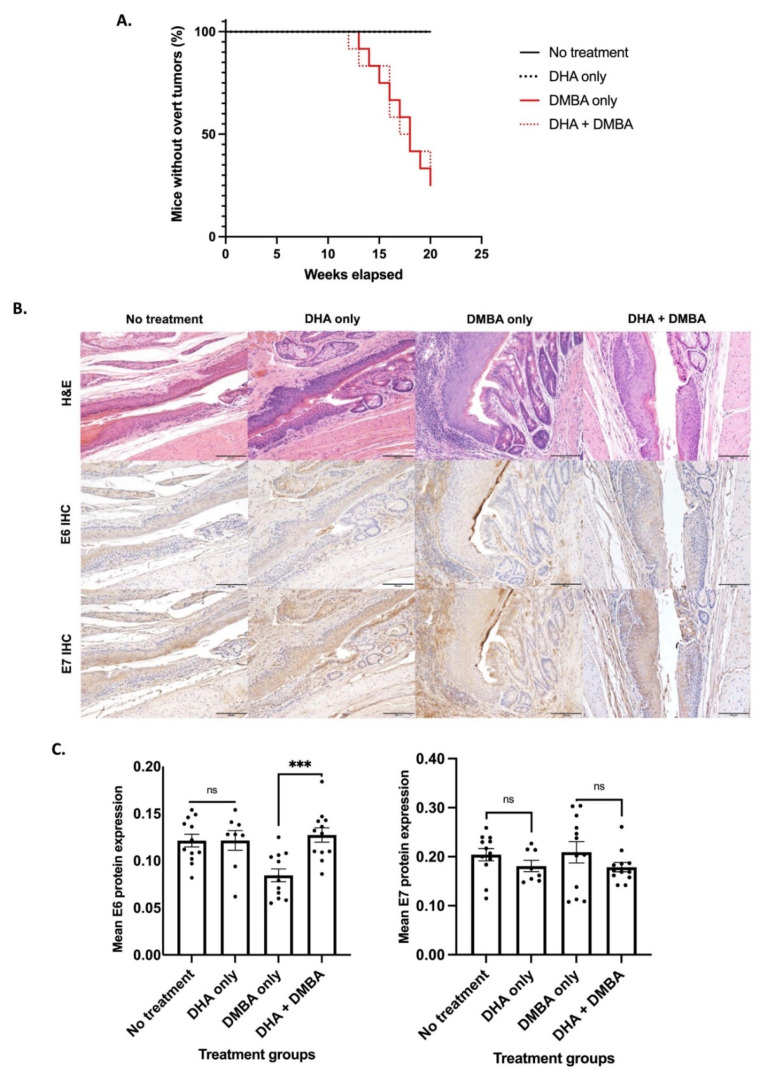
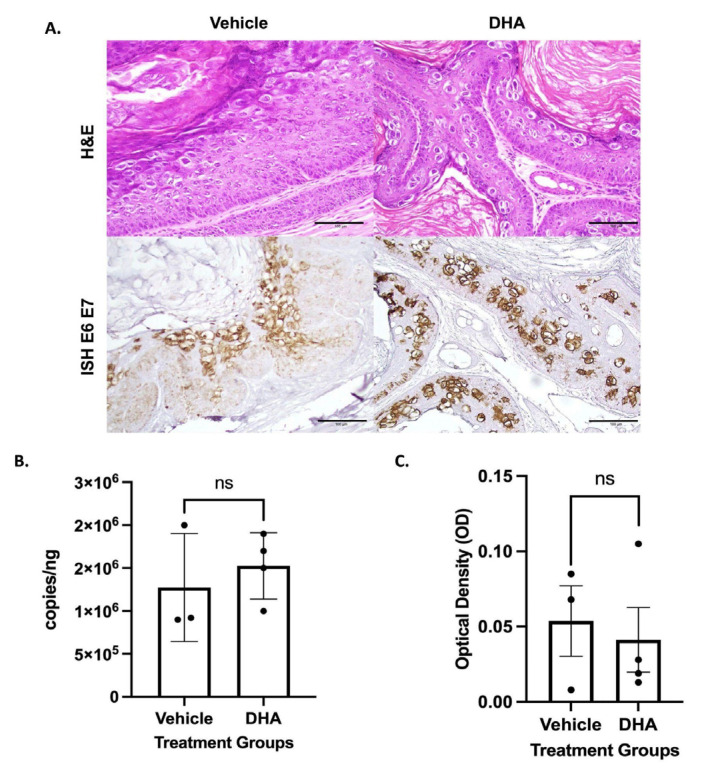
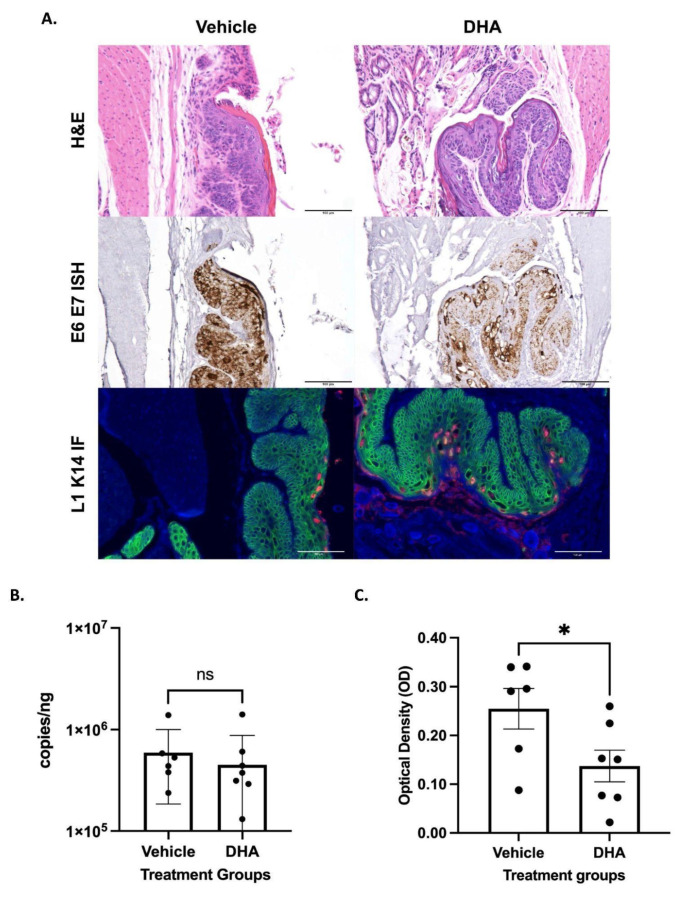
The artemisinin family of compounds is cytopathic in certain cancer cell lines that are positive for human papillomaviruses (HPV) and can potentially drive the regression of dysplastic lesions. We evaluated the efficacy of topical dihydroartemisinin (DHA) on cervical dysplasia and anal dysplasia in two papillomavirus mouse models: transgenic mice, which express HPV16 oncogenes; and immunodeficient NOD/SCID gamma (NSG) mice infected with papillomavirus (MmuPV1). Mice started treatment with DHA at 25 weeks of age () or 20 weeks post infection (MmuPV1-infected), when the majority of mice are known to have papillomavirus-induced low- to high-grade dysplasia. Mice were treated with or without topical DHA at the cervix or anus and with or without topical treatment with the chemical carcinogen 7,12 dimethylbenz(a)anthracene (DMBA) at the anus of in transgenic mice to induce neoplastic progression. Mice were monitored for overt tumor growth, and tissue was harvested after 20 weeks of treatment and scored for severity of histological disease. For MmuPV1-infected mice, anogenital lavages were taken to monitor for viral clearance. Tissues were also evaluated for viral gene expression at the RNA and/or protein levels. Treatment with topical DHA did not reduce dysplasia in the anogenital tract in either papillomavirus-induced mouse model and did not prevent progression to anal cancer in the DMBA-treated mice.
青蒿素类化合物对某些人乳头瘤病毒 (HPV) 阳性的癌症细胞系具有细胞毒性,可能导致发育不良病变的消退。我们评估了局部二氢青蒿素 (DHA) 对两种乳头瘤病毒小鼠模型中宫颈发育不良和肛门发育不良的疗效:表达 HPV16 致癌基因的转基因小鼠;以及感染 乳头瘤病毒 (MmuPV1) 的免疫缺陷 NOD/SCID gamma (NSG) 小鼠。小鼠在 25 周龄()或感染后 20 周(MmuPV1 感染)开始用 DHA 治疗,此时大多数小鼠已知患有乳头瘤病毒引起的低级别到高级别发育不良。用或不用局部 DHA 治疗转基因小鼠的宫颈或肛门,并用或不用局部化学致癌物 7,12 二甲基苯并(a)蒽(DMBA)治疗肛门,以诱导肿瘤进展。监测小鼠是否有明显的肿瘤生长,并在治疗 20 周后采集组织,根据组织病理学疾病的严重程度进行评分。对于 MmuPV1 感染的小鼠,采集肛门生殖器冲洗液以监测病毒清除情况。还评估了组织在 RNA 和/或蛋白质水平的病毒基因表达。局部 DHA 治疗并未减少两种乳头瘤病毒诱导的小鼠模型中肛门生殖器道的发育不良,也未预防 DMBA 处理的 小鼠进展为肛门癌。