McArdle Laboratory for Cancer Research, University of Wisconsin School of Medicine and Public Healthgrid.471391.9, Madison, Wisconsin, USA.
Department of Pathology and Laboratory Medicine, University of Wisconsin School of Medicine and Public Healthgrid.471391.9, Madison, Wisconsin, USA.
mBio. 2021 Aug 31;12(4):e0161121. doi: 10.1128/mBio.01611-21. Epub 2021 Jul 20.
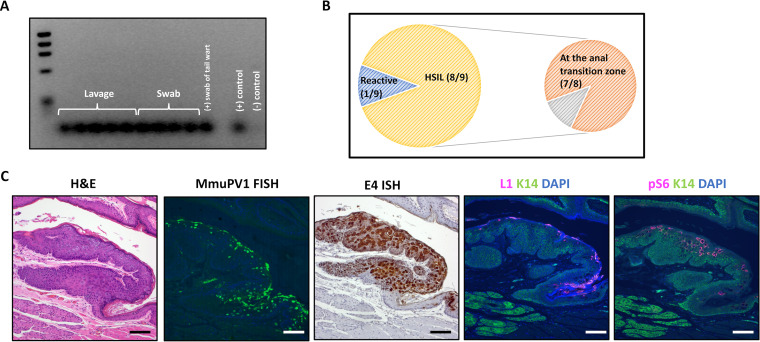
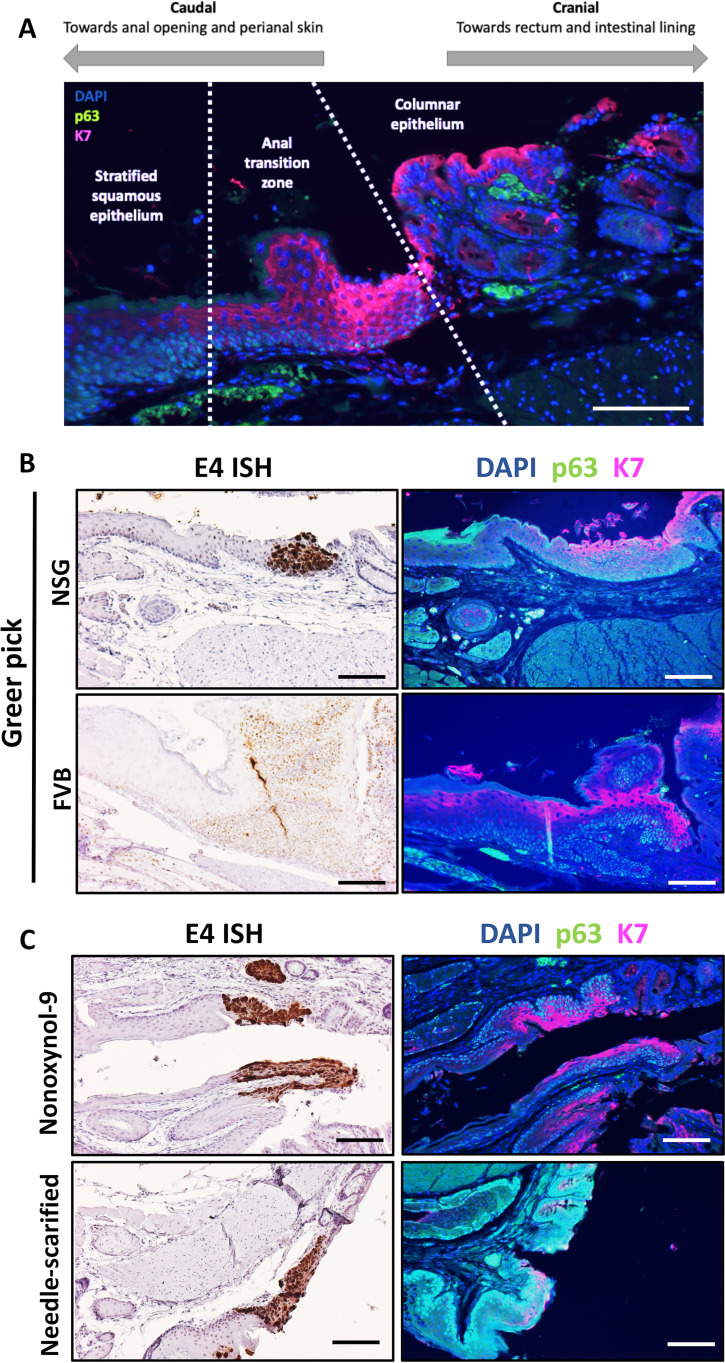
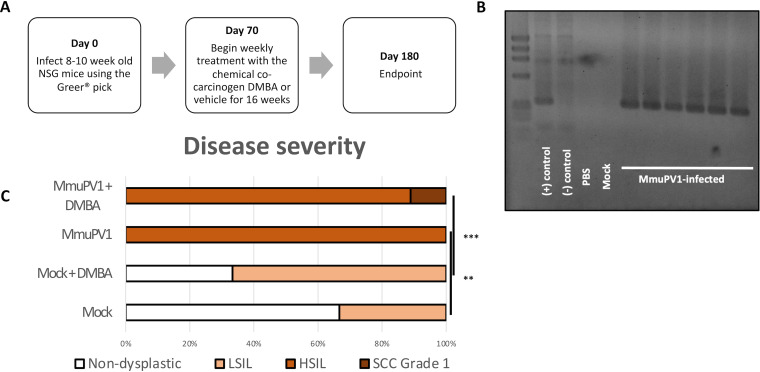
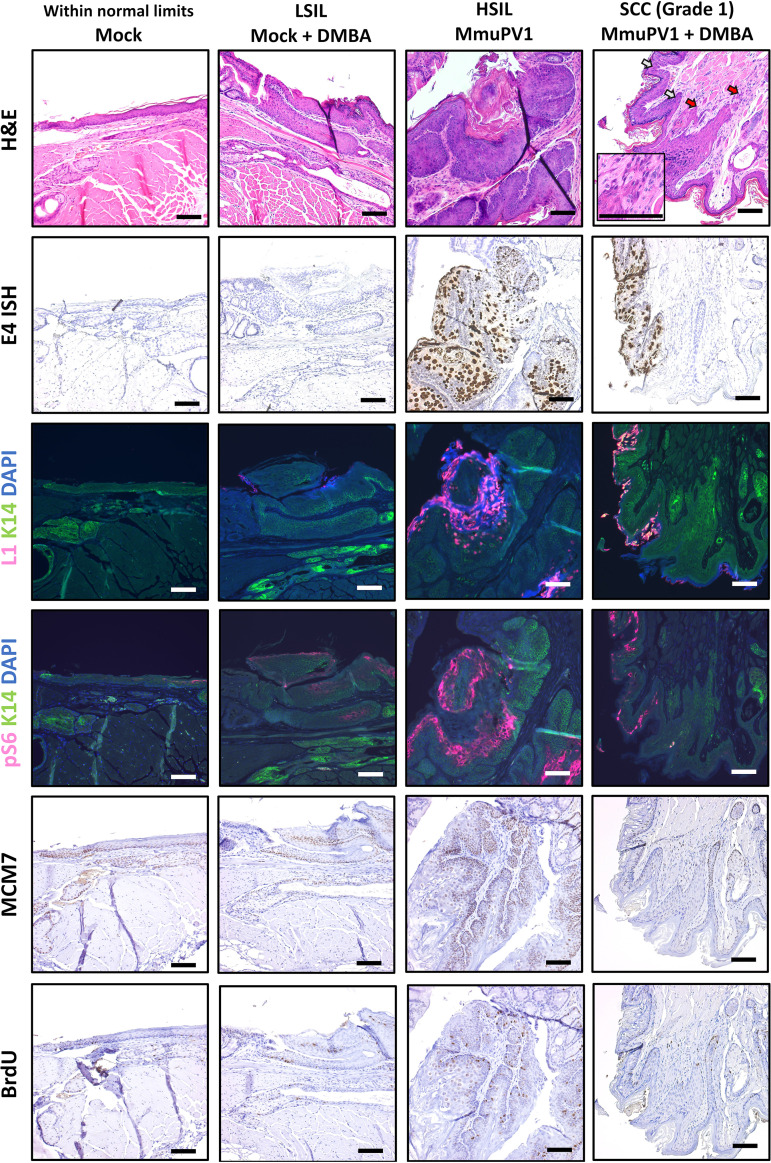
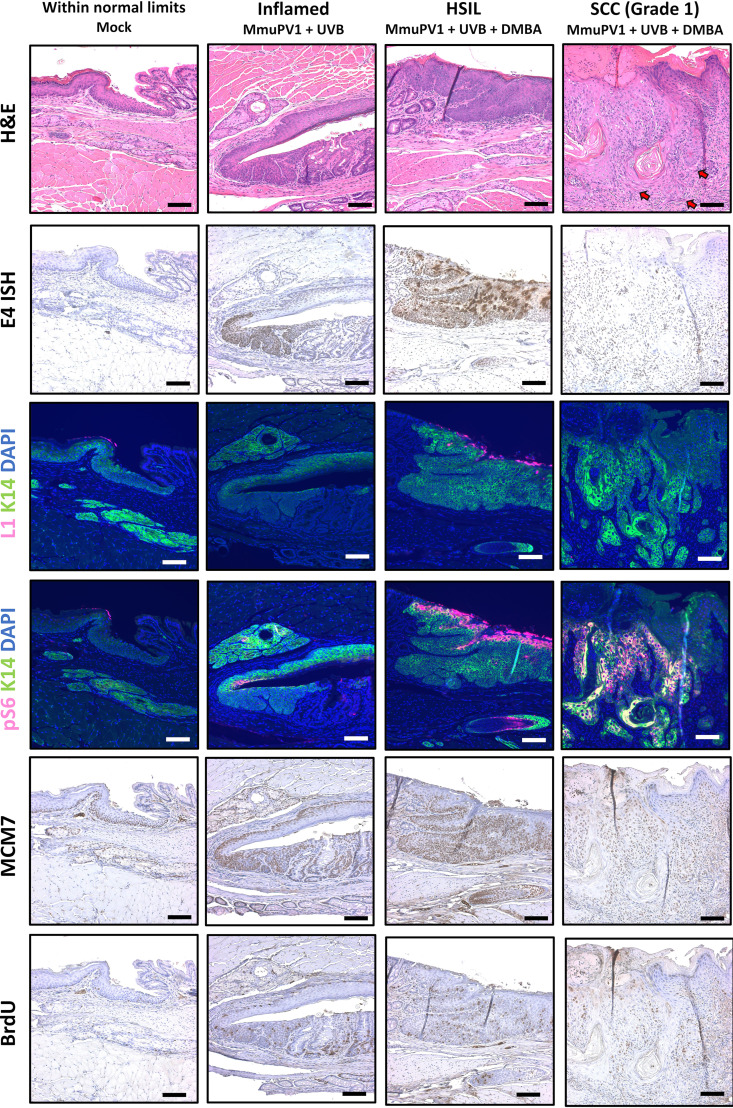
Up to 95% of all anal cancers are associated with infection by human papillomavirus (HPV); however, no established preclinical model exists for high-grade anal disease and cancer mediated by a natural papillomavirus infection. To establish an infection-mediated model, we infected both immunocompromised NSG and immunocompetent FVB/NJ mice with the recently discovered murine papillomavirus MmuPV1, with and without the additional cofactors of UV B radiation (UVB) and/or the chemical carcinogen 7,12-dimethylbenz(a)anthracene (DMBA). Infections were tracked via lavages and swabs for MmuPV1 DNA, and pathology was assessed at the endpoint. Tissues were analyzed for biomarkers of viral infection and papillomavirus-mediated disease, and the localization of viral infection was investigated using biomarkers to characterize the anal microanatomical zones. We show, for the first time, that MmuPV1 infection is sufficient to efficiently mediate high-grade squamous intraepithelial lesions in the anal tract of mice using the NSG immunocompromised strain and that MmuPV1, in combination with the chemical carcinogen DMBA, has carcinogenic potential. We further show that MmuPV1 is able to persist for up to 6 months in the anal tract of FVB/NJ mice irradiated with UVB and contributes to high-grade disease and cancer in an immunocompetent strain. We demonstrate that MmuPV1 preferentially localizes to the anal transition zone and that this localization is not an artifact of infection methodology. This study presents a valuable new preclinical model for studying papillomavirus-mediated anal disease driven by a natural infection.
高达 95%的肛门癌与人类乳头瘤病毒(HPV)感染有关;然而,目前还没有建立用于由天然乳头瘤病毒感染引起的高级别肛门疾病和癌症的临床前模型。为了建立感染介导的模型,我们用最近发现的鼠乳头瘤病毒 MmuPV1 感染免疫功能低下的 NSG 和免疫功能正常的 FVB/NJ 小鼠,同时存在和不存在紫外线 B 辐射(UVB)和/或化学致癌剂 7,12-二甲基苯并[a]蒽(DMBA)等额外的协同因素。通过灌洗和拭子跟踪 MmuPV1 DNA 的感染情况,并在终点评估病理学。分析组织中的病毒感染和乳头瘤病毒介导的疾病的生物标志物,并使用生物标志物研究病毒感染的定位,以表征肛门微解剖区。我们首次表明,MmuPV1 感染足以使用免疫功能低下的 NSG 鼠有效地介导肛门道中的高级别鳞状上皮内病变,并且 MmuPV1 与化学致癌剂 DMBA 结合具有致癌潜力。我们进一步表明,MmuPV1 能够在接受 UVB 照射的 FVB/NJ 小鼠的肛门道中持续存在长达 6 个月,并在免疫功能正常的菌株中导致高级别疾病和癌症。我们证明 MmuPV1 优先定位于肛门过渡区,这种定位不是感染方法的人为产物。这项研究提出了一个有价值的新临床前模型,用于研究由天然感染引起的乳头瘤病毒介导的肛门疾病。