Heine Sonja, Aguilar-Pimentel Antonio, Russkamp Dennis, Alessandrini Francesca, Gailus-Durner Valerie, Fuchs Helmut, Ollert Markus, Bredehorst Reinhard, Ohnmacht Caspar, Zissler Ulrich M, Hrabě de Angelis Martin, Schmidt-Weber Carsten B, Blank Simon
Center of Allergy and Environment (ZAUM), Technical University of Munich, School of Medicine and Helmholtz Center Munich, German Research Center for Environmental Health, 85764 Munich, Germany.
Institute of Experimental Genetics, German Mouse Clinic, Helmholtz Center Munich, German Research Center for Environmental Health, 85764 Neuherberg, Germany.
Pharmaceutics. 2022 Jul 22;14(8):1527. doi: 10.3390/pharmaceutics14081527.
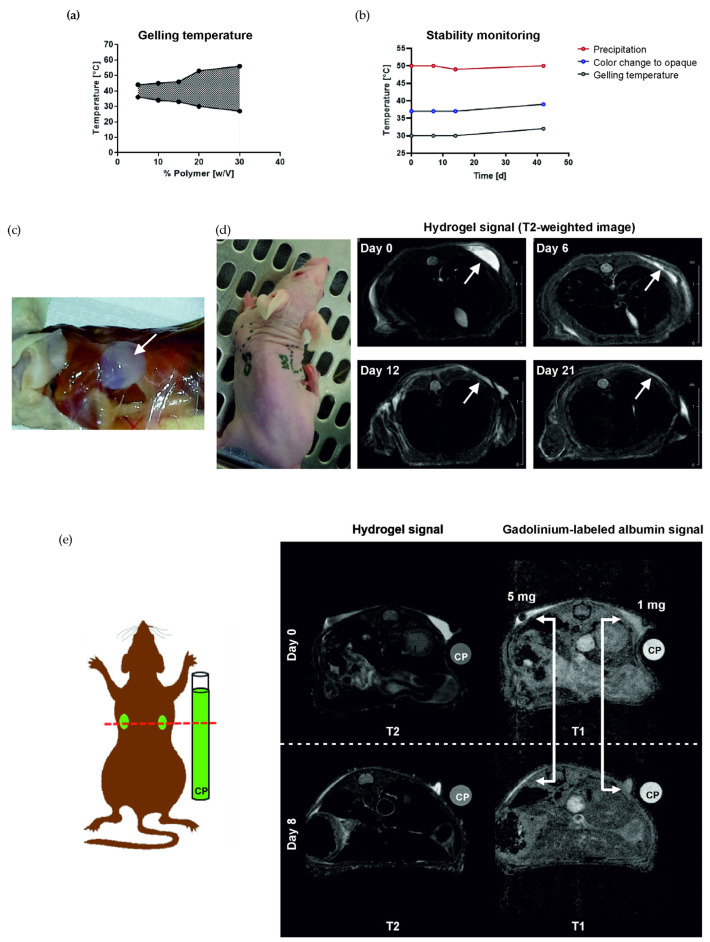
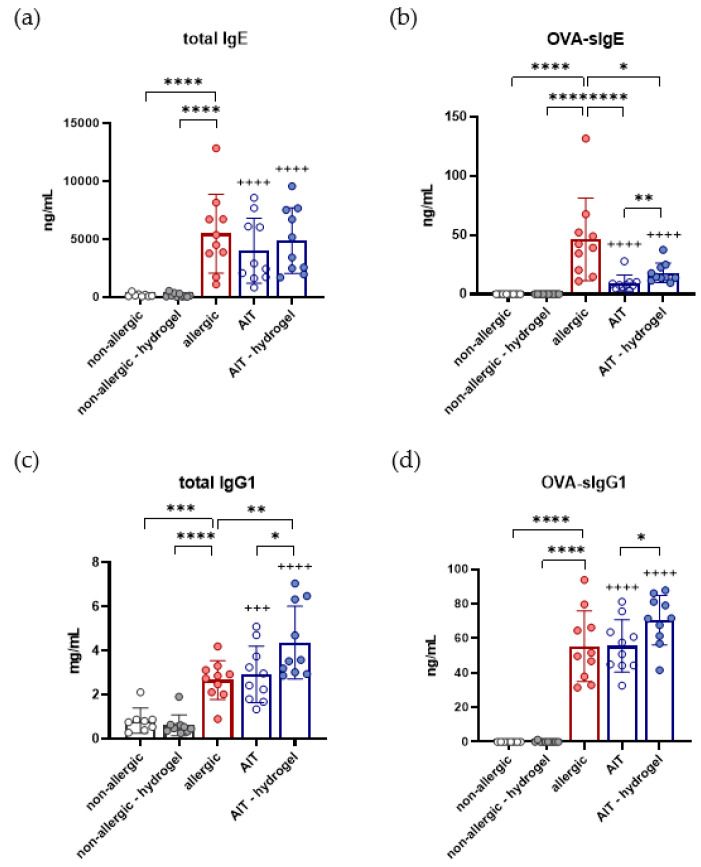
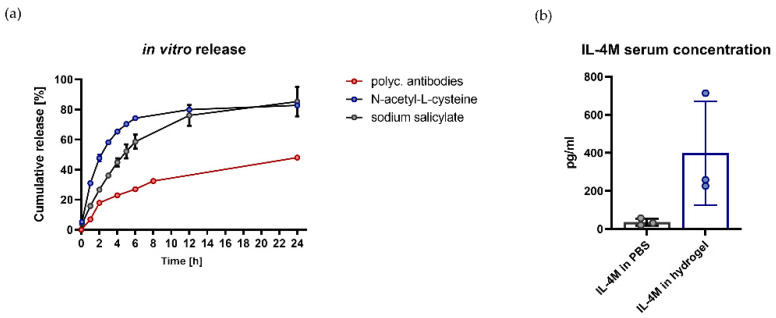
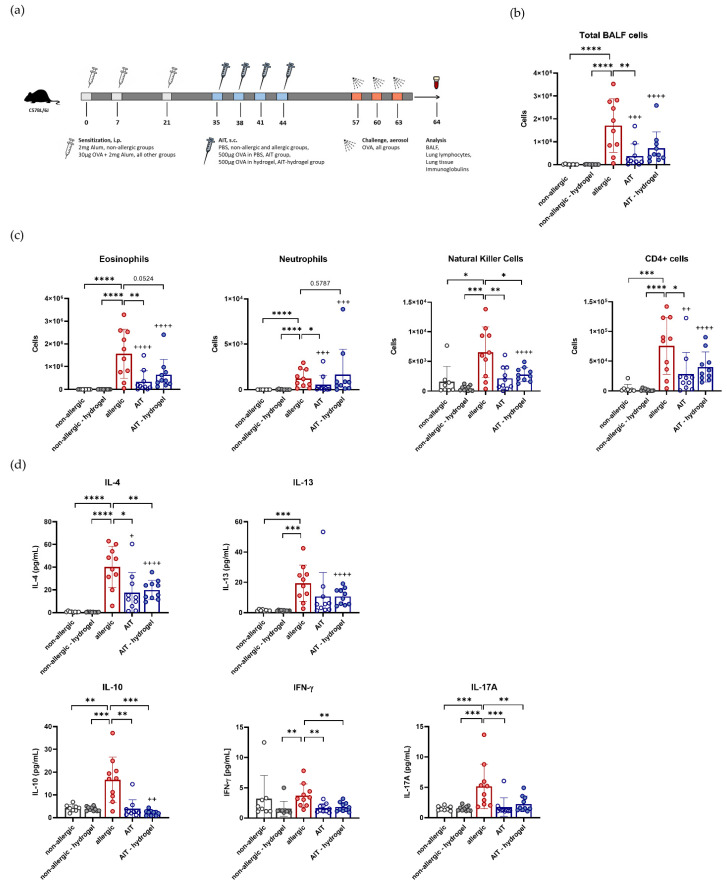
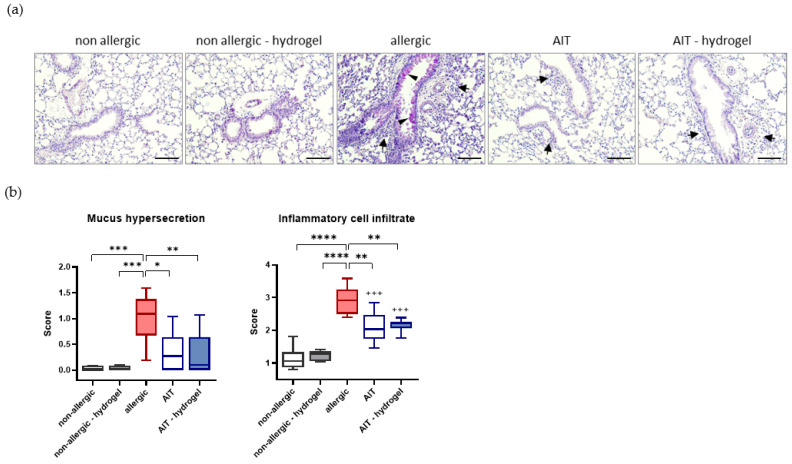
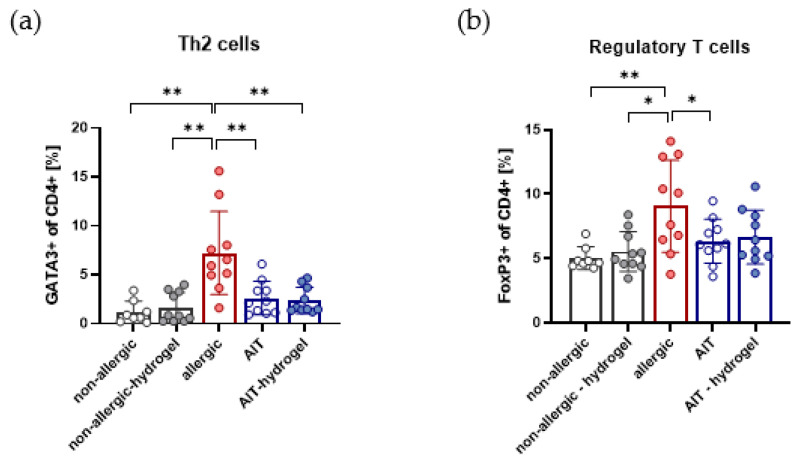
Allergen-specific immunotherapy (AIT) is the only currently available curative treatment option for allergic diseases. AIT often includes depot-forming and immunostimulatory adjuvants, to prolong allergen presentation and to improve therapeutic efficacy. The use of aluminium salts in AIT, which are commonly used as depot-forming adjuvants, is controversially discussed, due to health concerns and Th2-promoting activity. Therefore, there is the need for novel delivery systems in AIT with similar therapeutic efficacy compared to classical AIT strategies. In this study, a triblock copolymer (hydrogel) was assessed as a delivery system for AIT in a murine model of allergic asthma. We show that the hydrogel combines the advantages of both depot function and biodegradability at the same time. We further demonstrate the suitability of hydrogel to release different bioactive compounds in vitro and in vivo. AIT delivered with hydrogel reduces key parameters of allergic inflammation, such as inflammatory cell infiltration, mucus hypersecretion, and allergen-specific IgE, in a comparable manner to standard AIT treatment. Additionally, hydrogel-based AIT is superior in inducing allergen-specific IgG antibodies with potentially protective functions. Taken together, hydrogel represents a promising delivery system for AIT that is able to combine therapeutic allergen administration with the prolonged release of immunomodulators at the same time.
变应原特异性免疫疗法(AIT)是目前唯一可用于治疗过敏性疾病的治愈性疗法。AIT通常包括形成储存库和免疫刺激的佐剂,以延长变应原的呈递并提高治疗效果。由于健康问题和促进Th2的活性,在AIT中使用通常用作形成储存库佐剂的铝盐存在争议。因此,需要在AIT中开发与传统AIT策略具有相似治疗效果的新型递送系统。在本研究中,一种三嵌段共聚物(水凝胶)在过敏性哮喘小鼠模型中被评估为AIT的递送系统。我们表明,该水凝胶同时兼具储存库功能和生物可降解性的优点。我们进一步证明了水凝胶在体外和体内释放不同生物活性化合物的适用性。与标准AIT治疗相比,用水凝胶递送的AIT以可比的方式降低了过敏性炎症的关键参数,如炎症细胞浸润、黏液高分泌和变应原特异性IgE。此外,基于水凝胶的AIT在诱导具有潜在保护功能的变应原特异性IgG抗体方面更具优势。综上所述,水凝胶是一种很有前景的AIT递送系统,能够将治疗性变应原给药与免疫调节剂的缓释结合起来。