Institute of Neuroscience and Medicine (INM-1), Research Centre Jülich, Jülich, Germany.
Institute for Anatomy I, Medical Faculty & University Hospital Düsseldorf, Heinrich Heine University, Düsseldorf, Germany.
Brain Struct Funct. 2023 Jan;228(1):83-102. doi: 10.1007/s00429-022-02529-3. Epub 2022 Jul 29.
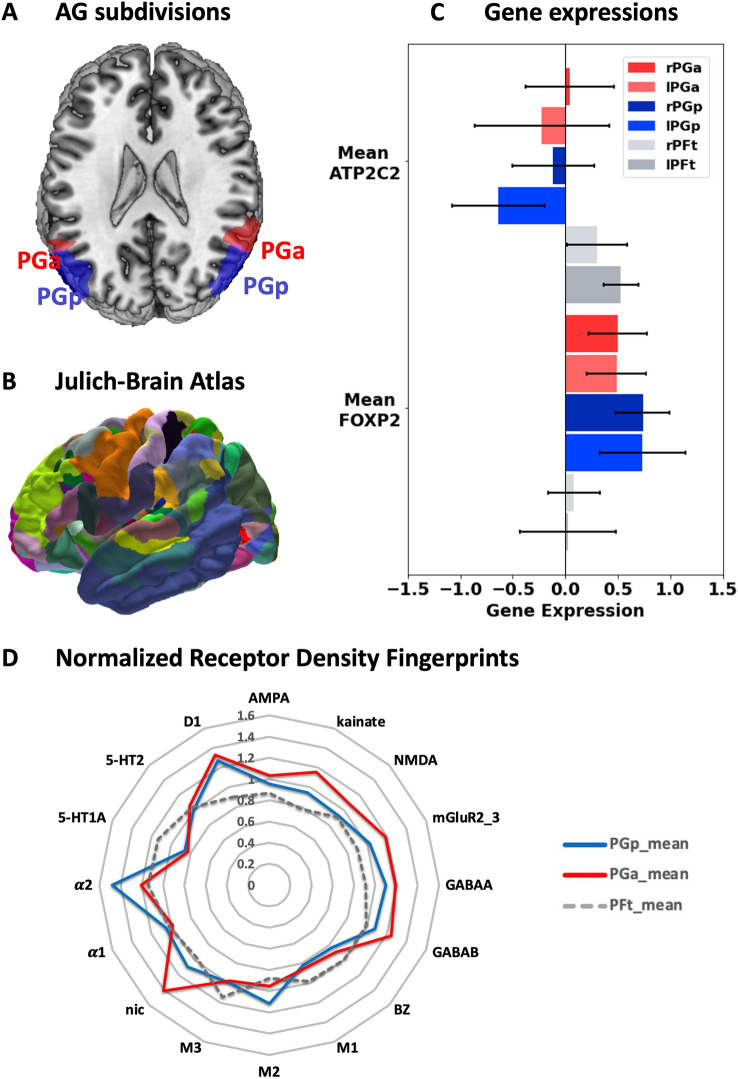
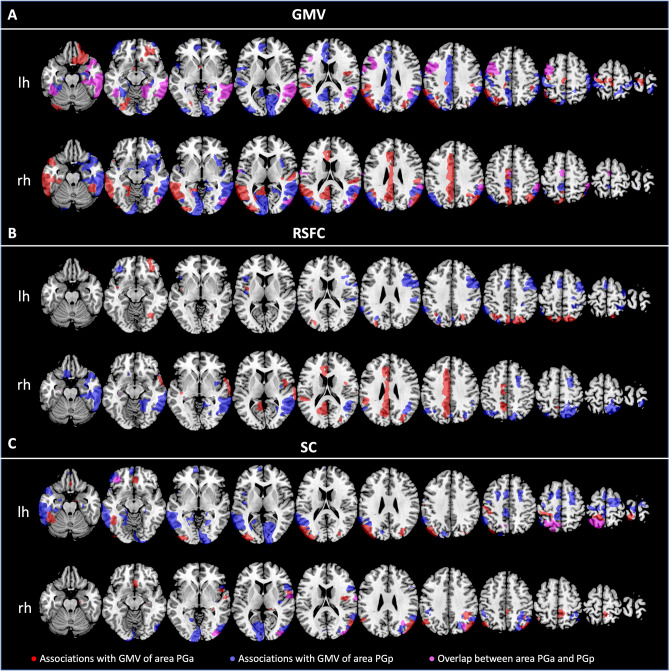
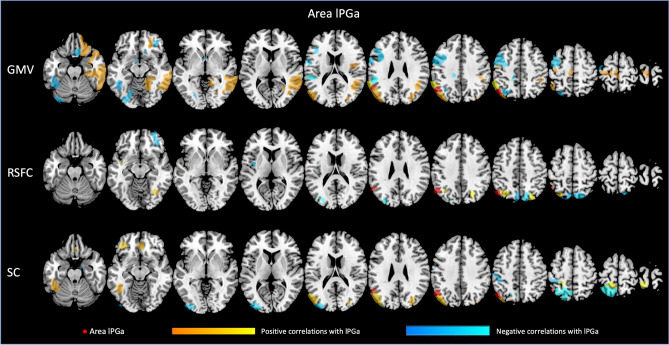
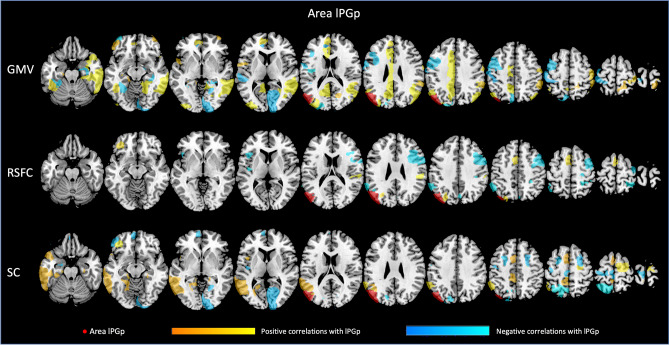
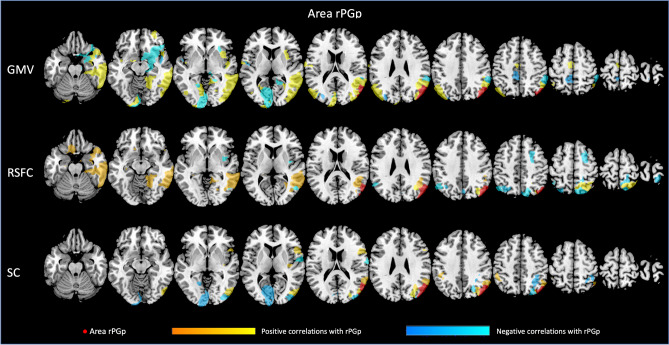
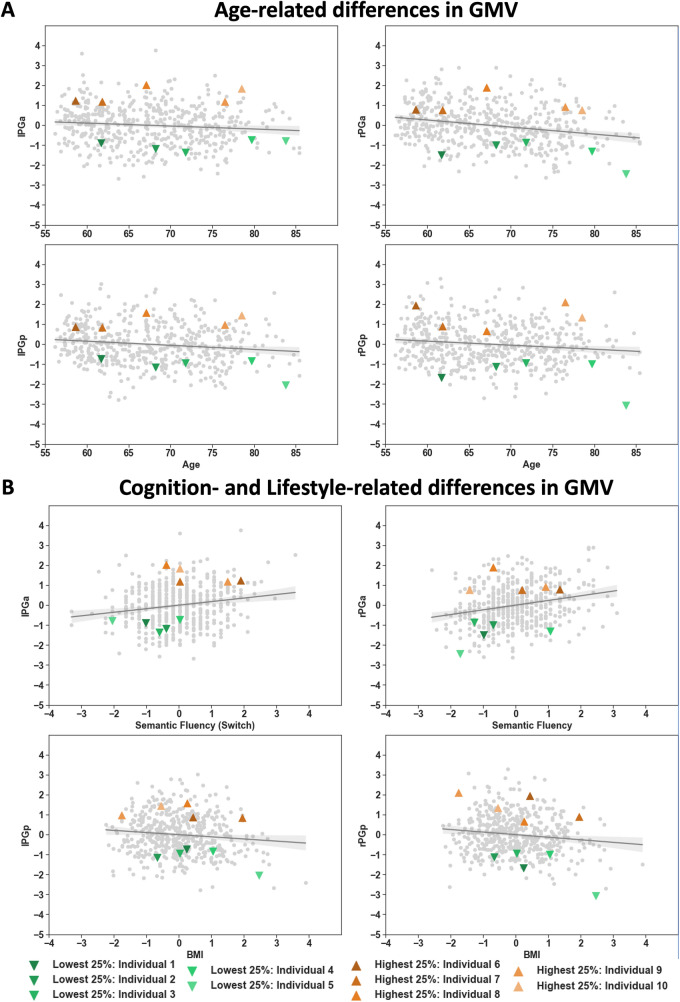
The angular gyrus (AG) has been associated with multiple cognitive functions, such as language, spatial and memory functions. Since the AG is thought to be a cross-modal hub region suffering from significant age-related structural atrophy, it may also play a key role in age-related cognitive decline. However, the exact relation between structural atrophy of the AG and cognitive decline in older adults is not fully understood, which may be related to two aspects: First, the AG is cytoarchitectonically divided into two areas, PGa and PGp, potentially sub-serving different cognitive functions. Second, the older adult population is characterized by high between-subjects variability which requires targeting individual phenomena during the aging process. We therefore performed a multimodal (gray matter volume [GMV], resting-state functional connectivity [RSFC] and structural connectivity [SC]) characterization of AG subdivisions PGa and PGp in a large older adult population, together with relations to age, cognition and lifestyle on the group level. Afterwards, we switched the perspective to the individual, which is especially important when it comes to the assessment of individual patients. The AG can be considered a heterogeneous structure in of the older brain: we found the different AG parts to be associated with different patterns of whole-brain GMV associations as well as their associations with RSFC, and SC patterns. Similarly, differential effects of age, cognition and lifestyle on the GMV of AG subdivisions were observed. This suggests each region to be structurally and functionally differentially involved in the older adult's brain network architecture, which was supported by differential molecular and genetic patterns, derived from the EBRAINS multilevel atlas framework. Importantly, individual profiles deviated considerably from the global conclusion drawn from the group study. Hence, general observations within the older adult population need to be carefully considered, when addressing individual conditions in clinical practice.
角回(AG)与多种认知功能有关,如语言、空间和记忆功能。由于 AG 被认为是一个跨模态枢纽区域,会受到显著的与年龄相关的结构萎缩的影响,因此它也可能在与年龄相关的认知能力下降中发挥关键作用。然而,AG 的结构萎缩与老年人认知能力下降的确切关系尚不完全清楚,这可能与两个方面有关:首先,AG 在细胞构筑上分为两个区域,PGa 和 PGp,可能分别为不同的认知功能服务。其次,老年人群的特点是受试者间的高度变异性,这需要在衰老过程中针对个体现象进行研究。因此,我们在一个大型老年人群中对 AG 亚区 PGa 和 PGp 进行了多模态(灰质体积[GMV]、静息态功能连接[RSFC]和结构连接[SC])特征描述,并在组水平上探讨了它们与年龄、认知和生活方式的关系。然后,我们从个体的角度出发,这在评估个体患者时尤为重要。AG 可以被认为是老年大脑中的一个异构结构:我们发现不同的 AG 部分与全脑 GMV 关联以及与 RSFC 和 SC 模式的不同关联模式有关。同样,年龄、认知和生活方式对 AG 亚区 GMV 的影响也存在差异。这表明每个区域在老年人大脑网络结构中都具有结构和功能上的差异参与,这得到了来自 EBRAINS 多层次图谱框架的不同分子和遗传模式的支持。重要的是,个体特征与从群组研究中得出的整体结论有很大的差异。因此,在临床实践中处理个体情况时,需要仔细考虑老年人群体中的一般观察结果。