State Key Laboratory for Modification of Chemical Fibers and Polymer Materials, College of Chemistry, Chemical Engineering and Biotechnology & Center for Advanced Low-dimension Materials, Donghua University, 2999 North Renmin Road, Shanghai, 201620, China.
Jülich Centre for Neutron Science (JCNS) at Heinz Maier-Leibnitz Zentrum (MLZ) Forschungszentrum Jülich, Lichtenbergstr. 1, 85748, Garching, Germany.
Nat Commun. 2022 Jul 29;13(1):4411. doi: 10.1038/s41467-022-32140-3.
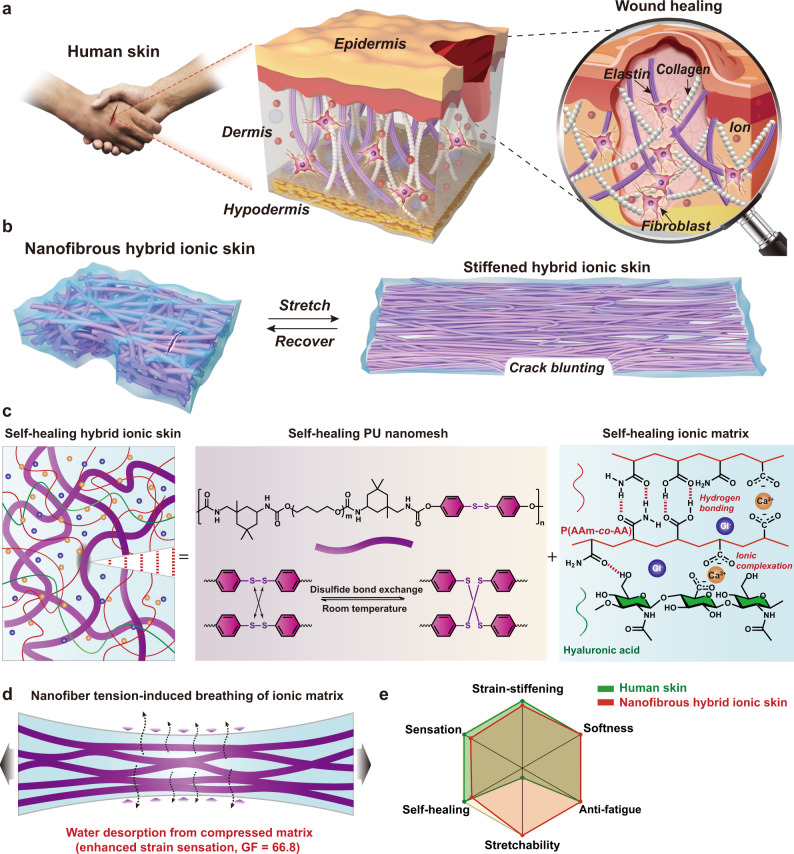
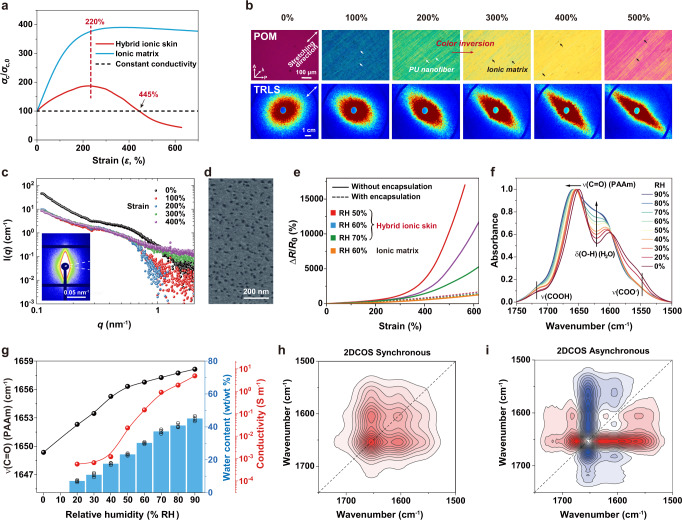
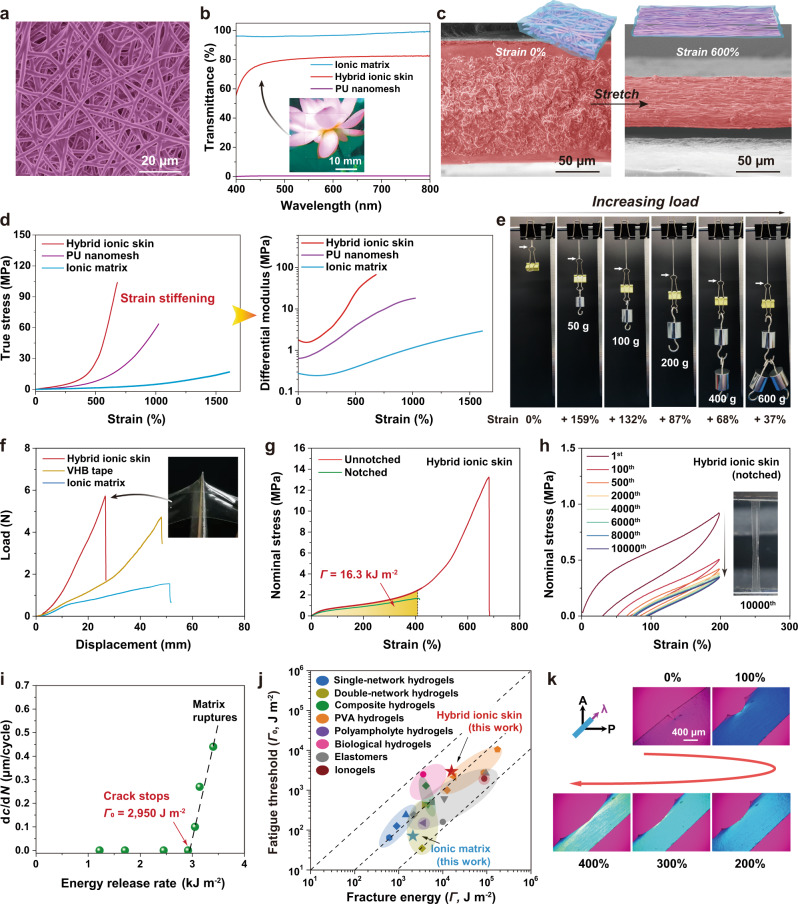
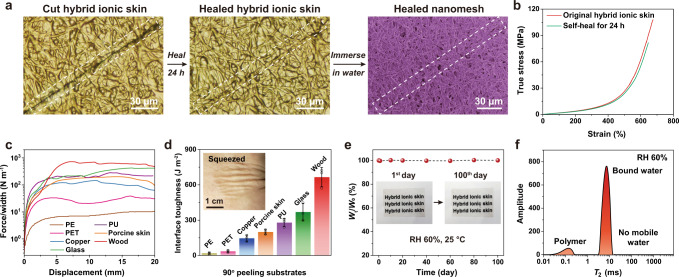
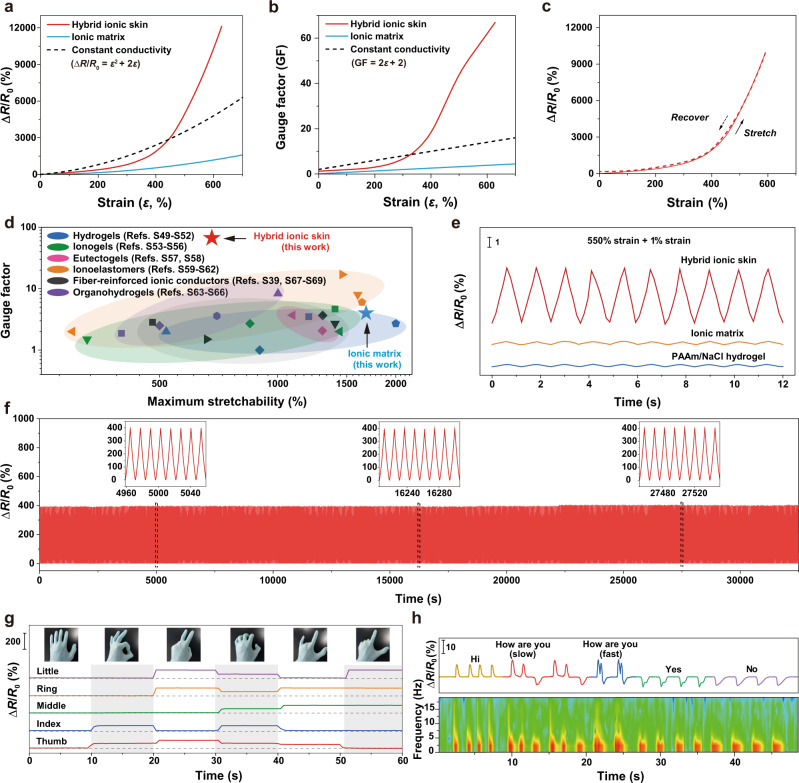
Robust ionic sensing materials that are both fatigue-resistant and self-healable like human skin are essential for soft electronics and robotics with extended service life. However, most existing self-healable artificial ionic skins produced on the basis of network reconfiguration suffer from a low fatigue threshold due to the easy fracture of low-energy amorphous polymer chains with susceptible crack propagation. Here we engineer a fatigue-free yet fully healable hybrid ionic skin toughened by a high-energy, self-healable elastic nanomesh, resembling the repairable nanofibrous interwoven structure of human skin. Such a design affords a superhigh fatigue threshold of 2950 J m while maintaining skin-like compliance, stretchability, and strain-adaptive stiffening response. Moreover, nanofiber tension-induced moisture breathing of ionic matrix leads to a record-high strain-sensing gauge factor of 66.8, far exceeding previous intrinsically stretchable ionic conductors. This concept creates opportunities for designing durable ion-conducting materials that replicate the unparalleled combinatory properties of natural skins more precisely.
类似于人类皮肤的、既抗疲劳又可自修复的稳健型离子传感材料对于具有延长使用寿命的软电子产品和机器人来说至关重要。然而,大多数现有的基于网络重构的自修复人工离子皮肤由于低能量非晶聚合物链容易断裂且易发生裂纹扩展,其疲劳阈值较低。在这里,我们设计了一种无疲劳且完全可修复的混合离子皮肤,其强度由高能自修复弹性纳米网提供,类似于具有可修复纳米纤维交织结构的人类皮肤。这种设计提供了超高的疲劳阈值 2950 J m,同时保持了类似皮肤的顺应性、拉伸性和应变自适应增强响应。此外,纳米纤维引起的离子基质的拉伸诱导的水分呼吸导致创纪录的高应变传感灵敏系数为 66.8,远远超过以前的固有可拉伸离子导体。这一概念为设计耐用的离子传导材料提供了机会,这些材料可以更精确地复制天然皮肤无与伦比的组合特性。