School of Health Management and Information Sciences, Iran University of Medical Sciences, Tehran, Iran.
Virtual School of Medical Education and Management, Shahid Beheshti University of Medical Sciences, Tehran, Iran.
BMC Health Serv Res. 2022 Jul 30;22(1):977. doi: 10.1186/s12913-022-08316-4.
Hospitals are the biggest users of the health system budgets. Policymakers are interested in improving hospital efficiency while maintaining their performance during the economic crisis. This study aims at analysing the hospitals' policy solutions during the economic crisis using the resilience system capacities framework.
This study is a systematic review. The search strategy was implemented on the Web of Science, PubMed, Embase, Scopus databases, and Econbiz search portal. Data were extracted and analysed through the comparative table of resilience system capacities framework and the World Health Organization (WHO) health system's six building blocks (i.e., leadership and governance, service delivery, health workforce, health systems financing, health information systems, and medicines and equipment).
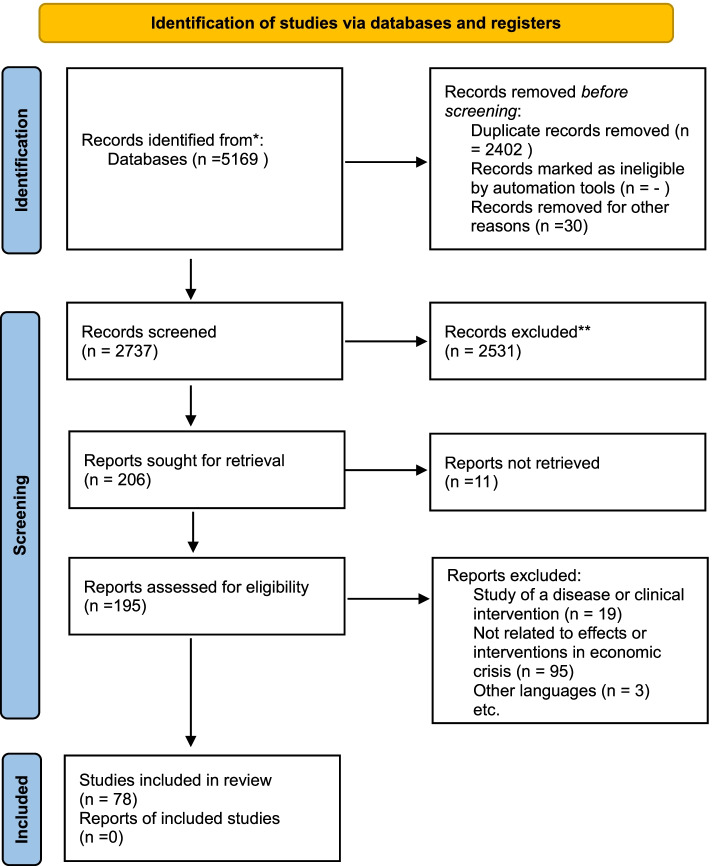
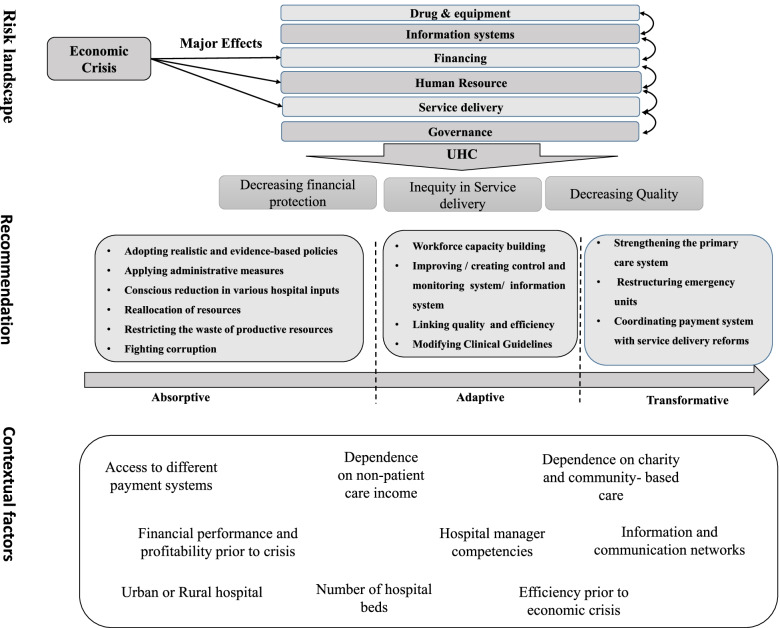
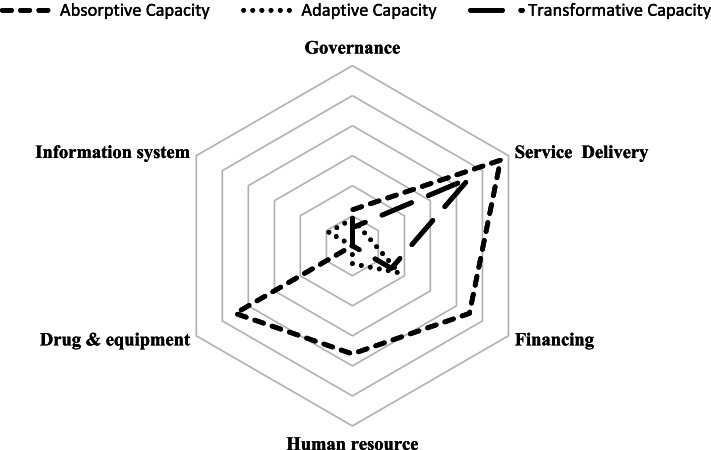
After the screening, 78 studies across 36 countries were reviewed. The economic crisis and adopted policies had a destructive effect on hospital contribution in achieving Universal Health Coverage (UHC). The short-term absorptive capacity policies were the most frequent policies against the economic crisis. Moreover, the least frequent and most effective policies were adaptive policies. Transformative policies mainly focused on moving from hospital-based to integrated and community-based services. The strength of primary care and community-based services, types and combination of hospital financing systems, hospital performance before the crisis, hospital managers' competencies, and regional, specialties, and ownership differences between hospitals can affect the nature and success of adopted policies.
The focus of countries on short-term policies and undermining necessary contextual factors, prioritizing efficiency over quality, and ignoring the interrelation of policies compromised hospital contribution in UHC.
医院是卫生系统预算的最大使用者。政策制定者有兴趣在经济危机期间提高医院效率,同时保持其绩效。本研究旨在使用弹性系统能力框架分析医院在经济危机期间的政策解决方案。
这是一项系统评价研究。搜索策略在 Web of Science、PubMed、Embase、Scopus 数据库和 Econbiz 搜索门户上实施。通过比较弹性系统能力框架和世界卫生组织(WHO)卫生系统六个组成部分(即领导力和治理、服务提供、卫生人力、卫生系统筹资、卫生信息系统以及药品和设备)的表格提取和分析数据。
经过筛选,共回顾了来自 36 个国家的 78 项研究。经济危机和采取的政策对医院在实现全民健康覆盖(UHC)方面的贡献产生了破坏性影响。针对经济危机的短期吸收能力政策是最常见的政策。此外,适应性政策是最不常见但最有效的政策。转型政策主要侧重于从以医院为基础的服务转向综合和以社区为基础的服务。初级保健和以社区为基础的服务的优势、医院筹资系统的类型和组合、危机前医院的绩效、医院管理者的能力以及医院之间的区域、专业和所有权差异,都可能影响所采用政策的性质和成功。
各国对短期政策的关注以及对必要的背景因素的破坏、对效率的重视超过质量,以及对政策相互关系的忽视,都影响了医院在全民健康覆盖方面的贡献。