Chen Liyuan, Wang Lifei, Wang Yi, Hu Haishan, Zhan Yuan, Zeng Zhilin, Liu Lidan
Department of Obstetrics and Gynecology, Wuhan No 1 Hospital, Wuhan, China.
Second Clinical College, Tongji Hospital, Tongji Medical College, Huazhong University of Science and Technology, Wuhan, China.
Front Genet. 2022 Jul 15;13:908482. doi: 10.3389/fgene.2022.908482. eCollection 2022.
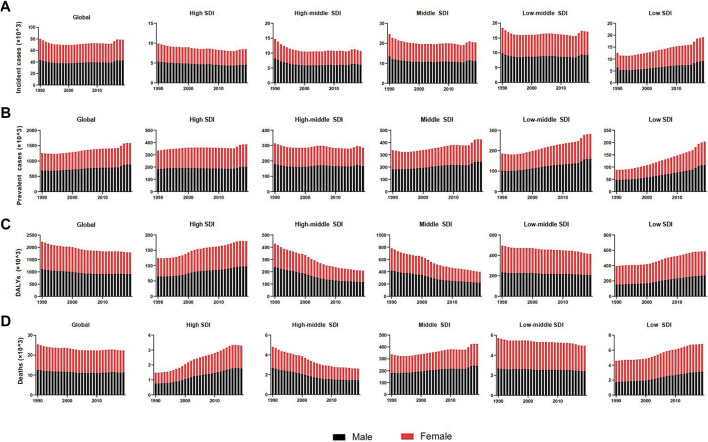
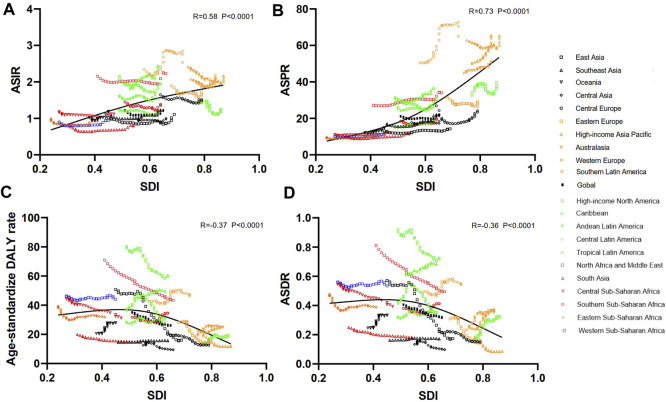
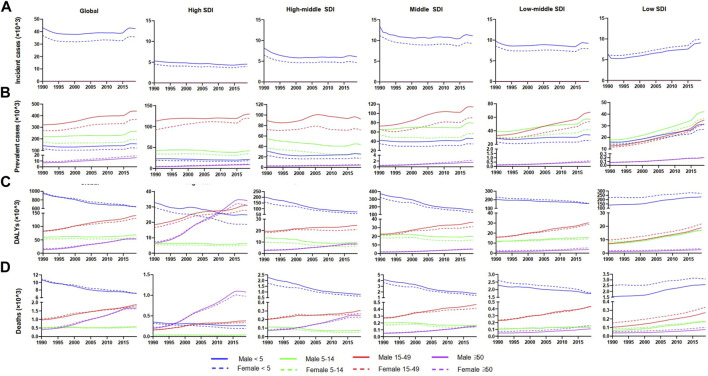
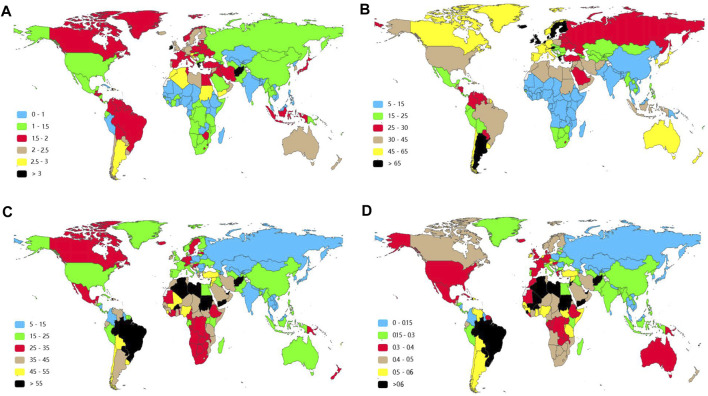
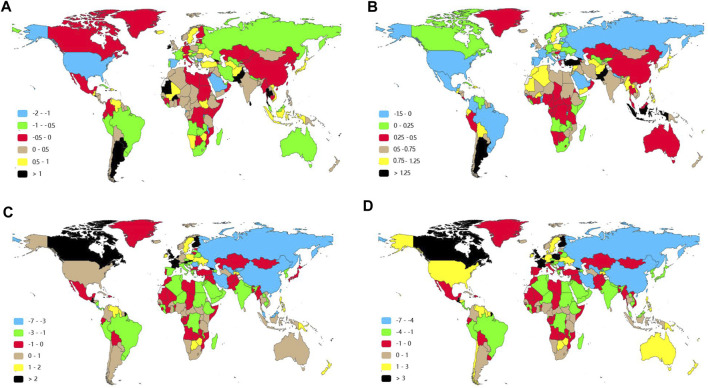
Down syndrome (DS) is the leading cause of genetically defined intellectual disability and congenital birth defects worldwide. A large population of people diagnosed with DS globally is posing an enormous socioeconomic burden. However, the global burden and trends of DS have not been reported. Based on the data from the Global Burden of Disease database in 2019, we analyzed the incidence, prevalence, disability-adjusted life years (DALYs), and death of DS from 1990 to 2019 according to sex, age, regions, and social-demographic index (SDI). Then, age-standardized rates (ASRs) and estimated annual percentage change (EAPC) of these aforementioned indexes were calculated to evaluate the temporal trend of DS. Finally, the association of SDI with DS epidemiological parameters was assessed. In the past 30 years, the incident cases, age-standardized incident rate (ASIR), and age-standardized prevalent rate (ASPR) of DS first decreased slightly and subsequently increased globally. The number of prevalent cases increased steadily, while the number and age-standardized rate (ASRs) of DALYs and deaths decreased gradually from 1990 to 2019. In the meantime, disease burdens were different across various SDI regions. The prevalent cases and ASPR for both sexes were increasing in all SDI regions except for the high-middle SDI region. At the national level, Brunei Darussalam, Ireland, and Haiti were the top three countries with the highest ASIR in 2019. Georgia was in the top three with the highest increase in ASRs of four parameters, while Serbia was consistently ranked in the top three with fastest declining. Furthermore, we found that ASIR and ASPR were positively correlated with SDI, yet the age-standardized DALYs and age-standardized death rate (ASDR) were negatively correlated with SDI. In the past 30 years, the burden and trends of DS were heterogeneous across different regions and countries with different sociodemographic characteristics. Great improvements had been achieved in reducing DALYs and deaths globally. However, the increased number and ASRs of incident and prevalent cases in some regions, especially in low SDI regions, were contributing to numerous challenges to public health. The findings may provide valuable information to the development or implementation of more effective measures.
唐氏综合征(DS)是全球范围内基因导致的智力残疾和先天性出生缺陷的主要原因。全球大量被诊断为唐氏综合征的人群带来了巨大的社会经济负担。然而,唐氏综合征的全球负担和趋势尚未见报道。基于2019年全球疾病负担数据库的数据,我们根据性别、年龄、地区和社会人口指数(SDI)分析了1990年至2019年唐氏综合征的发病率、患病率、伤残调整生命年(DALYs)和死亡率。然后,计算这些上述指标的年龄标准化率(ASRs)和估计年百分比变化(EAPC),以评估唐氏综合征的时间趋势。最后,评估SDI与唐氏综合征流行病学参数的关联。在过去30年里,全球唐氏综合征的发病病例、年龄标准化发病率(ASIR)和年龄标准化患病率(ASPR)先略有下降,随后上升。患病病例数稳步增加,而从1990年到2019年,DALYs和死亡的数量及年龄标准化率(ASRs)逐渐下降。与此同时,不同SDI地区的疾病负担有所不同。除高中等SDI地区外,所有SDI地区男女的患病病例和ASPR均呈上升趋势。在国家层面,文莱达鲁萨兰国、爱尔兰和海地是2019年ASIR最高的前三个国家。格鲁吉亚在四个参数的ASRs增长最高的国家中位列前三,而塞尔维亚一直是下降最快的前三个国家之一。此外,我们发现ASIR和ASPR与SDI呈正相关,而年龄标准化DALYs和年龄标准化死亡率(ASDR)与SDI呈负相关。在过去30年里,不同地区和具有不同社会人口特征的国家中,唐氏综合征的负担和趋势存在异质性。在全球范围内减少DALYs和死亡方面已取得了巨大进展。然而,一些地区,特别是低SDI地区,发病和患病病例数量及ASRs的增加给公共卫生带来了诸多挑战。这些研究结果可能为制定或实施更有效的措施提供有价值的信息。