Mu Lin, Dong Zhiguo, Zhang Yinjian
Department of Ophthalmology, Longhua Hospital Shanghai University of Traditional Chinese Medicine, Shanghai 200032, China.
Evid Based Complement Alternat Med. 2022 Jul 20;2022:8336131. doi: 10.1155/2022/8336131. eCollection 2022.
In this study, we investigated the mechanism of Qing-Gan Li-Shui formulation (QGLSF) in treating primary open glaucoma (POAG) by network pharmacology and experiments.
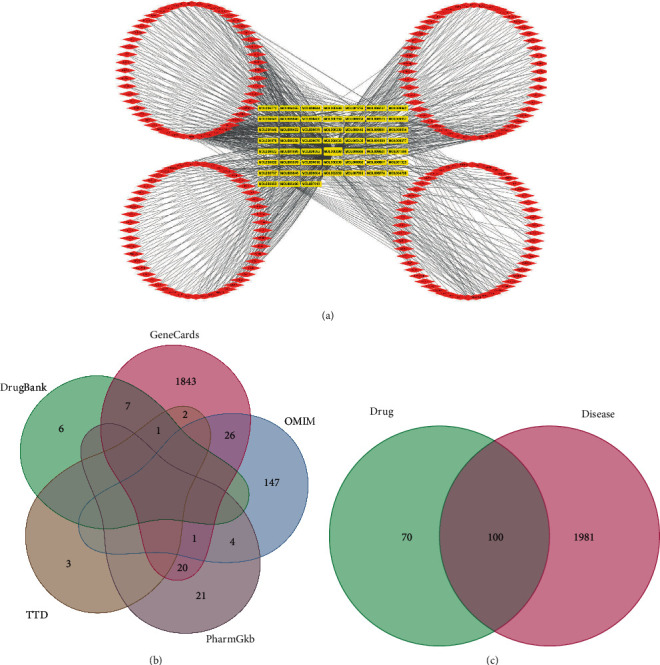
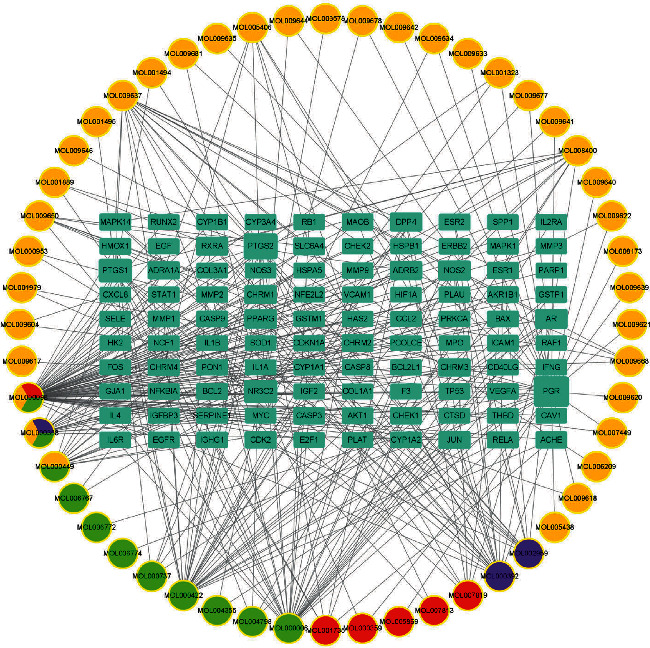
The active pharmaceutical ingredients (APIs) of GLQSF (prepared with vulgaris, Kudzu root, , and ) were obtained from the Traditional Chinese Medicine Systems Pharmacology Database and Analysis Platform (TCMSP) and Yet Another Traditional Chinese Medicine database (YATCM). The targets of POAG were screened out with GeneCards, OMIM, PharmGKB, Therapeutic Target Database (TTD), and DrugBank databases. The Venny platform was used to summarize the core targets. Topological analysis was performed using Cytoscape3.8.0. A protein-protein interaction network was plotted by STRING online. The key targets were subjected to GO and KEGG enrichment analyses. Finally, the effects of APIs were verified by a model of chloride hexahydrate (CoCl)-induced retinal ganglion cells-5 (RGC-5).
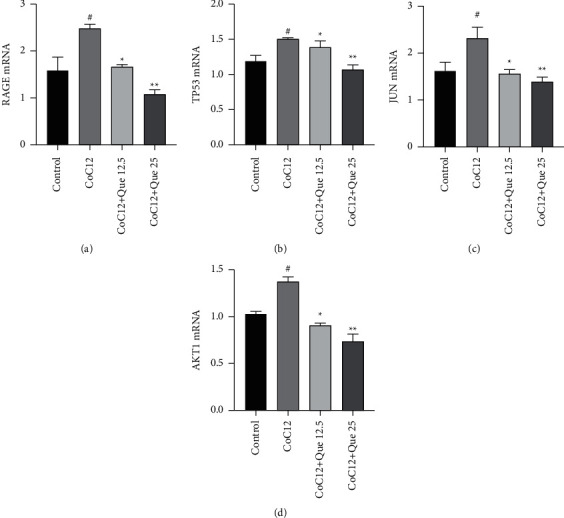
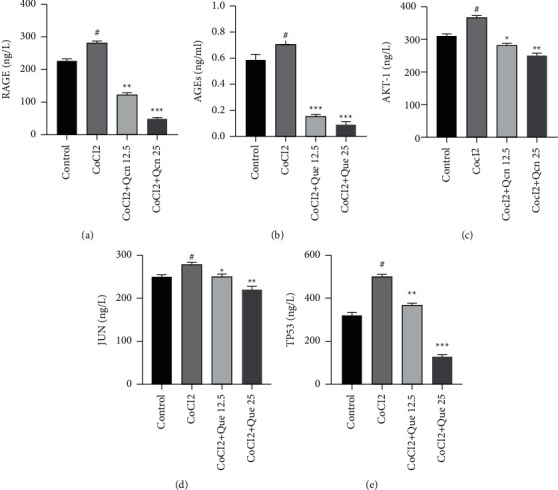
The main APIs were selected as quercetin (Que) by network pharmacology. Nine clusters of QGLSF targets were obtained by the PPI network analysis, including AKT-1, TP53, and JUN. KEGG enrichment analysis showed that these targets were mainly involved in the AGE-RAGE signaling pathway. By experiments, Que promoted cell proliferation. The secretion of AKT-1, TP53, JUN, AGE, and RAGE in the cell culture supernatant decreased, as shown by ELISA. The mRNA levels of AKT-1, TP53, JUN, and RAGE decreased, as shown by RT-PCR. QGLSF may employ the AGE-RAGE signaling pathway to counter POAG.
This study preliminarily elucidates the efficacy and mechanism of QGLSF in the treatment of POAG.
在本研究中,我们通过网络药理学和实验研究清肝利水方(QGLSF)治疗原发性开角型青光眼(POAG)的机制。
清肝利水方(由[具体药材1]、葛根、[具体药材2]和[具体药材3]制备)的活性药物成分(APIs)从中药系统药理学数据库与分析平台(TCMSP)和另一个中药数据库(YATCM)中获取。通过GeneCards、OMIM、PharmGKB、治疗靶点数据库(TTD)和药物银行数据库筛选出POAG的靶点。使用Venny平台总结核心靶点。使用Cytoscape3.8.0进行拓扑分析。通过STRING在线绘制蛋白质-蛋白质相互作用网络。对关键靶点进行基因本体(GO)和京都基因与基因组百科全书(KEGG)富集分析。最后,通过六水合氯化钴(CoCl)诱导的视网膜神经节细胞-5(RGC-5)模型验证APIs的作用。
通过网络药理学选择主要的活性药物成分为槲皮素(Que)。通过蛋白质-蛋白质相互作用(PPI)网络分析获得清肝利水方九个靶点簇,包括蛋白激酶B-1(AKT-1)、肿瘤蛋白p53(TP53)和原癌基因蛋白c-Jun(JUN)。KEGG富集分析表明这些靶点主要参与晚期糖基化终末产物-晚期糖基化终末产物受体(AGE-RAGE)信号通路。通过实验,槲皮素促进细胞增殖。酶联免疫吸附测定(ELISA)显示细胞培养上清液中AKT-1、TP53、JUN、AGE和RAGE的分泌减少。逆转录-聚合酶链反应(RT-PCR)显示AKT-1、TP53、JUN和RAGE的mRNA水平降低。清肝利水方可能通过AGE-RAGE信号通路对抗POAG。
本研究初步阐明了清肝利水方治疗POAG的疗效和机制。