Centre for Rural Dentistry and Oral Health, Charles Sturt University, Orange, New South Wales, Australia.
Periodontics, Melbourne Dental School, The University of Melbourne, Melbourne, Victoria, Australia.
Periodontol 2000. 2022 Oct;90(1):106-124. doi: 10.1111/prd.12452. Epub 2022 Aug 1.
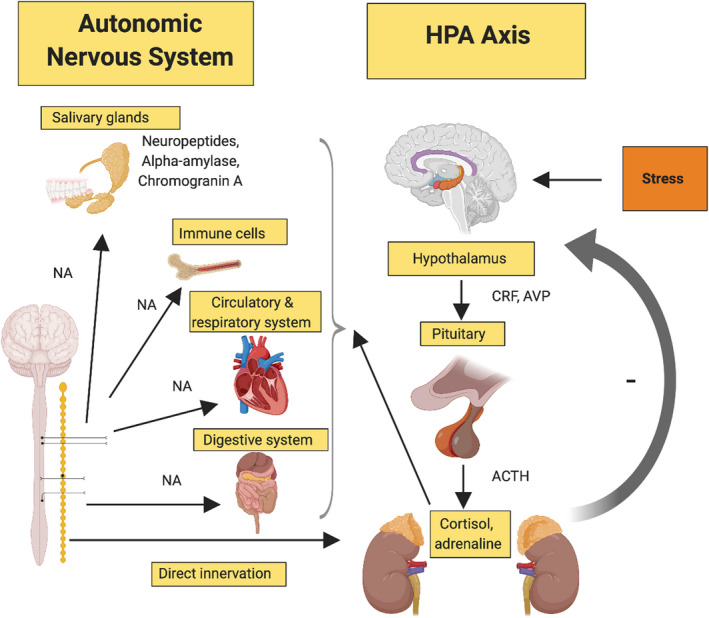
Mental health disorders, particularly depression and anxiety, affect a significant number of the global population. Several pathophysiological pathways for these disorders have been identified, including the hypothalamic-pituitary-adrenal axis, autonomic nervous system, and the immune system. In addition, life events, environmental factors, and lifestyle affect the onset, progression, and recurrence of mental health disorders. These may all overlap with periodontal and/or peri-implant disease. Mental health disorders are associated with more severe periodontal disease and, in some cases, poorer healing outcomes to nonsurgical periodontal therapy. They can result in behavior modification, such as poor oral hygiene practices, tobacco smoking, and alcohol abuse, which are also risk factors for periodontal disease and, therefore, may have a contributory effect. Stress has immunomodulatory effects regulating immune cell numbers and function, as well as proinflammatory cytokine production. Stress markers such as cortisol and catecholamines may modulate periodontal bacterial growth and the expression of virulence factors. Stress and some mental health disorders are accompanied by a low-grade chronic inflammation that may be involved in their relationship with periodontal disease and vice versa. Although the gut microbiome interacting with the central nervous system (gut-brain axis) is thought to play a significant role in mental illness, less is understood about the role of the oral microbiome. The evidence for mental health disorders on implant outcomes is lacking, but may mainly be through behaviourial changes. Through lack of compliance withoral hygiene and maintenance visits, peri-implant health can be affected. Increased smoking and risk of periodontal disease may also affect implant outcomes. Selective serotonin reuptake inhibitors have been linked with higher implant failure. They have an anabolic effect on bone, reducing turnover, which could account for the increased loss.
心理健康障碍,特别是抑郁症和焦虑症,影响了全球相当数量的人群。已经确定了这些疾病的几种病理生理途径,包括下丘脑-垂体-肾上腺轴、自主神经系统和免疫系统。此外,生活事件、环境因素和生活方式会影响心理健康障碍的发作、进展和复发。这些因素可能都与牙周病和/或种植体周围病重叠。心理健康障碍与更严重的牙周病有关,在某些情况下,非手术牙周治疗的愈合效果较差。它们可能导致行为改变,例如不良的口腔卫生习惯、吸烟和酗酒,这些也是牙周病的危险因素,因此可能具有促成作用。压力具有免疫调节作用,调节免疫细胞数量和功能,以及促炎细胞因子的产生。皮质醇和儿茶酚胺等应激标志物可能调节牙周细菌的生长和毒力因子的表达。应激和一些心理健康障碍伴随着低度慢性炎症,这可能与它们与牙周病的关系有关,反之亦然。虽然与中枢神经系统相互作用的肠道微生物群(肠-脑轴)被认为在精神疾病中发挥重要作用,但对口腔微生物群的作用了解较少。精神健康障碍对种植体结果的证据不足,但可能主要是通过行为改变。由于缺乏口腔卫生和维护访问的依从性,种植体周围的健康可能会受到影响。吸烟增加和牙周病的风险也可能影响种植体的结果。选择性 5-羟色胺再摄取抑制剂与更高的种植体失败率有关。它们对骨骼具有合成代谢作用,减少了骨转换,这可能是导致骨丢失增加的原因。