Faculty of Medicine and Health Technology, Tampere University and Tampere University Hospital, Tampere, Finland.
Pirkkala Municipal Health Centre, Pirkkala, Finland.
BMC Health Serv Res. 2022 Aug 1;22(1):983. doi: 10.1186/s12913-022-08389-1.
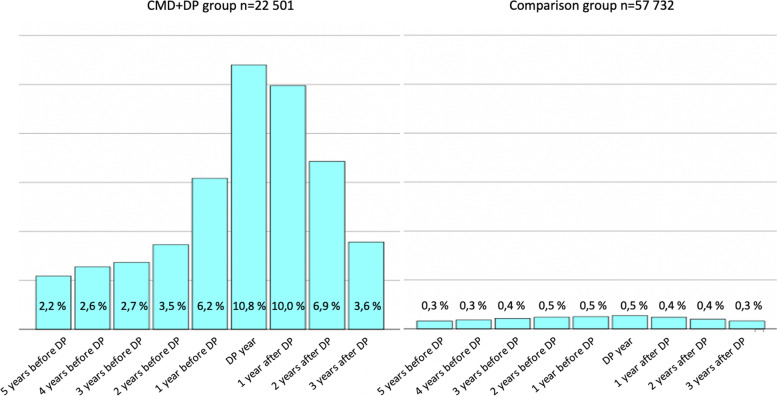
Research in high-income countries has identified low socioeconomic status as a risk factor for disability pension (DP) due to common mental disorders (CMDs). Psychotherapy is an evidence-based treatment for the majority of CMDs along with medication and it is often targeted to prevent work disability. This study examines socioeconomic differences in the use of rehabilitative psychotherapy in Finland, where citizens have universal health coverage, but psychotherapy is partly dependent on personal finance.
The study subjects (N = 22,501) were all the Finnish citizens granted a DP due to CMD between 2010 and 2015 and a comparison group (N = 57,732) matched based on age, gender, and hospital district. Socioeconomic differences in psychotherapy use were studied using logistic regression models. Socioeconomic status was defined by education, income, and occupation. Age, gender, and family status were also examined.
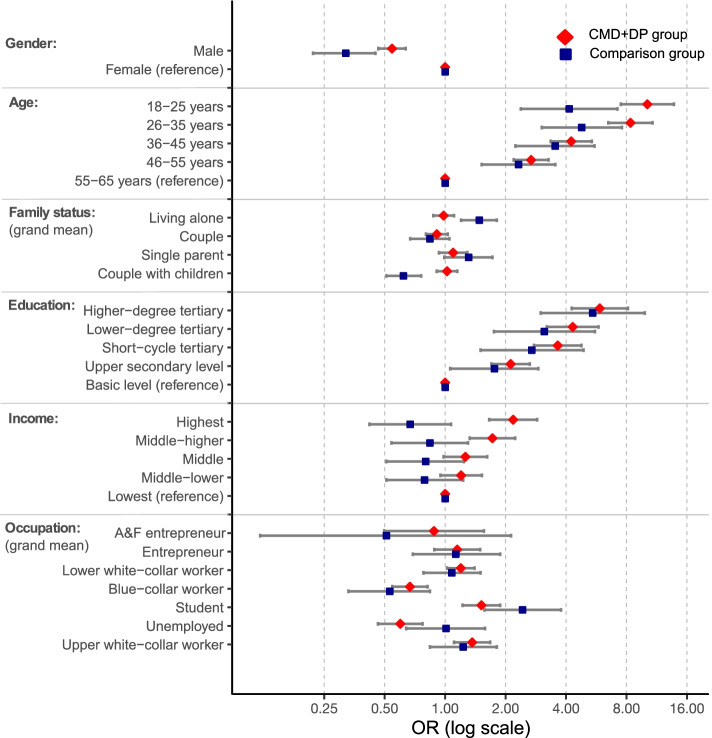
A lower level of education, lower occupational status (blue-collar worker), male gender, and older age, were associated with less frequent psychotherapy use, in both groups. Education was the strongest component of socioeconomic status associated with psychotherapy use, but the role of income was not straightforward. Unemployment when approaching DP, but not otherwise, was a risk factor for not receiving rehabilitative psychotherapy. Socioeconomic disparities were not any smaller among CMD patients approaching DP than in the comparison group.
This study demonstrates the disparity in the provision of psychotherapy for CMD patients, even on the verge of DP with an acute need for services. This disparity is partly related to a complex interplay of socioeconomic factors and the service system characteristics. Factors predisposing to unequal access to mental health services are presumably diverse and should be studied further.
在高收入国家的研究表明,社会经济地位较低是由于常见精神障碍(CMD)而导致残疾抚恤金(DP)的风险因素。心理治疗是针对大多数 CMD 的循证治疗方法,与药物治疗一起,它通常旨在预防工作残疾。本研究考察了在芬兰,公民享有全民健康覆盖,但心理治疗部分依赖个人财务的情况下,康复心理治疗的社会经济差异。
研究对象(N=22501)均为 2010 年至 2015 年间因 CMD 获得 DP 的芬兰公民,以及一个基于年龄、性别和医院区匹配的对照组(N=57732)。使用逻辑回归模型研究了心理治疗使用中的社会经济差异。社会经济地位由教育、收入和职业定义。还检查了年龄、性别和家庭状况。
在两组中,教育程度较低、职业地位较低(蓝领工人)、男性性别和年龄较大与较少接受心理治疗相关。教育是与心理治疗使用最相关的社会经济地位的最强组成部分,但收入的作用并不简单。接近 DP 时的失业,但不是其他情况,是未接受康复心理治疗的风险因素。接近 DP 的 CMD 患者的社会经济差距并不比对照组小。
这项研究表明,即使在有急性服务需求的 DP 边缘,CMD 患者接受心理治疗的机会也存在差异。这种差异部分与社会经济因素和服务系统特征的复杂相互作用有关。导致心理健康服务获得不平等的因素可能多种多样,应进一步研究。