Qinghai University, Xining, 810016, China.
Qinghai Academy of Agricultural and Forestry Sciences, Xining, 810016, China.
BMC Plant Biol. 2022 Aug 4;22(1):391. doi: 10.1186/s12870-022-03699-2.
Colored barley, which may have associated human health benefits, is more desirable than the standard white variety, but the metabolites and molecular mechanisms underlying seedcoat coloration remain unclear.
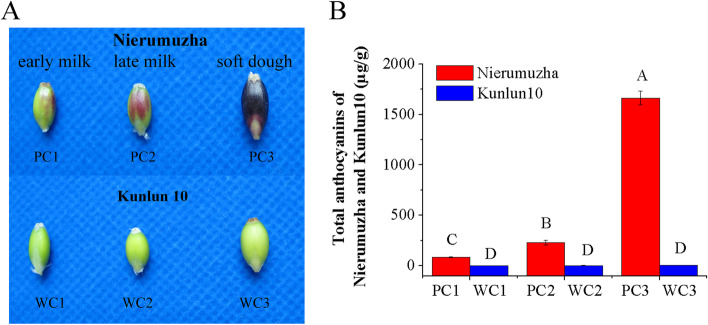
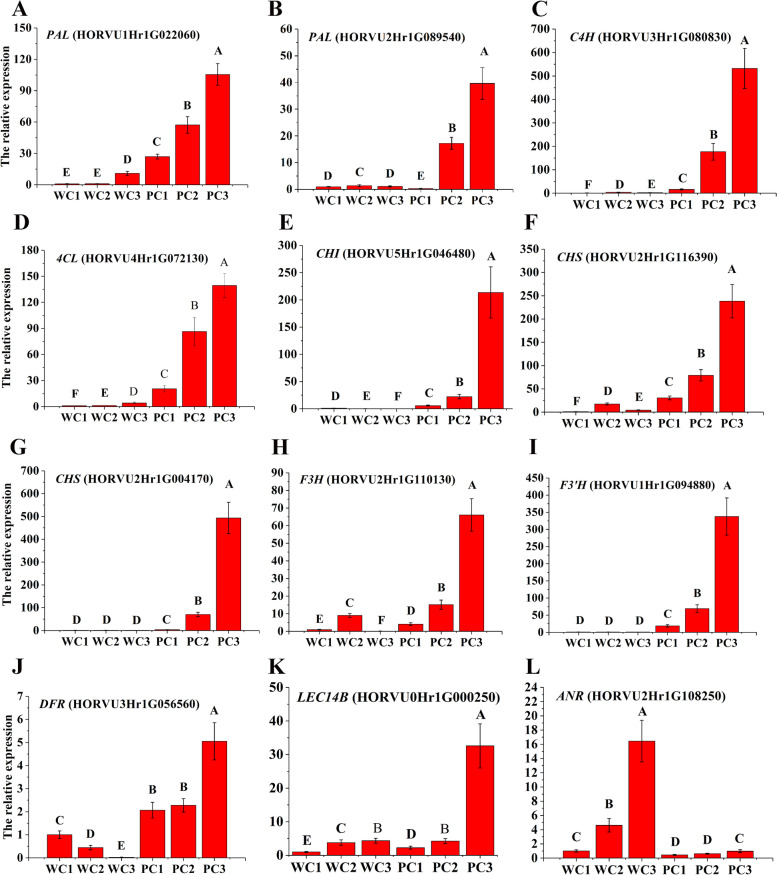
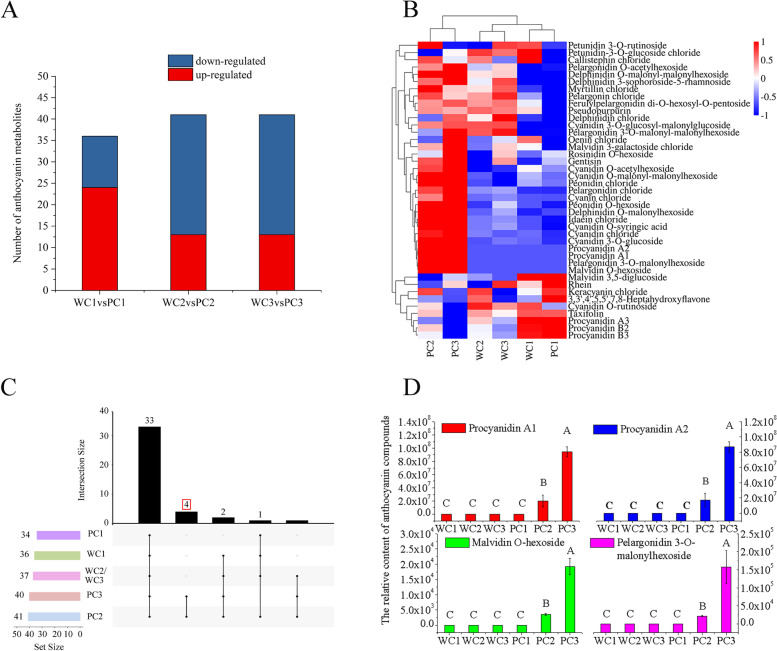
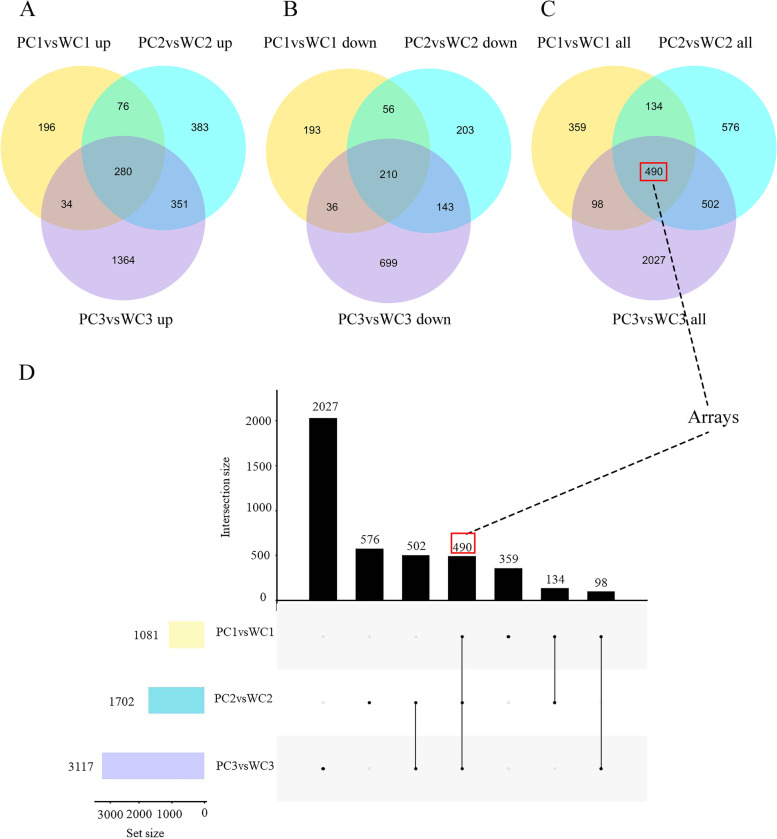
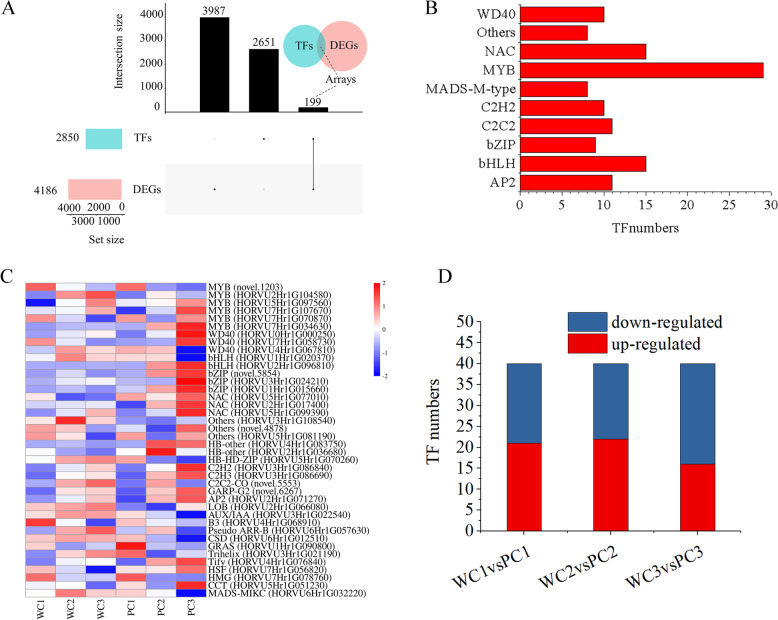
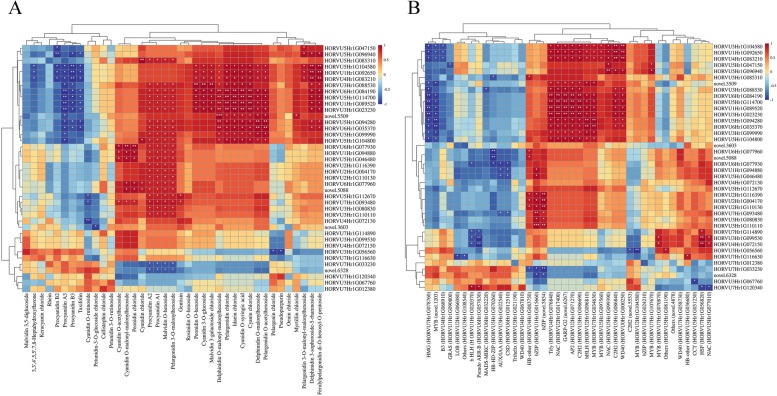
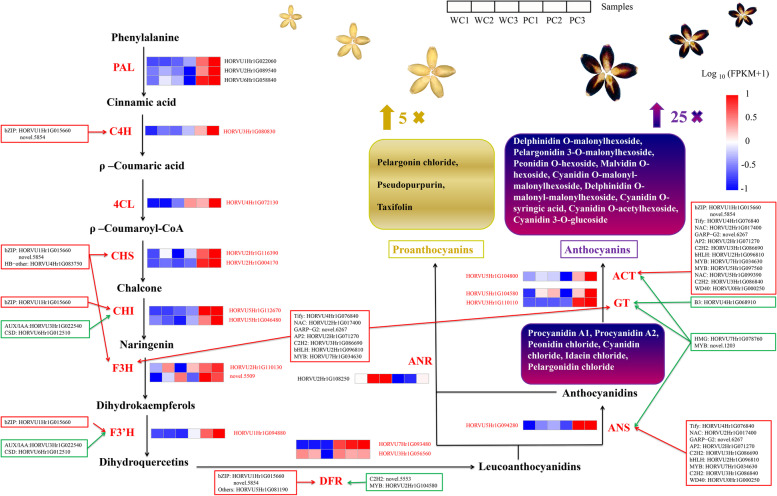
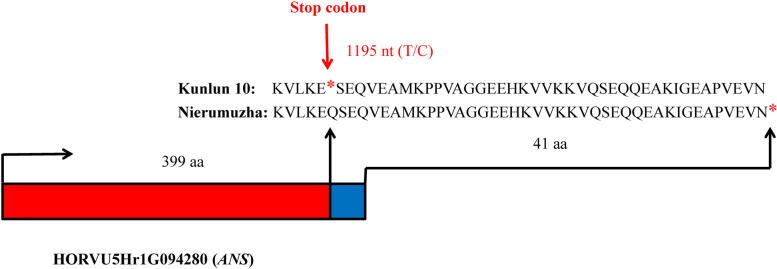
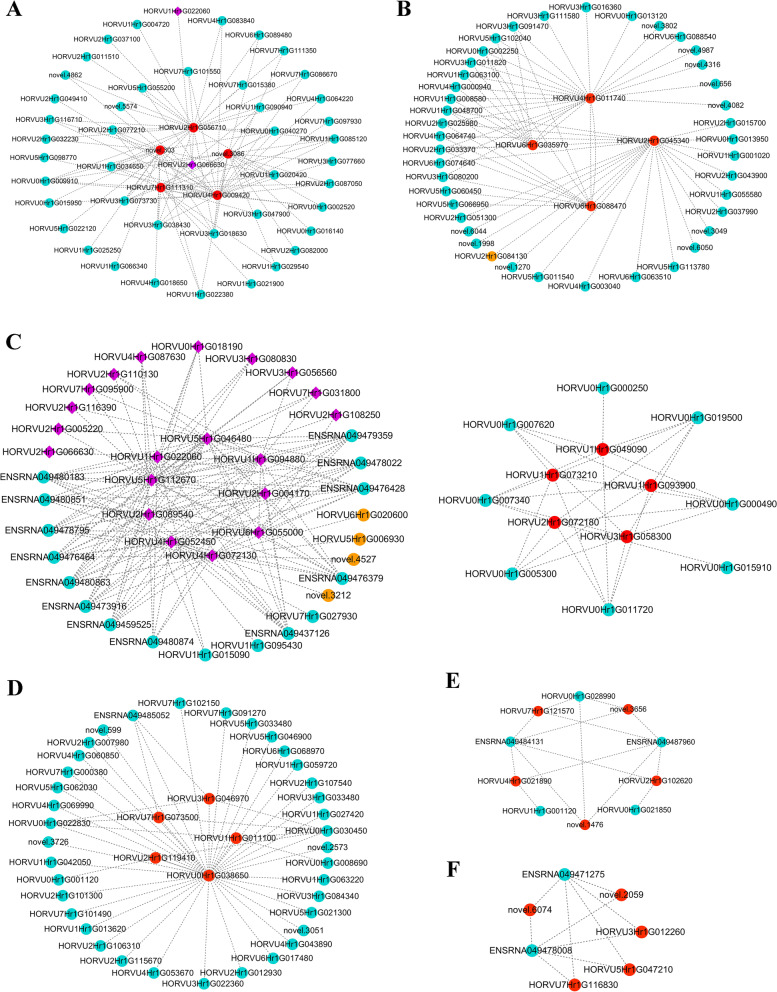
Here, the development of Tibetan hulless barley was monitored, and 18 biological samples at 3 seedcoat color developmental stages were analyzed by transcriptomic and metabolic assays in Nierumuzha (purple) and Kunlun10 (white). A total of 41 anthocyanin compounds and 4186 DEGs were identified. Then we constructed the proanthocyanin-anthocyanin biosynthesis pathway of Tibetan hulless barley, including 19 genes encoding structural enzymes in 12 classes (PAL, C4H, 4CL, CHS, CHI, F3H, F3'H, DFR, ANS, ANR, GT, and ACT). 11 DEGs other than ANR were significantly upregulated in Nierumuzha as compared to Kunlun10, leading to high levels of 15 anthocyanin compounds in this variety (more than 25 times greater than the contents in Kunlun10). ANR was significantly upregulated in Kunlun10 as compared to Nierumuzha, resulting in higher contents of three anthocyanins compounds (more than 5 times greater than the contents in Nierumuzha). In addition, 22 TFs, including MYBs, bHLHs, NACs, bZips, and WD40s, were significantly positively or negatively correlated with the expression patterns of the structural genes. Moreover, comparisons of homologous gene sequences between the two varieties identified 61 putative SNPs in 13 of 19 structural genes. A nonsense mutation was identified in the coding sequence of the ANS gene in Kunlun10. This mutation might encode a nonfunctional protein, further reducing anthocyanin accumulation in Kunlun10. Then we identified 3 modules were highly specific to the Nierumuzha (purple) using WGCNA. Moreover, 12 DEGs appeared both in the putative proanthocyanin-anthocyanin biosynthesis pathway and the protein co-expression network were obtained and verified.
Our study constructed the proanthocyanin-anthocyanin biosynthesis pathway of Tibetan hulless barley. A series of compounds, structural genes and TFs responsible for the differences between purple and white hulless barley were obtained in this pathway. Our study improves the understanding of the molecular mechanisms of anthocyanin accumulation and biosynthesis in barley seeds. It provides new targets for the genetic improvement of anthocyanin content and a framework for improving the nutritional quality of barley.
有色大麦可能对人体健康有益,比标准的白麦更受欢迎,但种皮颜色形成的代谢物和分子机制尚不清楚。
本研究监测了西藏青稞的发育过程,在 3 个种皮颜色发育阶段,通过对来自聂汝村(紫色)和昆仑 10 号(白色)的 18 个生物样本进行转录组和代谢组分析。共鉴定出 41 种花色苷化合物和 4186 个差异表达基因。然后,我们构建了西藏青稞原花青素-花色苷生物合成途径,包括 12 类结构酶编码的 19 个基因(PAL、C4H、4CL、CHS、CHI、F3H、F3'H、DFR、ANS、ANR、GT 和 ACT)。与昆仑 10 号相比,聂汝村有 11 个除 ANR 以外的差异表达基因显著上调,导致该品种 15 种花色苷化合物含量较高(比昆仑 10 号高 25 倍以上)。与聂汝村相比,昆仑 10 号的 ANR 显著上调,导致 3 种花色苷化合物含量较高(比聂汝村高 5 倍以上)。此外,22 个 TF,包括 MYBs、bHLHs、NACs、bZips 和 WD40s,与结构基因的表达模式呈显著的正相关或负相关。此外,对两个品种的同源基因序列进行比较,在 19 个结构基因中的 13 个基因中鉴定出 61 个潜在 SNP。在昆仑 10 号的 ANS 基因编码序列中发现了一个无义突变。该突变可能导致一个无功能的蛋白质,进一步降低了昆仑 10 号的花色苷积累。然后,我们使用 WGCNA 鉴定了 3 个与聂汝村(紫色)高度特异的模块。此外,还获得并验证了在假定的原花青素-花色苷生物合成途径和蛋白质共表达网络中出现的 12 个差异表达基因。
本研究构建了西藏青稞原花青素-花色苷生物合成途径。在此途径中获得了一系列负责紫色和白色青稞差异的化合物、结构基因和 TF。本研究提高了对大麦种子中花色苷积累和生物合成分子机制的认识。为提高花色苷含量的遗传改良和提高大麦营养价值提供了新的目标。