School of Biosciences, The University of Sheffieldgrid.11835.3e, Sheffield, United Kingdom.
Department of Chemistry, The University of Sheffieldgrid.11835.3e, Sheffield, United Kingdom.
mSystems. 2022 Aug 30;7(4):e0045422. doi: 10.1128/msystems.00454-22. Epub 2022 Aug 4.
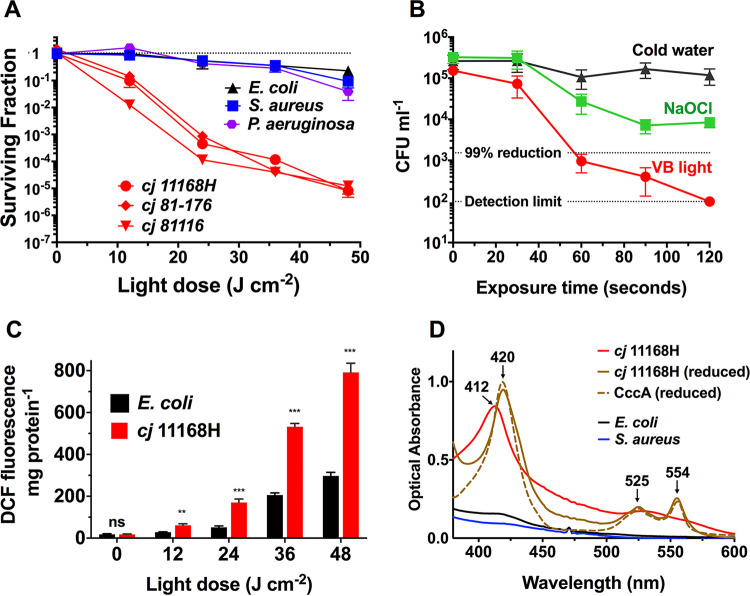
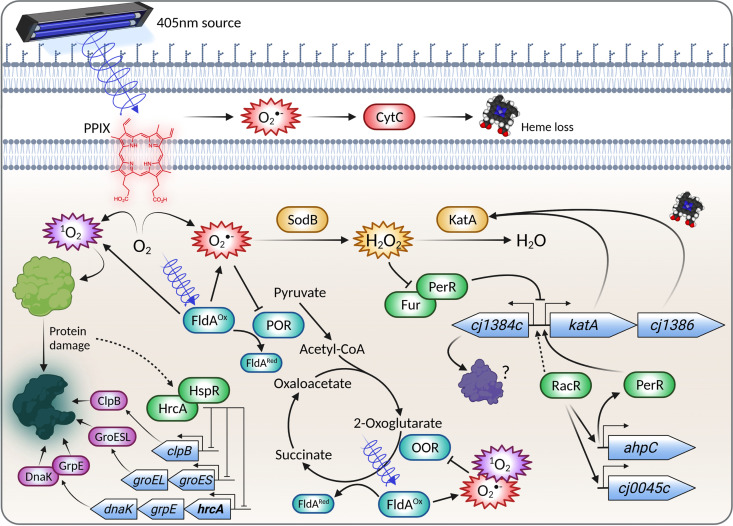
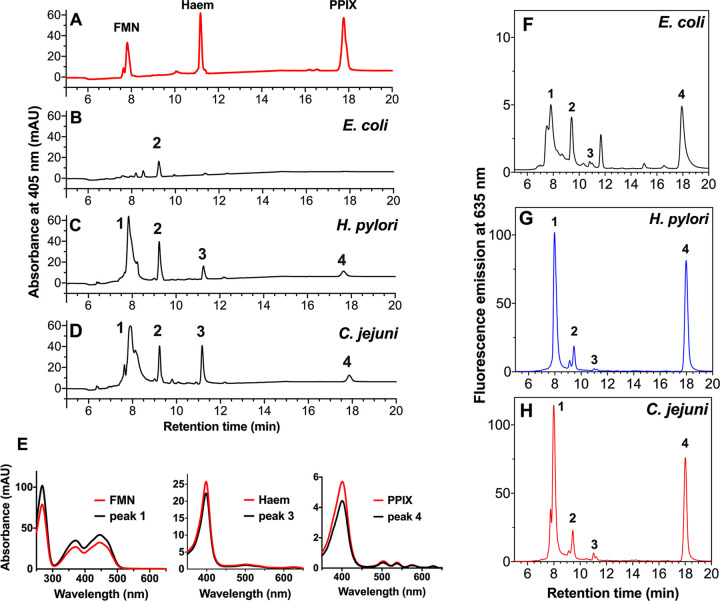
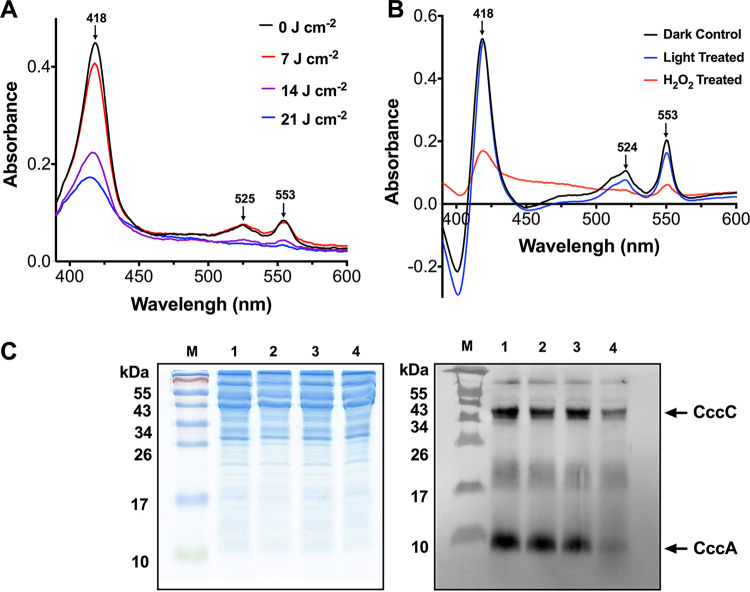
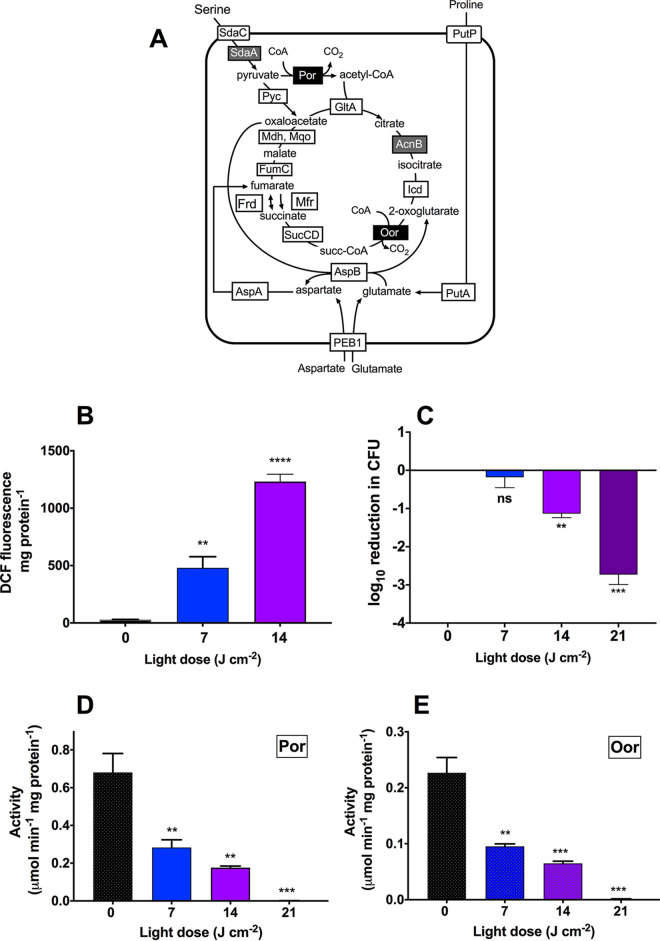
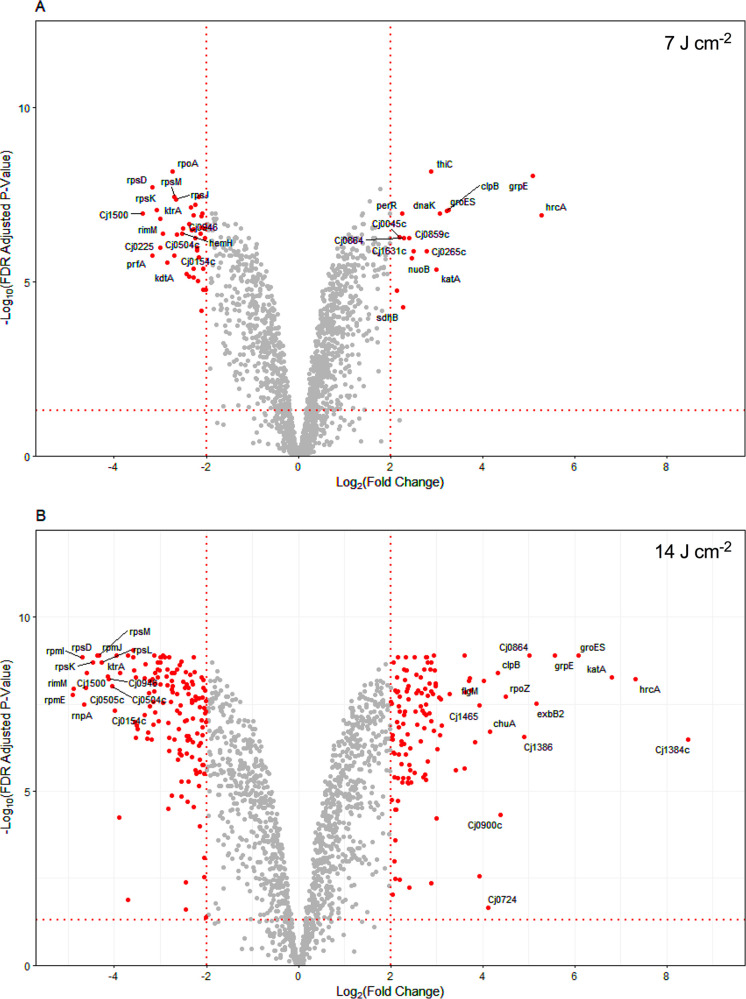
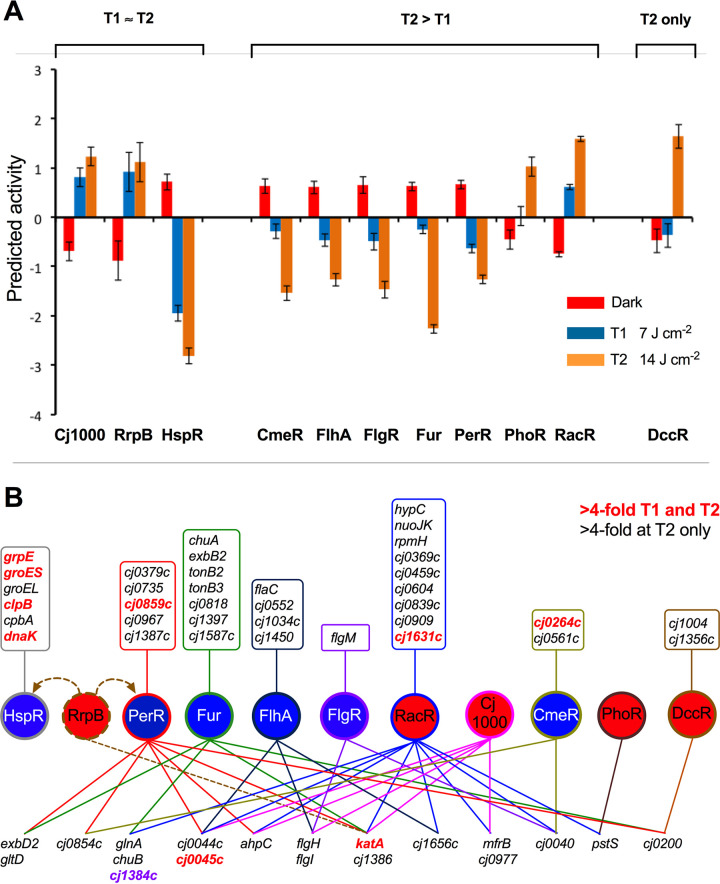
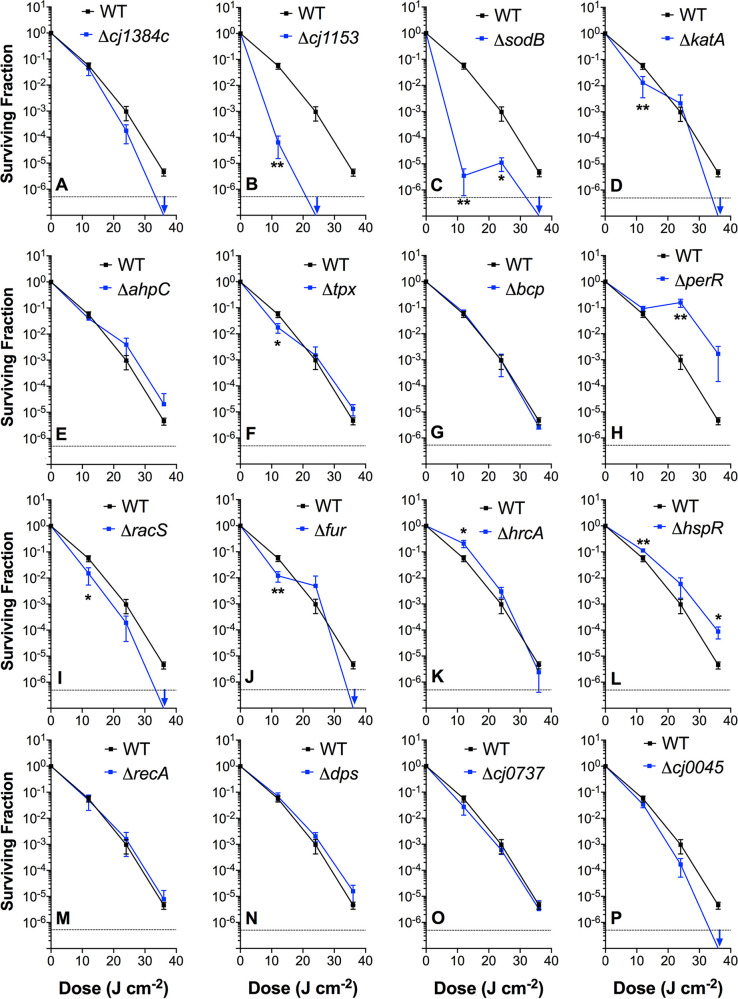
Campylobacter jejuni is a microaerophilic foodborne zoonotic pathogen of worldwide concern as the leading cause of bacterial gastroenteritis. Many strains are increasingly antibiotic resistant and new methods of control are required to reduce food-chain contamination. One possibility is photodynamic inactivation (PDI) using violet-blue (VB) light, to which C. jejuni is highly susceptible. Here, we show that flavin and protoporphyrin IX are major endogenous photosensitizers and that exposure of cells to VB light increases intracellular reactive oxygen species (ROS) to high levels, as indicated by a dichlorodihydrofluorescein reporter. Unusually for an oxygen-respiring bacterium, C. jejuni employs several ROS-sensitive iron-sulfur cluster enzymes in central metabolic pathways; we show that VB light causes rapid inactivation of both pyruvate and 2-oxoglutarate oxidoreductases, thus interrupting the citric acid cycle. Cells exposed to VB light also lose heme from -type cytochromes, restricting electron transport, likely due to irreversible oxidation of heme-ligating cysteine residues. Evaluation of global gene expression changes by RNAseq and probabilistic modeling showed a two-stage protein damage/oxidative stress response to VB light, driven by specific regulators, including HspR, PerR, Fur, and RacR. Deletion mutant analysis showed that superoxide dismutase and the cytochrome CccA were particularly important for VB light survival and that abolishing repression of chaperones and oxidative stress resistance genes by HcrA, HspR, or PerR increased tolerance to VB light. Our results explain the high innate sensitivity of C. jejuni to VB light and provide new insights that may be helpful in exploiting PDI for novel food-chain interventions to control this pathogen. Campylobacteriosis caused by C. jejuni is one of the most widespread zoonotic enteric diseases worldwide and represents an enormous human health and economic burden, compounded by the emergence of antibiotic-resistant strains. New interventions are urgently needed to reduce food-chain contamination. Although UV light is well known to be bactericidal, it is highly mutagenic and problematic for continuous exposure in food production facilities; in contrast, narrow spectrum violet-blue (VB) light is much safer. We confirmed that C. jejuni is highly susceptible to VB light and then identified some of the global regulatory networks involved in responding to photo-oxidative damage. The identification of damaged cellular components underpins efforts to develop commercial applications of VB light-based technologies.
空肠弯曲菌是一种微需氧的食源性病原体,在全球范围内引起关注,是细菌性肠胃炎的主要致病原。许多菌株对抗生素的耐药性日益增强,需要新的控制方法来减少食物链污染。一种可能性是使用紫蓝光(VB)进行光动力失活(PDI),空肠弯曲菌对此高度敏感。在这里,我们表明黄素和原卟啉 IX 是主要的内源性光敏剂,并且细胞暴露于 VB 光会导致细胞内活性氧(ROS)增加到高水平,如二氯二氢荧光素报告所表明的。与需氧细菌不同,空肠弯曲菌在中心代谢途径中使用几种 ROS 敏感的铁硫簇酶;我们表明 VB 光会迅速失活丙酮酸和 2-氧戊二酸氧化还原酶,从而中断柠檬酸循环。暴露于 VB 光的细胞也会从 c 型细胞色素中失去血红素,从而限制电子传递,这可能是由于血红素结合半胱氨酸残基的不可逆氧化。通过 RNAseq 和概率建模评估全局基因表达变化表明,VB 光引起的蛋白质损伤/氧化应激反应分为两个阶段,由特定的调节剂驱动,包括 HspR、PerR、Fur 和 RacR。缺失突变分析表明,超氧化物歧化酶和细胞色素 CccA 对 VB 光的存活特别重要,并且消除 HcrA、HspR 或 PerR 对伴侣蛋白和氧化应激抗性基因的抑制作用会增加对 VB 光的耐受性。我们的结果解释了空肠弯曲菌对 VB 光的高固有敏感性,并提供了新的见解,这可能有助于利用 PDI 进行新型食物链干预以控制这种病原体。由空肠弯曲菌引起的弯曲菌病是全球最广泛传播的人畜共患肠道疾病之一,给人类健康和经济带来了巨大负担,而且抗生素耐药菌株的出现使情况更加复杂。需要新的干预措施来减少食物链污染。尽管众所周知,紫外线具有杀菌作用,但它的致突变性很高,并且在食品生产设施中连续暴露存在问题;相比之下,窄谱紫蓝光(VB)光要安全得多。我们证实空肠弯曲菌对 VB 光高度敏感,然后确定了一些参与应对光氧化损伤的全局调控网络。受损细胞成分的鉴定为开发基于 VB 光的技术的商业应用奠定了基础。