Amodeo Davide, Manzi Pietro, De Palma Isa, Puccio Alessandro, Nante Nicola, Barcaccia Mariella, Marini Daniele, Pietrella Donatella
Department of Medical Biotechnology, University of Siena, 53100 Siena, Italy.
Hospital of Santa Maria di Terni, 05100 Terni, Italy.
Pathogens. 2023 Nov 10;12(11):1338. doi: 10.3390/pathogens12111338.
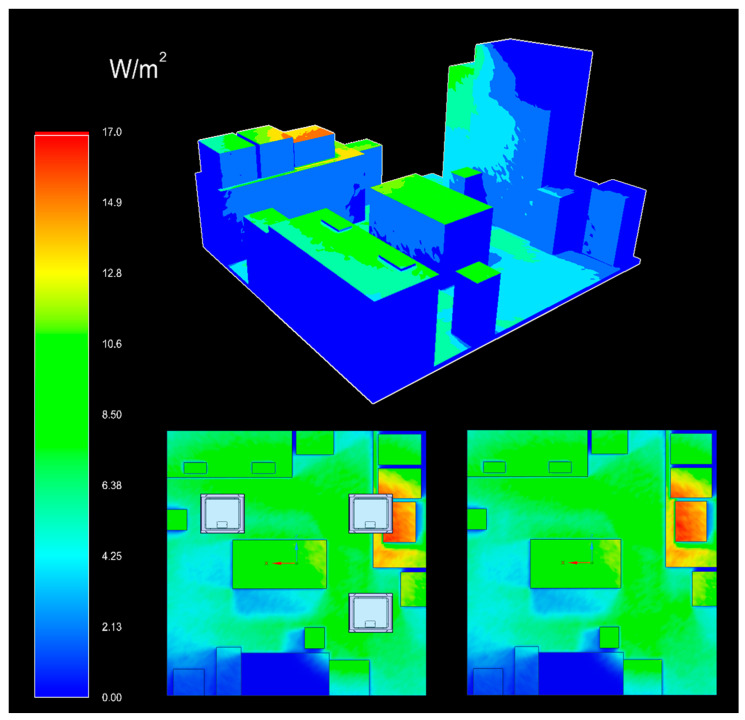
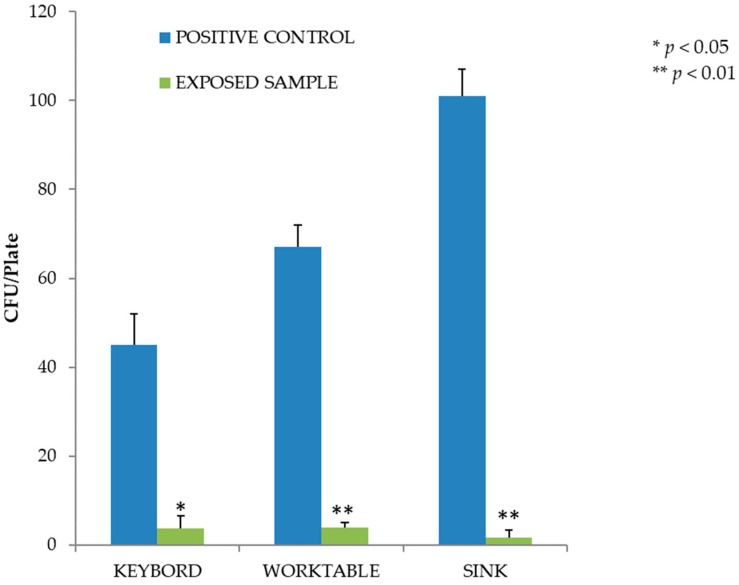
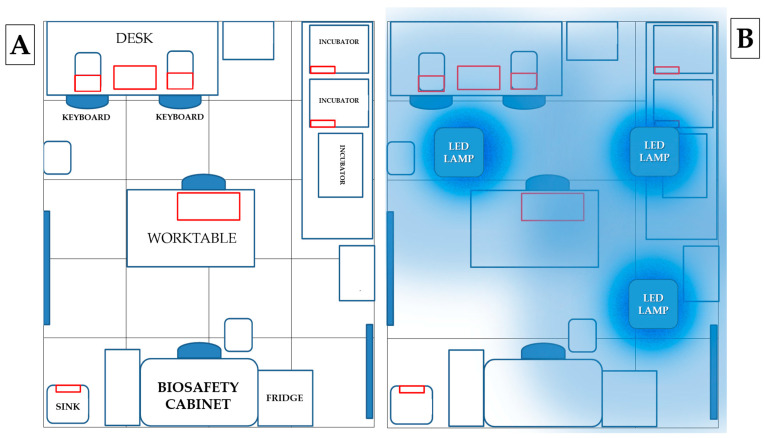
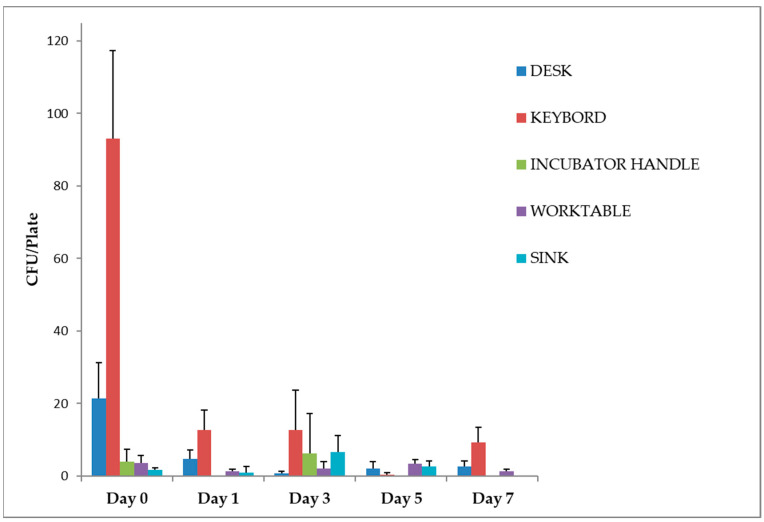
Effective disinfection procedures in healthcare facilities are essential to prevent transmission. Chemical disinfectants, hydrogen peroxide vapour (HPV) systems and ultraviolet (UV) light are commonly used methods. An emerging method, violet-blue light at 405 nm, has shown promise for surface disinfection. Its antimicrobial properties are based on producing reactive oxygen species (ROS) that lead to the inactivation of pathogens. Studies have shown significant efficacy in reducing bacterial levels on surfaces and in the air, reducing nosocomial infections. The aim of this study was to evaluate the antimicrobial effectiveness of violet-blue (405 nm) LED lamps on high-contact surfaces in a hospital infection-control laboratory. High-contact surfaces were sampled before and after 7 days of exposure to violet-blue light. In addition, the effect of violet-blue light on MRSA-contaminated surfaces was investigated. Exposure to violet-blue light significantly reduced the number of bacteria, yeasts and moulds on the sampled surfaces. The incubator handle showed a low microbial load and no growth after irradiation. The worktable and sink showed an inconsistent reduction due to shaded areas. In the second experiment, violet-blue light significantly reduced the microbial load of MRSA on surfaces, with a greater reduction on steel surfaces than on plastic surfaces. Violet-blue light at 405 nm has proven to be an effective tool for pathogen inactivation in healthcare settings Violet-blue light shows promise as an additional and integrated tool to reduce microbial contamination in hospital environments but must be used in combination with standard cleaning practices and infection control protocols. Further research is needed to optimise the violet-blue, 405 nm disinfection method.
医疗保健机构中的有效消毒程序对于防止传播至关重要。化学消毒剂、过氧化氢蒸汽(HPV)系统和紫外线(UV)光是常用的方法。一种新兴方法,即405纳米的紫蓝光,已显示出在表面消毒方面的潜力。其抗菌特性基于产生活性氧(ROS),从而导致病原体失活。研究表明,在降低表面和空气中的细菌水平以及减少医院感染方面具有显著效果。本研究的目的是评估紫蓝光(405纳米)发光二极管灯在医院感染控制实验室中对高接触表面的抗菌效果。在暴露于紫蓝光7天前后对高接触表面进行采样。此外,还研究了紫蓝光对耐甲氧西林金黄色葡萄球菌污染表面的影响。暴露于紫蓝光显著减少了采样表面上的细菌、酵母和霉菌数量。培养箱把手显示出低微生物负荷且照射后无生长。工作台和水槽由于存在阴影区域,减少情况不一致。在第二个实验中,紫蓝光显著降低了表面上耐甲氧西林金黄色葡萄球菌的微生物负荷,在钢表面上的减少幅度大于塑料表面。405纳米的紫蓝光已被证明是医疗环境中使病原体失活的有效工具。紫蓝光有望作为一种额外的综合工具来减少医院环境中的微生物污染,但必须与标准清洁做法和感染控制方案结合使用。需要进一步研究以优化405纳米紫蓝光消毒方法。