Abiopep S.L., Parque Científico de Murcia, Complejo de Espinardo, Espinardo, Murcia, Spain.
Centro de Edafología y Biología Aplicada del Segura (CEBAS)-CSIC, Department of Stress Biology and Plant Pathology, Espinardo, Murcia, Spain.
J Virol. 2022 Aug 24;96(16):e0042122. doi: 10.1128/jvi.00421-22. Epub 2022 Aug 4.
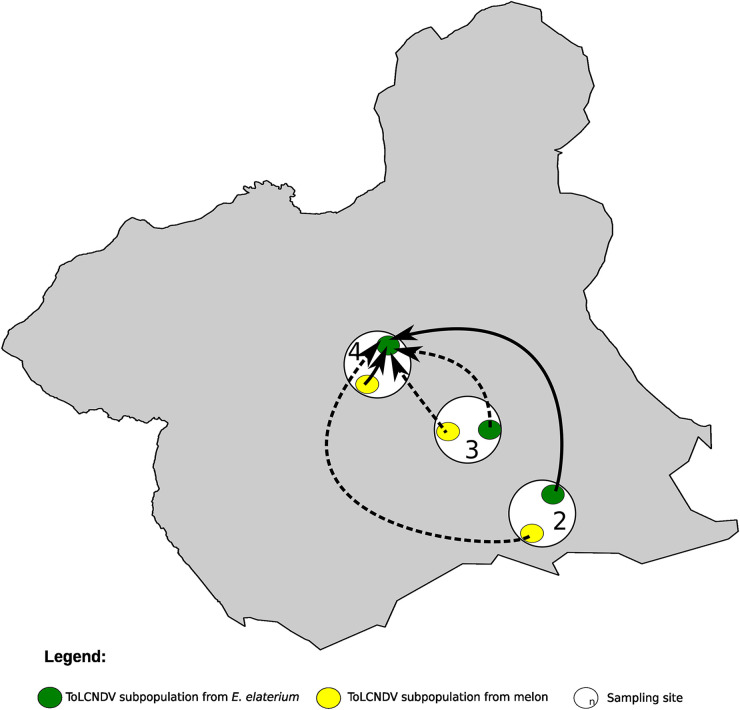
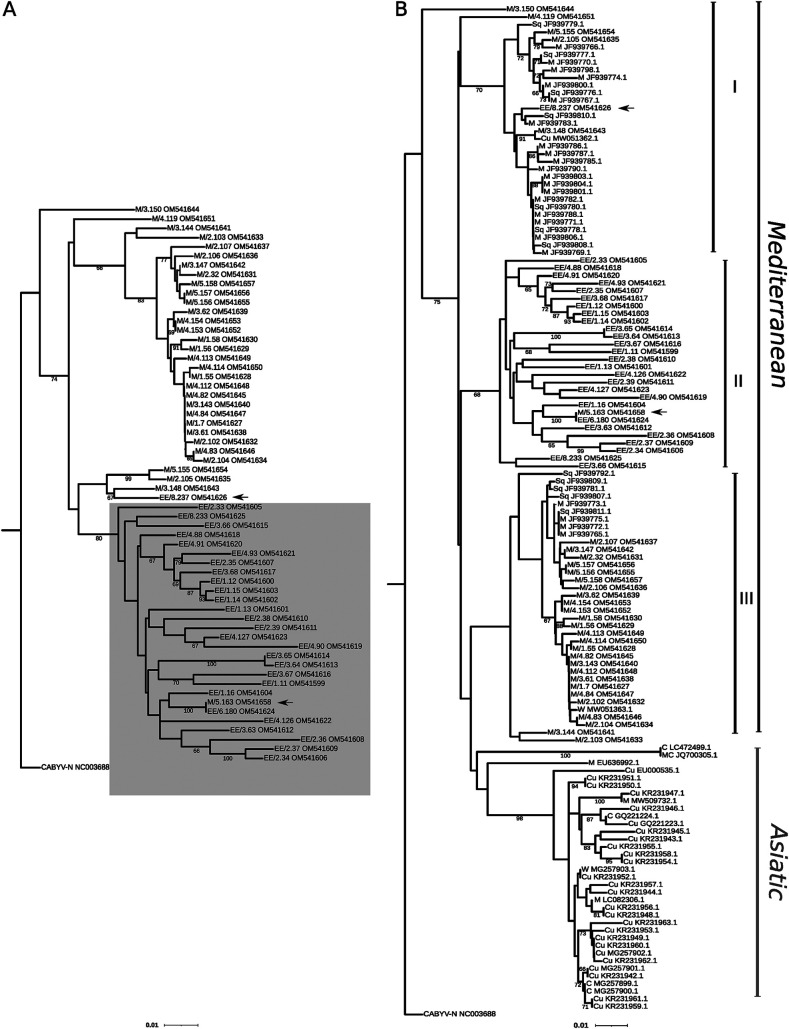
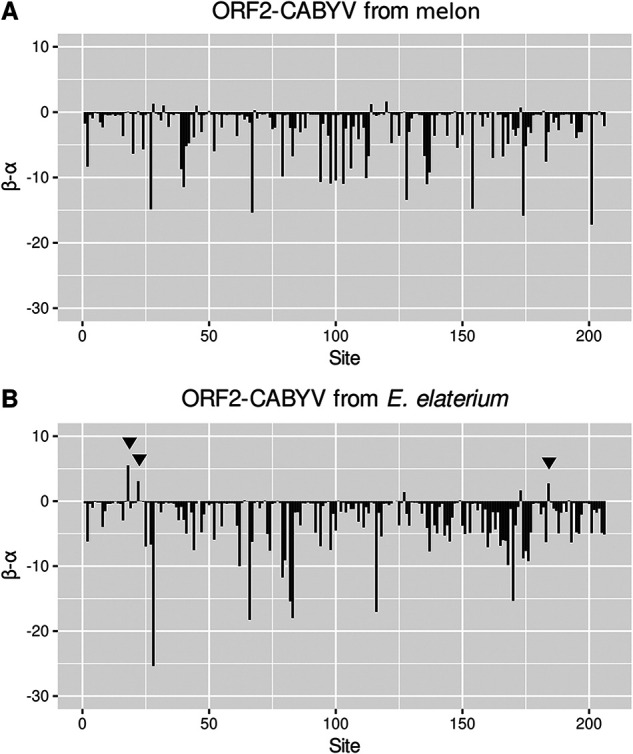
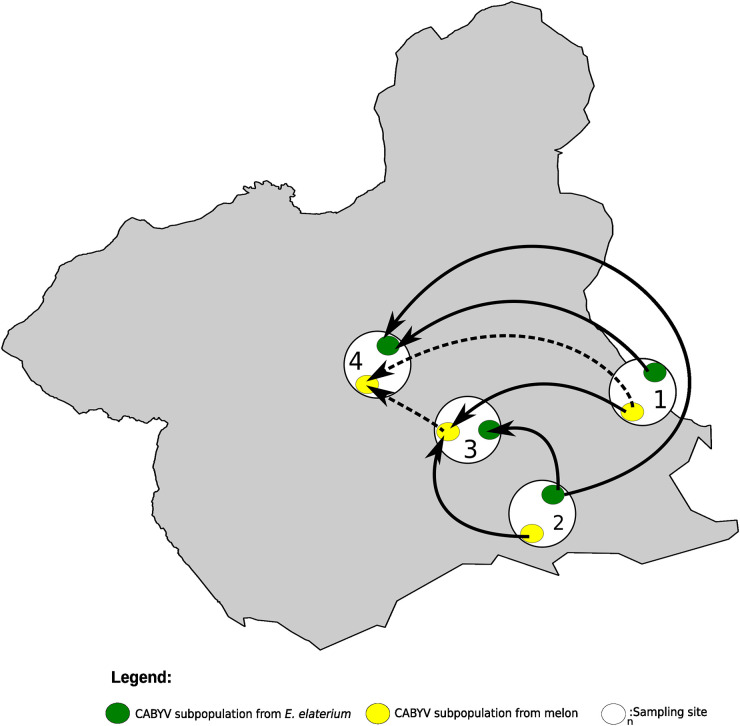
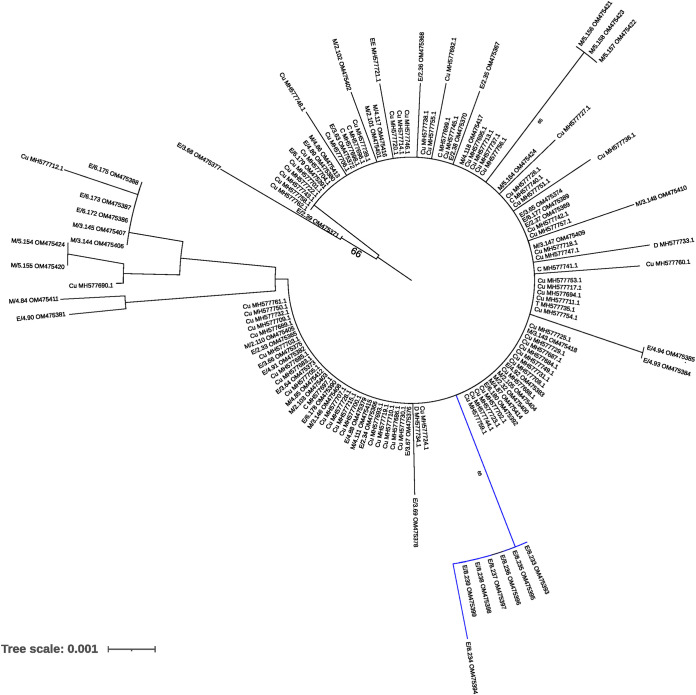
Weeds surrounding crops may act as alternative hosts, playing important epidemiological roles as virus reservoirs and impacting virus evolution. We used high-throughput sequencing to identify viruses in Spanish melon crops and plants belonging to three pluriannual weed species, , , and , sampled at the edges of the crops. Melon and , both belonging to the family , shared three virus species, whereas there was no virus species overlap between melon and the other two weeds. The diversity of cucurbit aphid-borne yellows virus (CABYV) and tomato leaf curl New Delhi virus (ToLCNDV), both in melon and , was further studied by amplicon sequencing. Phylogenetic and population genetics analyses showed that the CABYV population was structured by the host, identifying three sites in the CABYV RNA-dependent RNA polymerase under positive selection, perhaps reflecting host adaptation. The ToLCNDV population was much less diverse than the CABYV one, likely as a consequence of the relatively recent introduction of ToLCNDV in Spain. In spite of its low diversity, we identified geographical but no host differentiation for ToLCNDV. Potential virus migration fluxes between and melon plants were also analyzed. For CABYV, no evidence of migration between the populations of the two hosts was found, whereas important fluxes were identified between geographically distant subpopulations for each host. For ToLCNDV, in contrast, evidence of migration from melon to was found, but not the other way around. It has been reported that about half of the emerging diseases affecting plants are caused by viruses. Alternative hosts often play critical roles in virus emergence as virus reservoirs, bridging host species that are otherwise unconnected and/or favoring virus diversification. In spite of this, the viromes of potential alternative hosts remain largely unexplored. In the case of crops, pluriannual weeds at the crop edges may play these roles. Here, we took advantage of the power of high-throughput sequencing to characterize the viromes of three weed species frequently found at the edges of melon crops. We identified three viruses shared by melon and the cucurbit weed, with two of them being epidemiologically relevant for melon crops. Further genetic analyses showed that these two viruses had contrasting patterns of diversification and migration, providing an interesting example on the role that weeds may play in the ecology and evolution of viruses affecting crops.
我们周围的杂草可能充当替代宿主,作为病毒库发挥重要的流行病学作用,并影响病毒进化。我们使用高通量测序技术鉴定了西班牙甜瓜作物和三种多年生杂草属( 、 、 )植物中的病毒,这些杂草植物在作物边缘采集。属于葫芦科的甜瓜和 共享三种病毒,而甜瓜与其他两种杂草之间没有病毒重叠。通过扩增子测序进一步研究了甜瓜和 中瓜蚜传褪绿黄症病毒(CABYV)和番茄卷叶新德里病毒(ToLCNDV)的多样性。系统发育和群体遗传学分析表明,CABYV 群体由宿主结构决定,在 CABYV RNA 依赖性 RNA 聚合酶中鉴定出三个受正选择影响的位点,这可能反映了宿主适应。ToLCNDV 群体的多样性远低于 CABYV,这可能是由于 ToLCNDV 相对较新引入西班牙。尽管多样性较低,但我们确定了 ToLCNDV 的地理而非宿主分化。还分析了 和甜瓜植物之间潜在的病毒迁移通量。对于 CABYV,没有发现两个宿主种群之间迁移的证据,而对于每个宿主,地理上遥远的亚种群之间都存在重要的迁移。相比之下,发现了 ToLCNDV 从甜瓜到 的迁移证据,但反之则没有。 据报道,影响植物的大约一半新发疾病是由病毒引起的。替代宿主通常在病毒出现时作为病毒库发挥关键作用,连接原本不相关的宿主物种,并/或促进病毒多样化。尽管如此,潜在替代宿主的病毒组仍在很大程度上未被探索。对于作物来说,作物边缘的多年生杂草可能发挥这些作用。在这里,我们利用高通量测序的强大功能来描述在甜瓜作物边缘经常发现的三种杂草物种的病毒组。我们鉴定了三种甜瓜和葫芦科杂草共享的病毒,其中两种对甜瓜作物具有流行病学意义。进一步的遗传分析表明,这两种病毒具有不同的多样化和迁移模式,为杂草在影响作物的病毒生态和进化中可能发挥的作用提供了一个有趣的例子。