Department of Psychiatry and Behavioral Sciences, Johns Hopkins University School of Medicine, Baltimore, MD, 21287, USA.
Department of Neuroscience, University of Pennsylvania Perelman School of Medicine, Philadelphia, PA, 19104, USA.
Transl Psychiatry. 2022 Aug 5;12(1):314. doi: 10.1038/s41398-022-02081-y.
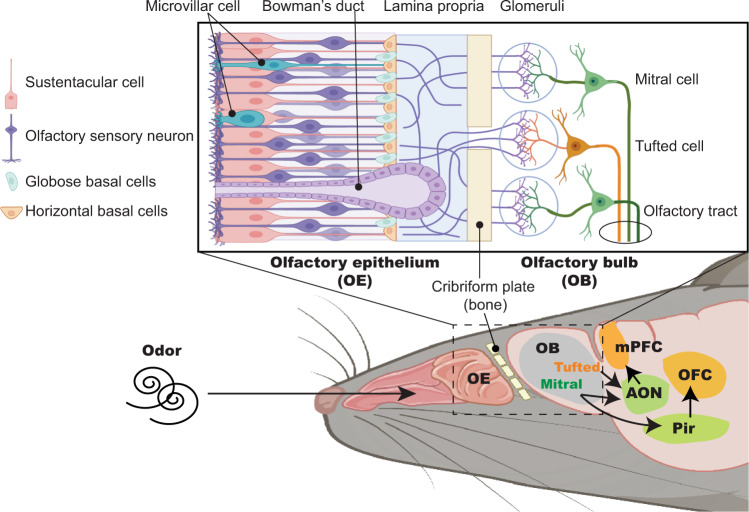
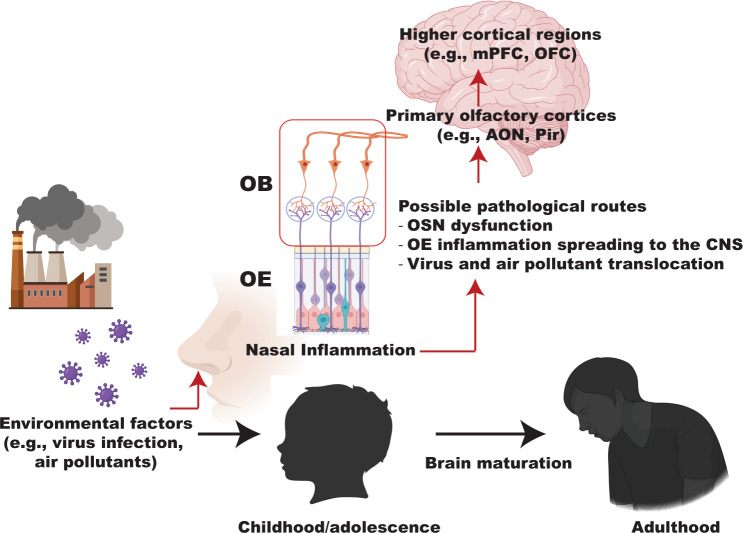
Olfactory impairments contribute to the psychopathology of mental illnesses such as schizophrenia and depression. Recent neuroscience research has shed light on the previously underappreciated olfactory neural circuits involved in regulation of higher brain functions. Although environmental factors such as air pollutants and respiratory viral infections are known to contribute to the risk for psychiatric disorders, the role of nasal inflammation in neurobehavioral outcomes and disease pathophysiology remains poorly understood. Here, we will first provide an overview of published findings on the impact of nasal inflammation in the olfactory system. We will then summarize clinical studies on olfactory impairments in schizophrenia and depression, followed by preclinical evidence on the neurobehavioral outcomes produced by olfactory dysfunction. Lastly, we will discuss the potential impact of nasal inflammation on brain development and function, as well as how we can address the role of nasal inflammation in the pathophysiological mechanisms underlying psychiatric disorders. Considering the current outbreak of Coronavirus Disease 2019 (COVID-19), which often causes nasal inflammation and serious adverse effects for olfactory function that might result in long-lasting neuropsychiatric sequelae, this line of research is particularly critical to understanding of the potential significance of nasal inflammation in the pathophysiology of psychiatric disorders.
嗅觉障碍是精神疾病(如精神分裂症和抑郁症)的发病机制之一。最近的神经科学研究揭示了以前被低估的参与调节大脑高级功能的嗅觉神经回路。虽然已知环境因素(如空气污染物和呼吸道病毒感染)会增加患精神疾病的风险,但鼻腔炎症对神经行为结果和疾病发病机制的作用仍知之甚少。在这里,我们将首先概述鼻腔炎症对嗅觉系统影响的已发表研究结果。然后,我们将总结精神分裂症和抑郁症嗅觉障碍的临床研究,接着介绍嗅觉功能障碍产生的神经行为学证据。最后,我们将讨论鼻腔炎症对大脑发育和功能的潜在影响,以及我们如何解决鼻腔炎症在精神疾病发病机制中的作用。考虑到目前 2019 年冠状病毒病(COVID-19)的爆发,它常引起鼻腔炎症和严重的嗅觉功能障碍,可能导致长期的神经精神后遗症,因此这项研究对于理解鼻腔炎症在精神疾病发病机制中的潜在意义至关重要。