Sun Liang, Yu Shian, Dong Cairong, Wu Zhengyi, Huang He, Chen Zhendong, Wu Zhipeng, Yin Xiangbao
Department of Hepatobiliary Surgery, The Second Affiliated Hospital of Nanchang University, Nanchang, China.
Front Genet. 2022 Jul 19;13:913398. doi: 10.3389/fgene.2022.913398. eCollection 2022.
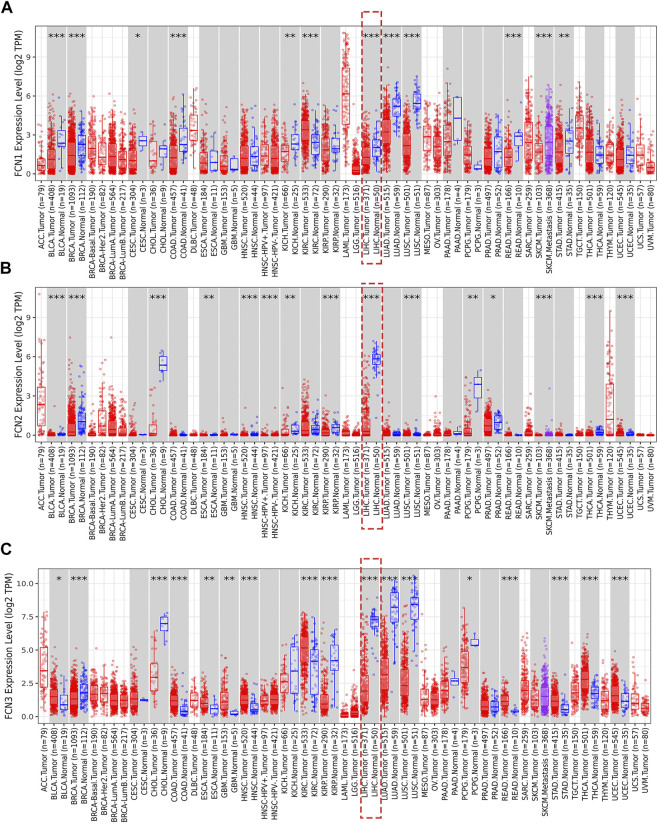
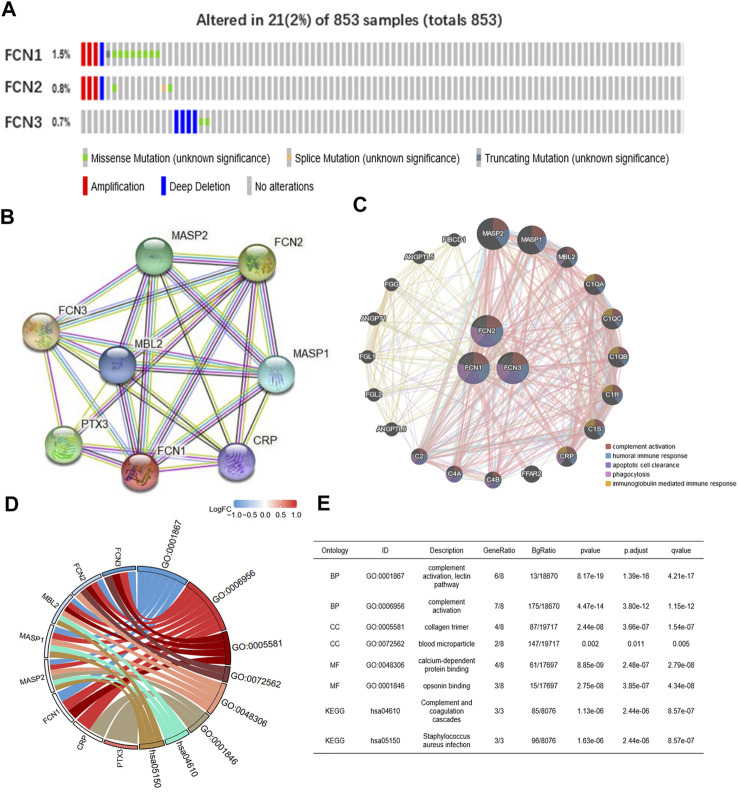
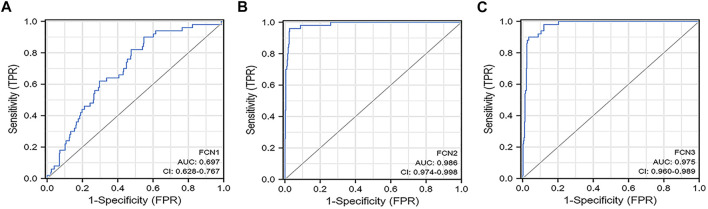
Ficolin (FCN) family proteins are part of the innate immune system, play a role as recognition molecules in the complement system, and are associated with tumor development. The mechanism of its role in immunotherapy of hepatocellular carcinoma (HCC) is unclear. In this study, we used the TCGA database, HPA database, Gene Expression Profile Interaction Analysis (GEPIA), Kaplan-Meier plotter, TCGAportal, cBioPortal, GeneMANIA, TIMER, and TISIDB to analyze Ficolin family proteins (FCN1, FCN2 and FCN3, FCNs) in patients with hepatocellular carcinoma for differential expression, prognostic value, genetic alterations, functional enrichment, and immune factor correlation analysis. The expression levels of FCN1/2/3 were significantly reduced in patients with HCC. Among them, FCN3 showed significant correlation with Overall Survival (OS), Progressive Free Survival (PFS) and Relapse Free Survival (RFS) in HCC. FCN1 and FCN3 may be potential prognostic markers for survival in patients with HCC. In addition, the functions of differentially expressed FCNs were mainly related to complement activation, immune response, apoptotic cell clearance and phagocytosis. FCNs were found to be significantly correlated with multiple immune cells and immune factors. Expression of FCN1 and FCN3 differed significantly in the immune and stromal cell component scores of HCC. analysis of the tumor mutation burden (TMB) and microsatellite instability (MSI) of FCNs with pan-cancer showed that FCN3 was significantly correlated with both. Our study provides new insights into the link between the FCN family and immunotherapy for HCC, and FCN3 may serve as a prognostic biomarker for HCC.
纤维胶凝蛋白(FCN)家族蛋白是固有免疫系统的一部分,在补体系统中作为识别分子发挥作用,并与肿瘤发展相关。其在肝细胞癌(HCC)免疫治疗中的作用机制尚不清楚。在本研究中,我们使用TCGA数据库、HPA数据库、基因表达谱相互作用分析(GEPIA)、Kaplan-Meier绘图仪、TCGAportal、cBioPortal、GeneMANIA、TIMER和TISIDB对肝细胞癌患者的纤维胶凝蛋白家族蛋白(FCN1、FCN2和FCN3,统称FCNs)进行差异表达、预后价值、基因改变、功能富集和免疫因子相关性分析。FCN1/2/3在HCC患者中的表达水平显著降低。其中,FCN3与HCC的总生存期(OS)、无进展生存期(PFS)和无复发生存期(RFS)显著相关。FCN1和FCN3可能是HCC患者生存的潜在预后标志物。此外,差异表达的FCNs的功能主要与补体激活、免疫反应、凋亡细胞清除和吞噬作用有关。发现FCNs与多种免疫细胞和免疫因子显著相关。FCN1和FCN3的表达在HCC的免疫和基质细胞成分评分中差异显著。对泛癌中FCNs的肿瘤突变负荷(TMB)和微卫星不稳定性(MSI)分析表明,FCN3与两者均显著相关。我们的研究为FCN家族与HCC免疫治疗之间的联系提供了新的见解,并且FCN3可能作为HCC的预后生物标志物。