Zhu Weize, Hong Ying, Li Yue, Li Yan, Zhong Jing, He Xiaofang, Zheng Ningning, Sheng Lili, Li Houkai
School of Pharmacy, Shanghai University of Traditional Chinese Medicine, Shanghai, China.
Department of Endocrinology, Shanghai Fifth People's Hospital, Shanghai Medical School, Fudan University, Shanghai, China.
Front Nutr. 2022 Jul 19;9:923377. doi: 10.3389/fnut.2022.923377. eCollection 2022.
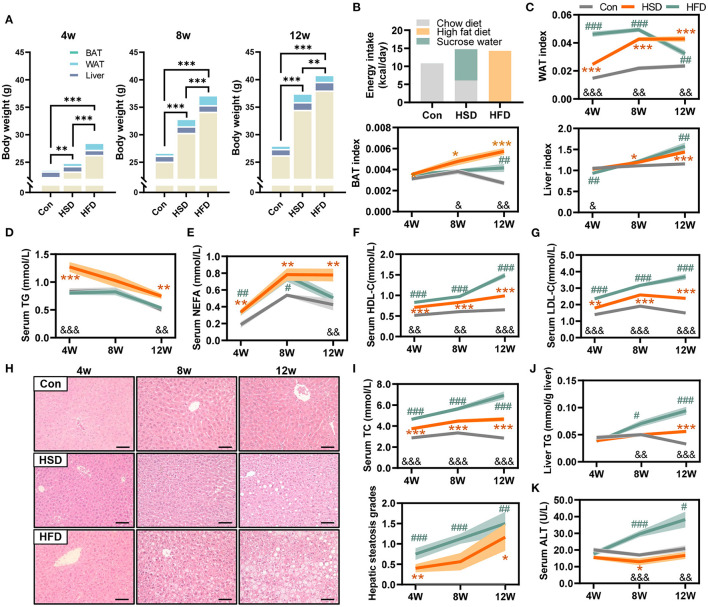
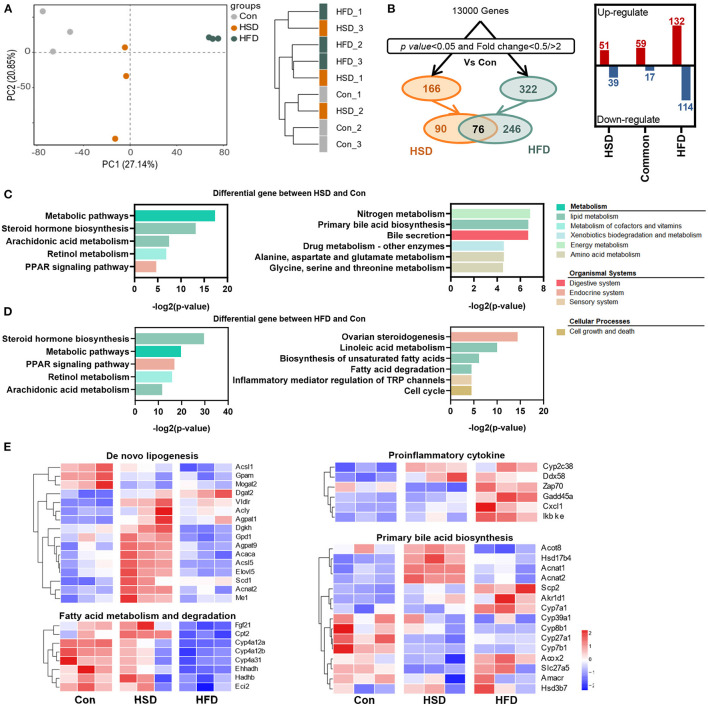
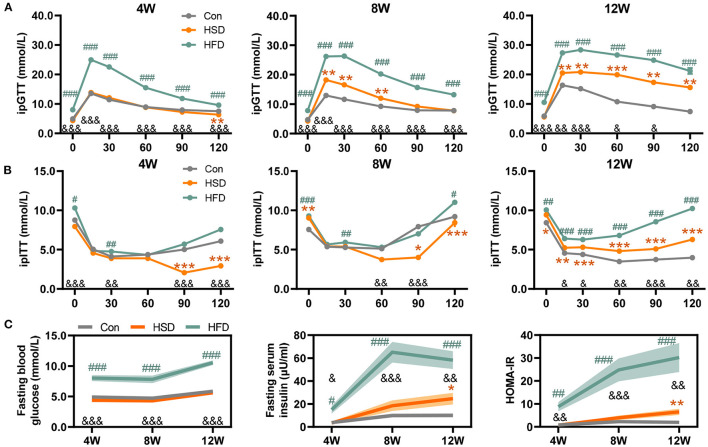
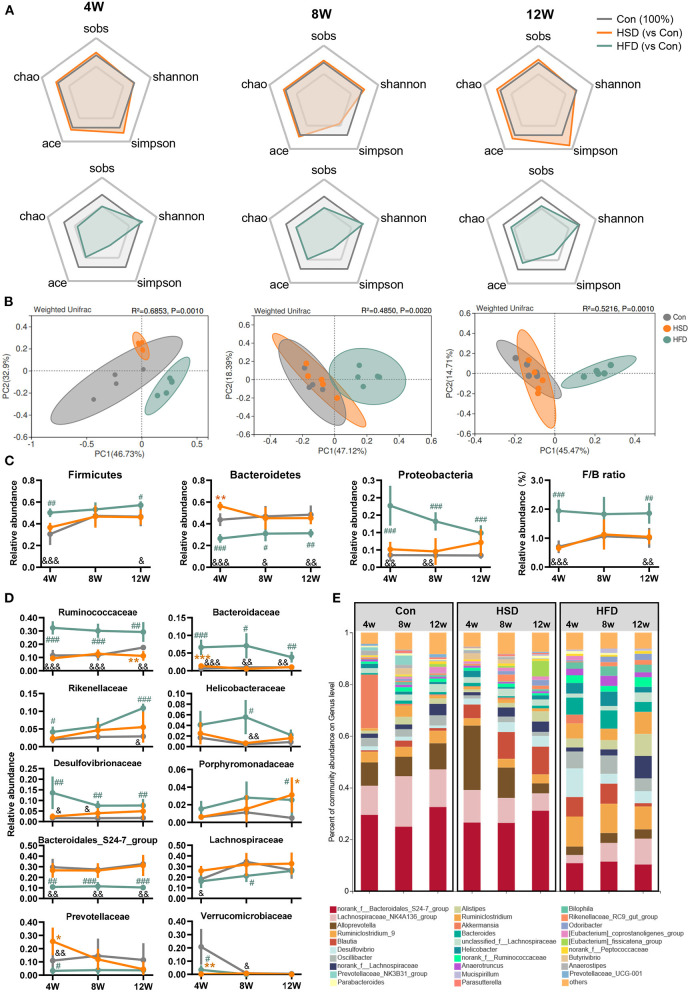
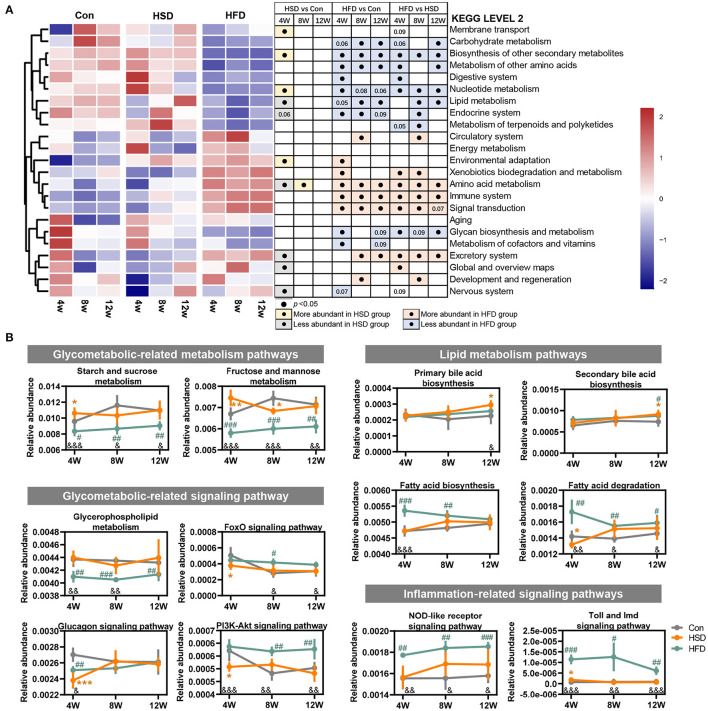
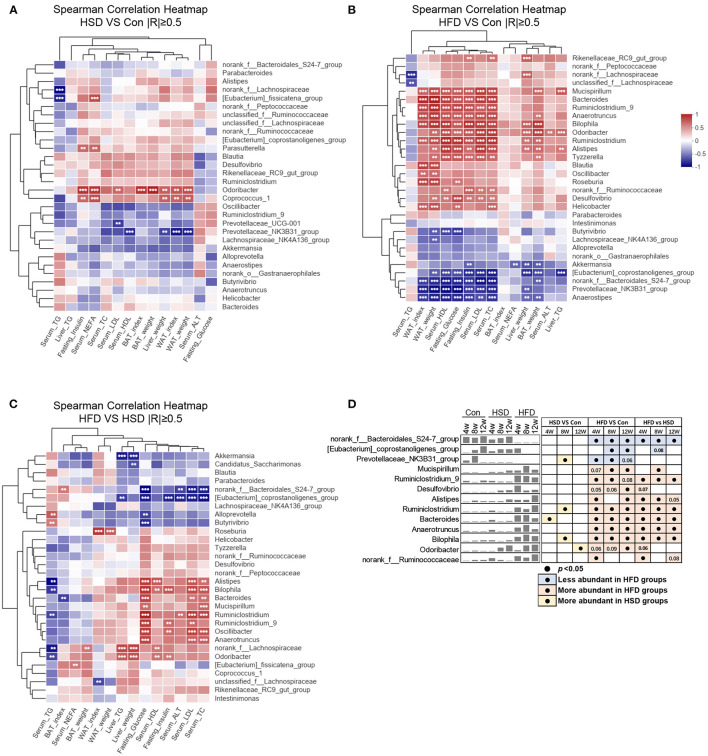
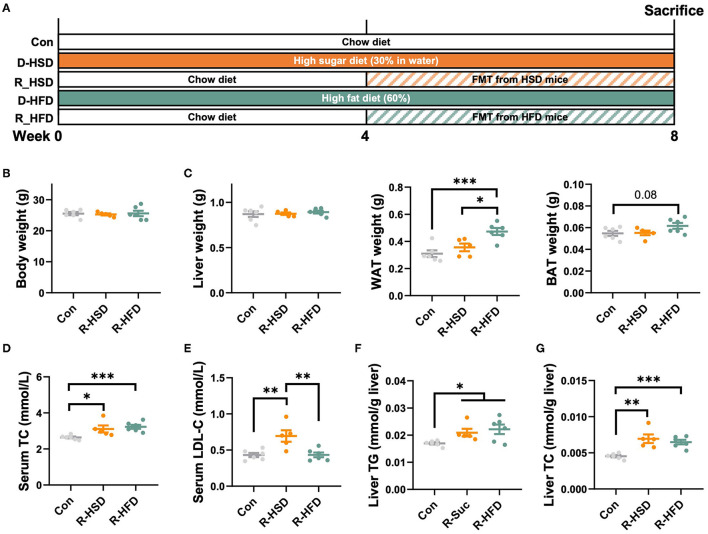
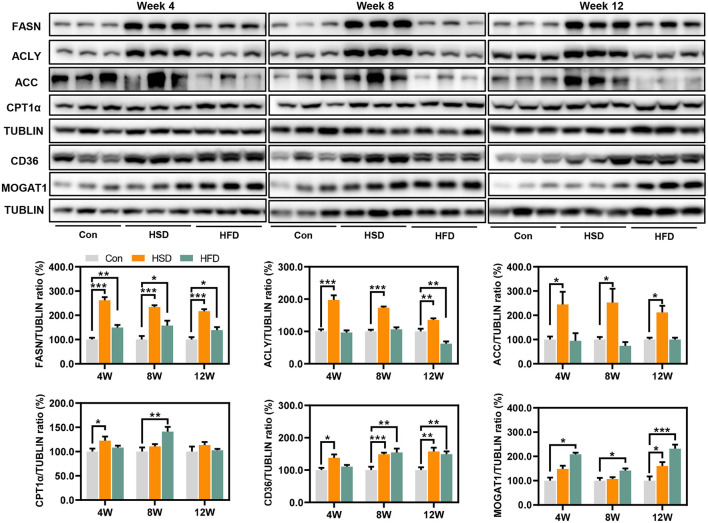
Metabolic disorders are the prelude of metabolic diseases, which are mainly due to the high-energy intake and genetic contribution. High-fat diet (HFD) or high-sucrose diet is widely used for inducing metabolic disorders characterized by increased body weight, insulin resistance, hepatic steatosis, and alteration of gut microbiome. However, the triangle relationship among diets, gut microbiome, and host metabolism is poorly understood. In our study, we investigated the dynamic changes in gut microbiota, and host metabolism in mice that were fed with either chow diet, HFD, or chow diet with 30% sucrose in drinking water (HSD) for continued 12 weeks. The gut microbiota was analyzed with 16S rDNA sequencing on feces. Hepatic gene expression profile was tested with transcriptomics analysis on liver tissue. The host metabolism was evaluated by measuring body weight, insulin sensitivity, serum lipids, and expression of proteins involved in lipid metabolism of liver. The results showed that HFD feeding affected body weight, insulin resistance, and hepatic steatosis more significantly than HSD feeding. 16S rRNA gene sequencing showed that HFD rapidly and steadily suppressed species richness, altered microbiota structure and function, and increased the abundance of bacteria responsible for fatty acid metabolism and inflammatory signaling. In contrast, HSD had minor impact on the overall bacteria structure or function but activated microbial bile acid biosynthesis. Fecal microbiota transplantation suggested that some metabolic changes induced by HFD or HSD feeding were transferrable, especially in the weight of white adipose tissue and hepatic triglyceride level that were consistent with the phenotypes in donor mice. Moreover, transcriptomic results showed that HFD feeding significantly inhibited fatty acid degradation and increase inflammation, while HSD increased hepatic lipogenesis and inhibited primary bile acid synthesis alternative pathway. In general, our study revealed the dynamic and diversified impacts of HFD and HSD on gut microbiota and host metabolism.
代谢紊乱是代谢性疾病的前奏,主要归因于高能量摄入和遗传因素。高脂饮食(HFD)或高糖饮食被广泛用于诱导以体重增加、胰岛素抵抗、肝脂肪变性和肠道微生物群改变为特征的代谢紊乱。然而,饮食、肠道微生物群和宿主代谢之间的三角关系尚不清楚。在我们的研究中,我们调查了连续12周喂食普通饮食、HFD或饮用水中含30%蔗糖的普通饮食(HSD)的小鼠肠道微生物群和宿主代谢的动态变化。通过对粪便进行16S rDNA测序分析肠道微生物群。用肝脏组织的转录组学分析检测肝脏基因表达谱。通过测量体重、胰岛素敏感性、血脂以及肝脏脂质代谢相关蛋白的表达来评估宿主代谢。结果表明,与HSD喂养相比,HFD喂养对体重、胰岛素抵抗和肝脂肪变性的影响更显著。16S rRNA基因测序表明,HFD迅速且稳定地抑制了物种丰富度,改变了微生物群的结构和功能,并增加了负责脂肪酸代谢和炎症信号传导的细菌丰度。相比之下,HSD对整体细菌结构或功能的影响较小,但激活了微生物胆汁酸生物合成。粪便微生物群移植表明,HFD或HSD喂养诱导的一些代谢变化是可转移的,特别是在白色脂肪组织重量和肝脏甘油三酯水平方面,与供体小鼠的表型一致。此外,转录组学结果表明,HFD喂养显著抑制脂肪酸降解并增加炎症,而HSD增加肝脏脂肪生成并抑制初级胆汁酸合成替代途径。总的来说,我们的研究揭示了HFD和HSD对肠道微生物群和宿主代谢的动态和多样化影响。