Cherng Juin-Hong, Chang Shu-Jen, Chiu Yaw-Kwan, Chiu Yu-Hsiang, Fang Tong-Jing, Chen Hsiang-Cheng
Graduate Institute of Life Sciences, National Defense Medical Center, Taipei, Taiwan.
Department and Graduate Institute of Biology and Anatomy, National Defense Medical Center, Taipei, Taiwan.
Front Bioeng Biotechnol. 2022 Jul 19;10:925197. doi: 10.3389/fbioe.2022.925197. eCollection 2022.
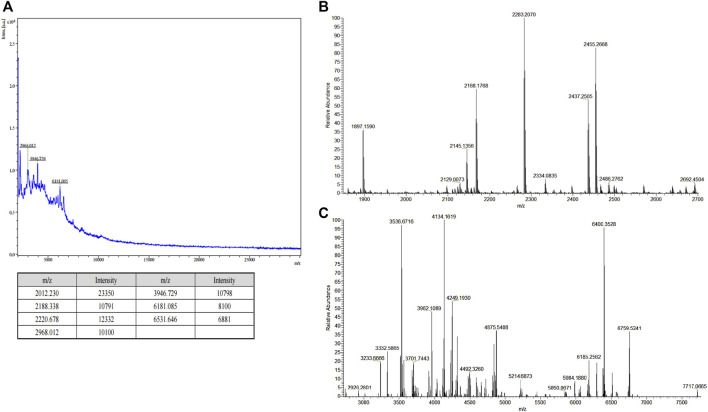
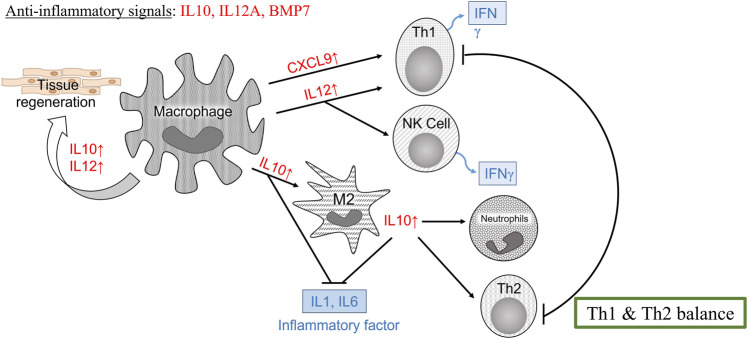
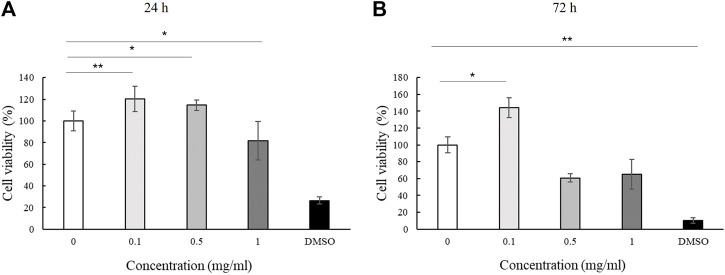
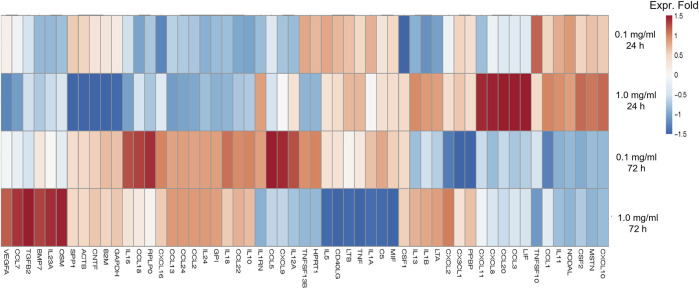
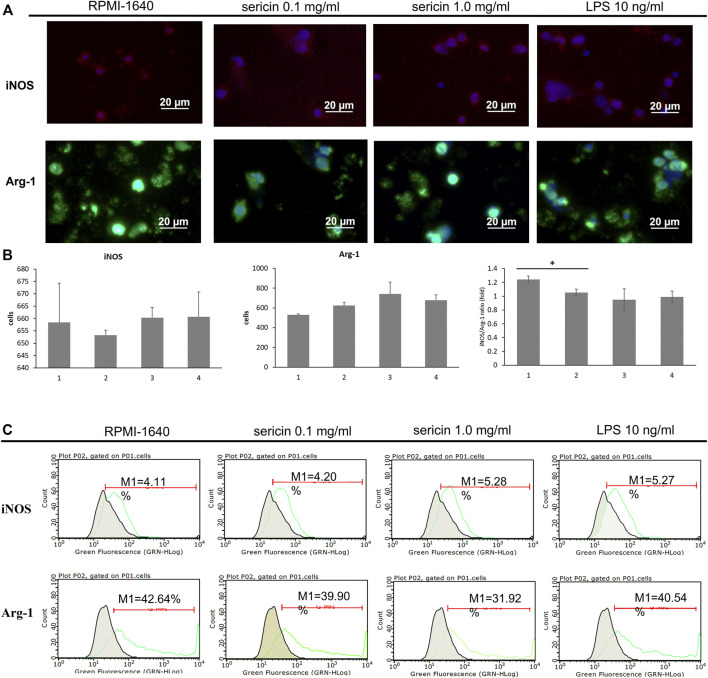
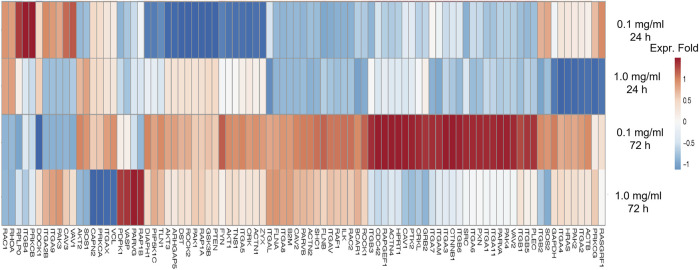
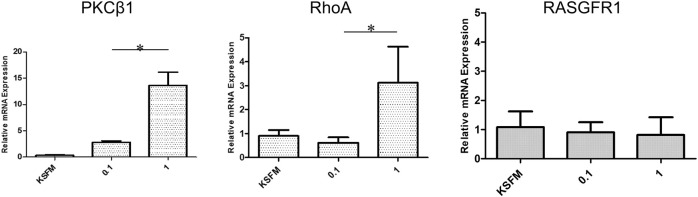
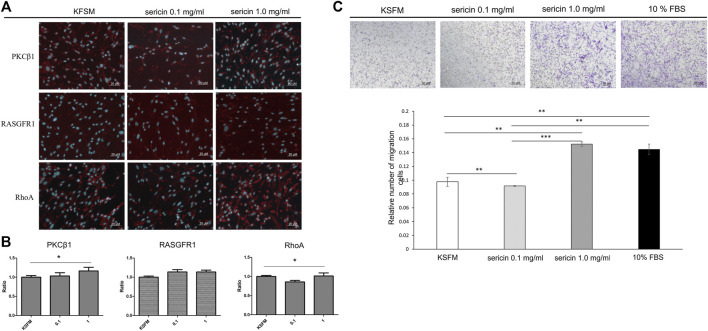
Sericin, a waste product of the silk textile industry, has favorable physicochemical and biological properties. In this study, we extracted a low molecular weight (MW) sericin (LMW-sericin; below 10 kDa) by a performing high-temperature and high-pressure method and confirmed the MW using matrix-assisted laser desorption ionization-time of flight and liquid chromatography-mass spectrometry. Furthermore, we determined its biological effects on macrophages and human adipose stem cells (hASCs) as cell models to investigate the biocompatibility, immunomodulation behavior, and potential signaling pathway-related wound healing analyses of gene expression of focal adhesion and human cytokines and chemokines using quantitative real-time polymerase chain reaction and cytokine assay. LMW-sericin showed good biocompatibility both in macrophages and hASCs. Macrophages cultured with 0.1 mg/ml LMW-sericin displayed an improved inflammatory response shown by the upregulation of CXCL9, IL12A, BMP7, and IL10, which developed Th1 and Th2 balance. LMW-sericin also improved the differentiation of macrophages toward the M2 phenotype by significantly enhancing the expression of Arg-1, which is conducive to the repair of the inflammatory environment. Moreover, the gene expression of hASCs showed that LMW-sericin promoted the secretion of beneficial adhesion molecules that potentially activate the gene transcription of differentiation and migration in hASCs, as well as significantly enhanced the levels of PKCβ1, RhoA, and RasGFR1 as fruitful molecules in wound healing. These findings provide insights into LMW-sericin application as a potential biomaterial for wound management.
丝胶蛋白是丝绸纺织工业的一种废弃物,具有良好的物理化学和生物学特性。在本研究中,我们采用高温高压法提取了一种低分子量(MW)的丝胶蛋白(LMW-丝胶蛋白;低于10 kDa),并使用基质辅助激光解吸电离飞行时间质谱和液相色谱-质谱联用技术确认了其分子量。此外,我们以巨噬细胞和人脂肪干细胞(hASCs)作为细胞模型,研究了其生物学效应,通过定量实时聚合酶链反应和细胞因子检测,对其生物相容性、免疫调节行为以及与伤口愈合相关的潜在信号通路进行了分析,包括粘着斑和人细胞因子及趋化因子的基因表达。LMW-丝胶蛋白在巨噬细胞和hASCs中均表现出良好的生物相容性。用0.1 mg/ml LMW-丝胶蛋白培养的巨噬细胞显示出炎症反应改善,表现为CXCL9、IL12A、BMP7和IL10的上调,这促进了Th1和Th2平衡。LMW-丝胶蛋白还通过显著增强Arg-1的表达,改善了巨噬细胞向M2表型的分化,这有利于炎症环境的修复。此外,hASCs的基因表达表明,LMW-丝胶蛋白促进了有益粘附分子的分泌,这些分子可能激活hASCs中分化和迁移的基因转录,同时还显著提高了PKCβ1、RhoA和RasGFR1的水平,这些都是伤口愈合中的有效分子。这些发现为LMW-丝胶蛋白作为伤口管理潜在生物材料的应用提供了见解。