Department of Industrial Engineering, Clemson University, USA.
SHARP, Washington State Department of Labor & Industries, USA.
Appl Ergon. 2022 Nov;105:103845. doi: 10.1016/j.apergo.2022.103845. Epub 2022 Jul 20.
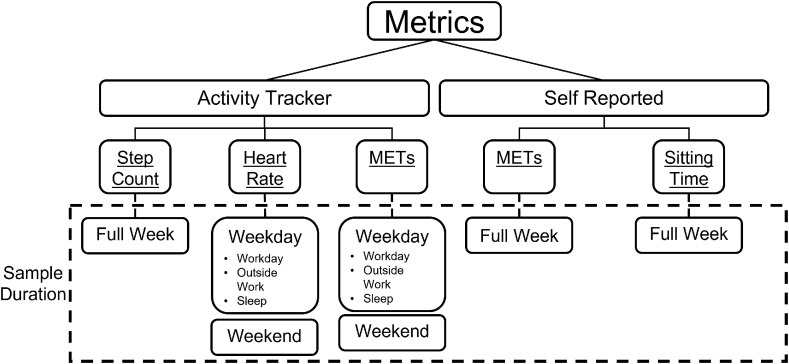
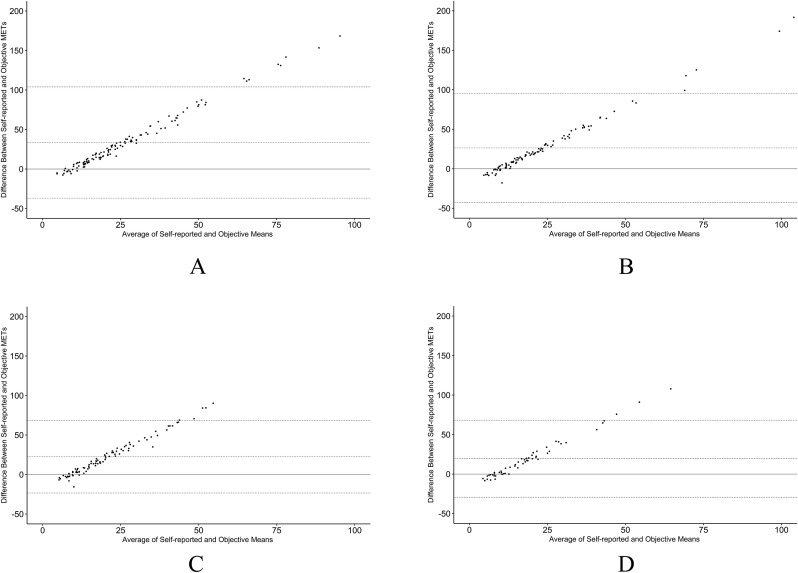
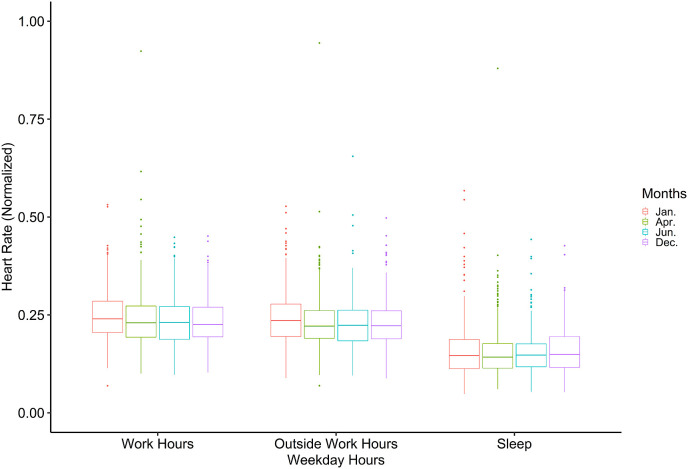
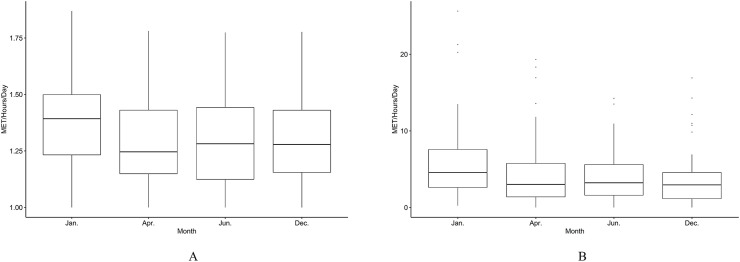
After the onset of the COVID-19 pandemic, many office workers transitioned to working-from-home (WFH) which altered routine physical activity (PA). To understand how these workers' PA were affected throughout the pandemic, PA data collected in January, April, June, and December 2020 with an activity tracker and a validated survey were analyzed. Between January and December, it was found that step counts during the weekday decreased (p < 0.01), weekday heart rate was higher than weekends (p < 0.01), activity-tracker and self-reported PA decreased (p < 0.01), and sitting time increased (p < 0.01). To understand the agreement between the objective and subjective METs, Bland-Altman analyses were completed and demonstrated an acceptable level of agreement. Findings show decreased level of PA amongst WFH office workers and that the activity tracker and survey are reliable methods of recording WFH PA.
在 COVID-19 大流行期间,许多上班族转为在家办公(WFH),这改变了他们的日常体力活动(PA)。为了了解这些工人在整个大流行期间的 PA 是如何受到影响的,分析了 2020 年 1 月、4 月、6 月和 12 月使用活动追踪器和经过验证的调查收集的 PA 数据。结果发现,工作日的步数减少(p<0.01),工作日的心率高于周末(p<0.01),活动追踪器和自我报告的 PA 减少(p<0.01),久坐时间增加(p<0.01)。为了了解客观和主观 METs 之间的一致性,完成了 Bland-Altman 分析,结果表明在家办公的上班族的 PA 水平下降,并且活动追踪器和调查是记录在家办公 PA 的可靠方法。