Robin Hannah P, Trudeau Courtney N, Robbins Adam J, Chung Emily J, Rahman Erum, Strickland Olivia L Gangmark, Jordan Scott, Licari Frank W, Winden Duane R, Reynolds Paul R, Arroyo Juan A
College of Dental Medicine, Roseman University of Health Sciences, South Jordan, UT, United States.
Lung and Placenta Laboratory, Department of Cell Biology and Physiology, Brigham Young University, Provo, UT, United States.
Front Oncol. 2022 Jul 22;12:917862. doi: 10.3389/fonc.2022.917862. eCollection 2022.
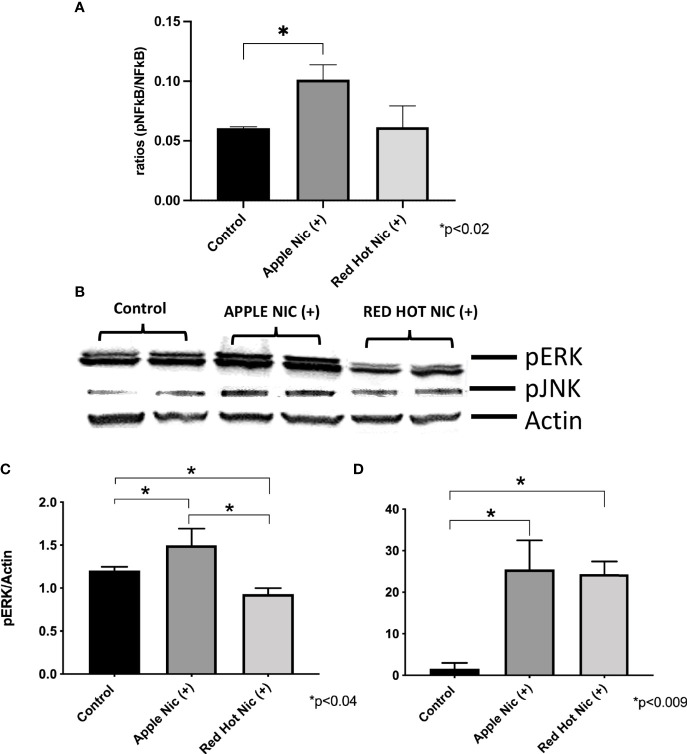
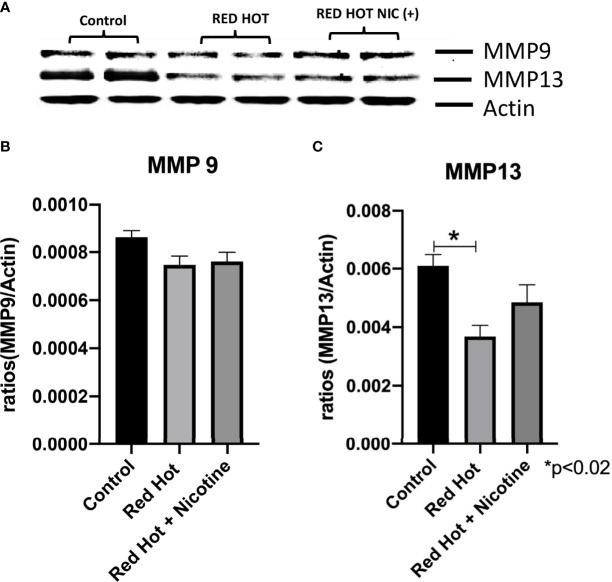
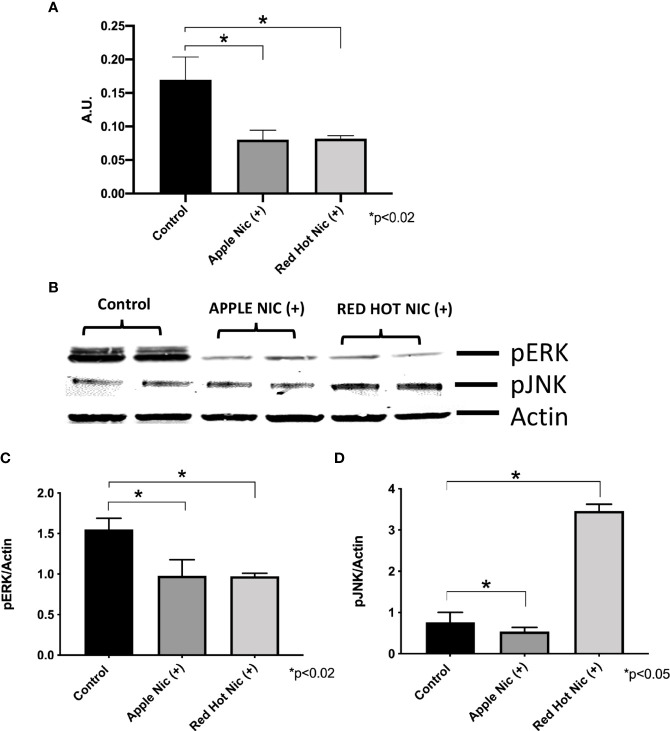
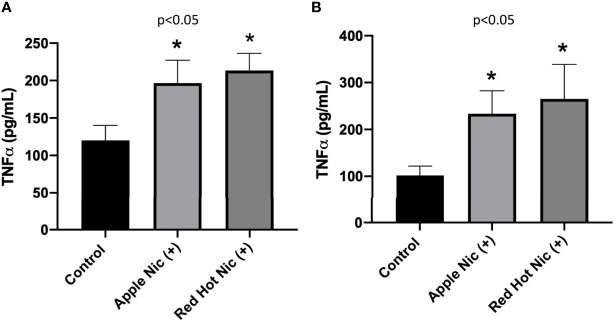
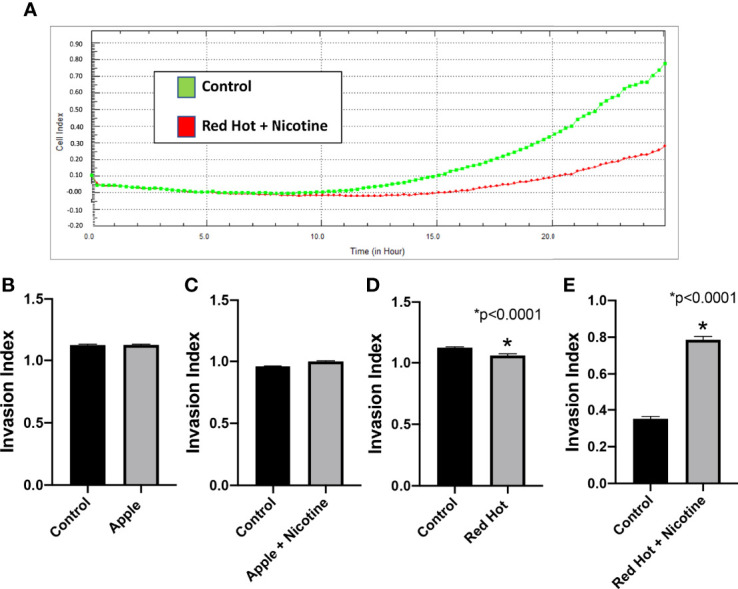
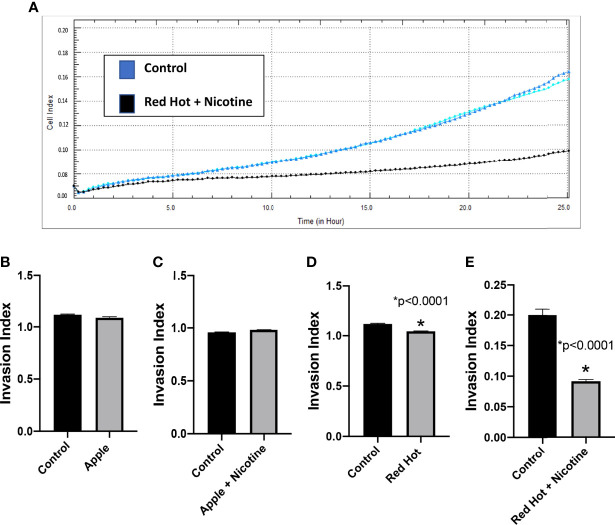
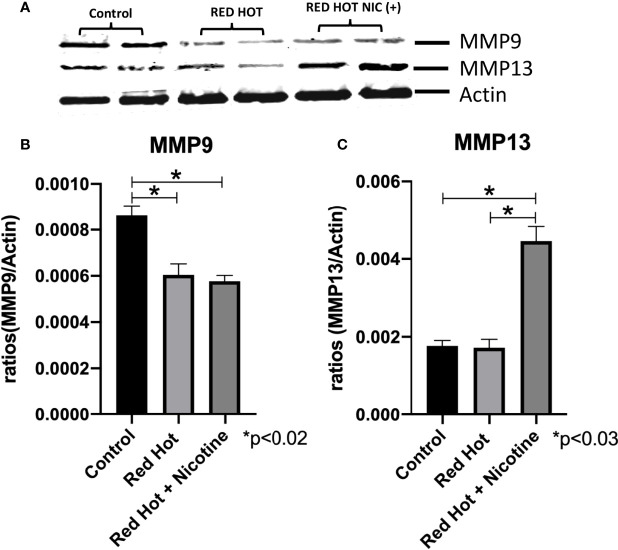
Electronic cigarettes (eCig) represent a new avenue of tobacco exposure that involves heating oil-based liquids and the delivery of aerosolized flavors with or without nicotine, yet little is known about their overall health impact. The oral cavity is an anatomic gateway for exposure that can be compromised by activating myriad of signaling networks. Oral squamous cell carcinoma (OSSC) is a common malignancy affecting 30,000 people in the United States each year. Our objective was to determine the impact of eCig and nicotine on gingival OSSC invasion and their secretion of pro-inflammatory molecules. Gingiva-derived Ca9-22 cells and tongue-derived Cal27 cells were exposed to eCig vapor extract (EVE) generated from Red Hot or Green Apple (Apple) flavored eCig solution +/- nicotine for 6 hours. Isolation of protein lysates and collection conditioned media was done after treatment. Real-time cellular invasion was assessed using a RTCA DP instrument. Protein expression was determined using western blot. Compared to controls, we observed: elevated NF-B, TNF-α, ERK, JNK, MMP-13 and cell invasion by Ca9-22 treated with Apple EVE; increased TNF-α and JNK by Ca9-22 treated with Red Hot EVE; and increased TNF-α and JNK by Cal27 cells treated with both Apple and Red Hot EVE. We conclude that eCig flavoring and nicotine orchestrated differential cell invasion and inflammatory effects. This study provides an important initial step in dissecting mechanisms of cancerous invasion and molecular avenues employed by OSCC.
电子烟是烟草暴露的一种新途径,它涉及加热油基液体并输送含有或不含尼古丁的雾化香味,但人们对其对整体健康的影响知之甚少。口腔是暴露的解剖学通道,通过激活无数信号网络可能会受到损害。口腔鳞状细胞癌(OSSC)是一种常见的恶性肿瘤,在美国每年影响3万人。我们的目标是确定电子烟和尼古丁对牙龈OSSC侵袭及其促炎分子分泌的影响。将牙龈来源的Ca9-22细胞和舌来源的Cal27细胞暴露于由红热或青苹果(苹果)口味的电子烟溶液产生的电子烟蒸汽提取物(EVE)中,并添加或不添加尼古丁,处理6小时。处理后进行蛋白质裂解物的分离和条件培养基的收集。使用RTCA DP仪器评估实时细胞侵袭。使用蛋白质印迹法测定蛋白质表达。与对照组相比,我们观察到:用苹果EVE处理的Ca9-22细胞中NF-κB、TNF-α、ERK、JNK、MMP-13升高且细胞侵袭增加;用红热电电子烟处理的Ca9-22细胞中TNF-α和JNK增加;用苹果和红热电电子烟处理的Cal27细胞中TNF-α和JNK增加。我们得出结论,电子烟调味剂和尼古丁协同作用产生不同的细胞侵袭和炎症效应。这项研究为剖析癌侵袭机制和OSCC所采用的分子途径提供了重要的第一步。