Nuffield Department of Population Health, University of Oxford, Oxford, OX3 7LFUK.
Oxford Martin School, University of Oxford, Oxford, OX1 3BDUK.
Proc Natl Acad Sci U S A. 2022 Aug 16;119(33):e2120584119. doi: 10.1073/pnas.2120584119. Epub 2022 Aug 8.
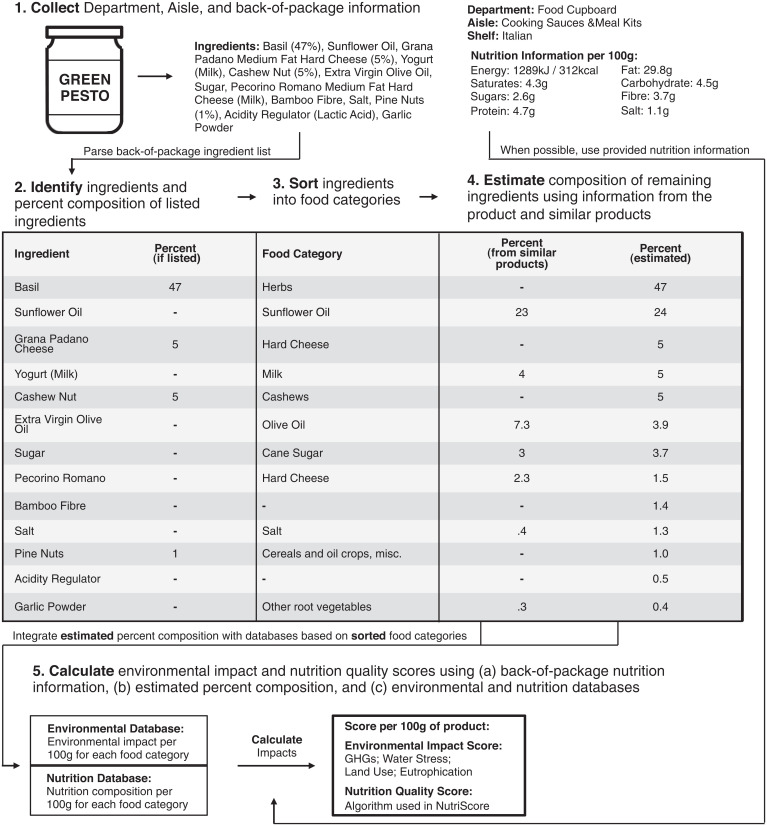
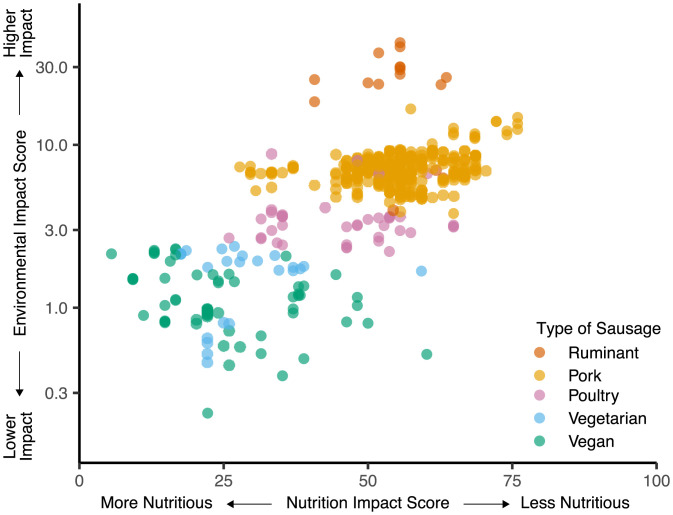
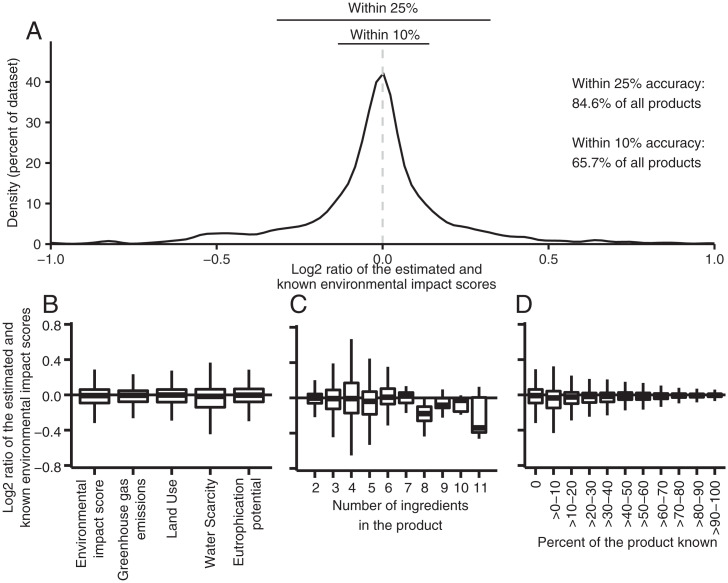
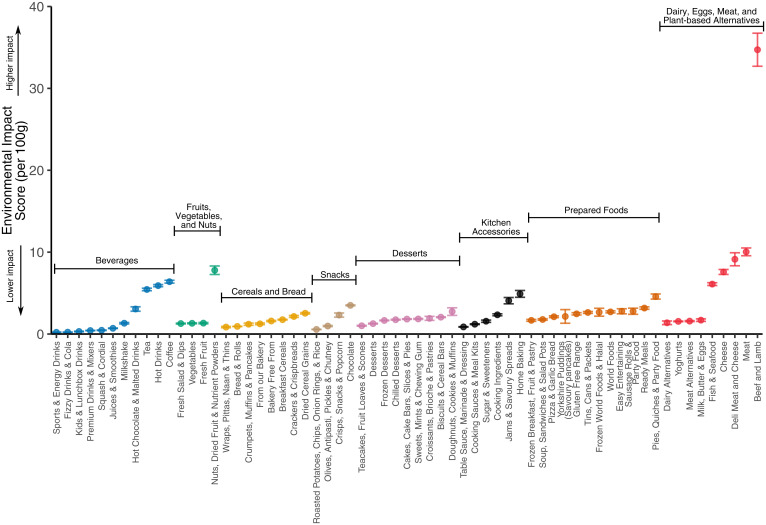
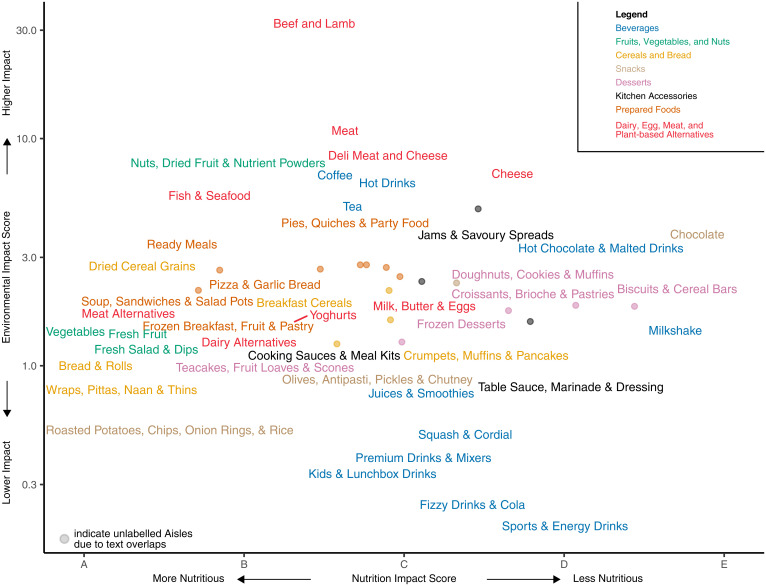
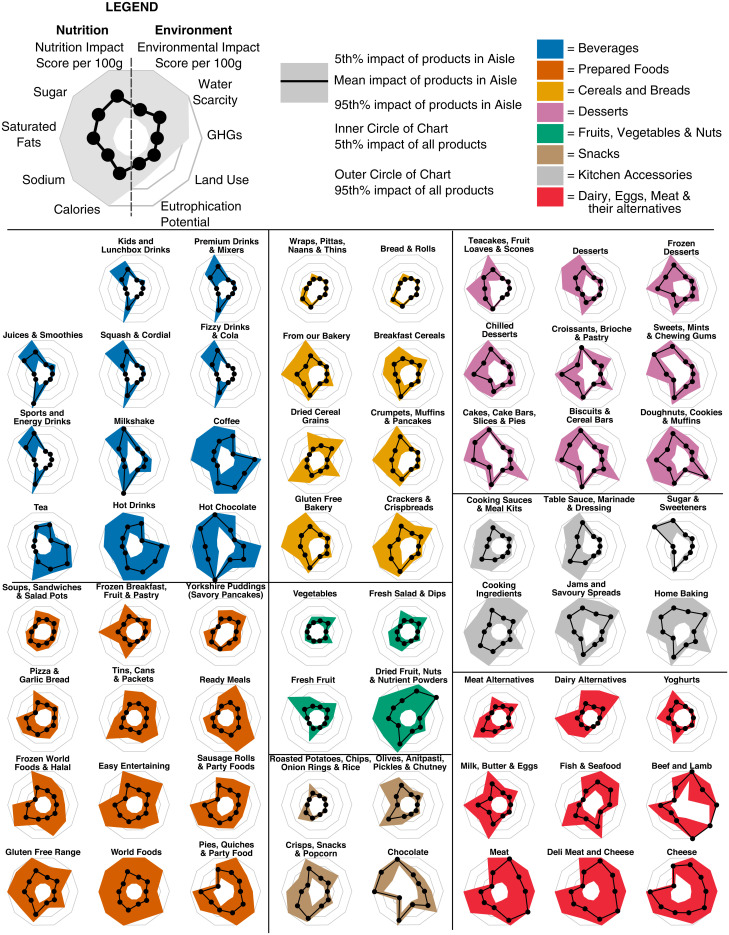
Understanding and communicating the environmental impacts of food products is key to enabling transitions to environmentally sustainable food systems [El Bilali and Allahyari, Inf. Process. Agric. 5, 456-464 (2018)]. While previous analyses compared the impacts of food commodities such as fruits, wheat, and beef [Poore and Nemecek, 360, 987-992 (2018)], most food products contain numerous ingredients. However, because the amount of each ingredient in a product is often known only by the manufacturer, it has been difficult to assess their environmental impacts. Here, we develop an approach to overcome this limitation. It uses prior knowledge from ingredient lists to infer the composition of each ingredient, and then pairs this with environmental databases [Poore and Nemecek 360, 987-992 (2018); Gephart et al., Nature 597, 360-365 (2021)] to derive estimates of a food product's environmental impact across four indicators: greenhouse gas emissions, land use, water stress, and eutrophication potential. Using the approach on 57,000 products in the United Kingdom and Ireland shows food types have low (e.g., sugary beverages, fruits, breads), to intermediate (e.g., many desserts, pastries), to high environmental impacts (e.g., meat, fish, cheese). Incorporating NutriScore reveals more nutritious products are often more environmentally sustainable but there are exceptions to this trend, and foods consumers may view as substitutable can have markedly different impacts. Sensitivity analyses indicate the approach is robust to uncertainty in ingredient composition and in most cases sourcing. This approach provides a step toward enabling consumers, retailers, and policy makers to make informed decisions on the environmental impacts of food products.
了解和传达食品的环境影响是实现向环境可持续食品系统转型的关键[El Bilali 和 Allahyari,Inf. Process. Agric. 5,456-464(2018)]。虽然之前的分析比较了食品商品的影响,如水果、小麦和牛肉[Poore 和 Nemecek,360,987-992(2018)],但大多数食品都含有许多成分。然而,由于产品中每种成分的数量通常只有制造商知道,因此很难评估其环境影响。在这里,我们开发了一种克服这一限制的方法。它利用成分清单中的先验知识来推断每种成分的组成,然后将其与环境数据库[Poore 和 Nemecek 360,987-992(2018);Gephart 等人,Nature 597,360-365(2021)]相结合,得出食品产品在四个指标下的环境影响估计值:温室气体排放、土地利用、水压力和富营养化潜力。在英国和爱尔兰的 57000 种产品上使用该方法表明,食品类型的环境影响较低(例如含糖饮料、水果、面包)、中等(例如许多甜点、糕点)、较高(例如肉类、鱼类、奶酪)。纳入 NutriScore 表明,营养更丰富的产品通常更具有环境可持续性,但也存在例外情况,而且消费者可能认为可替代的食品可能具有明显不同的影响。敏感性分析表明,该方法对成分组成和大多数情况下的来源的不确定性具有稳健性。这种方法为使消费者、零售商和政策制定者能够就食品的环境影响做出明智的决策提供了一个步骤。