G0 Cell Unit, Okinawa Institute of Science and Technology Graduate University, Onna-son, Okinawa 904-0495, Japan.
Institute for Quantitative Biosciences, University of Tokyo, Tokyo, 113-0032 Japan.
Proc Natl Acad Sci U S A. 2022 Aug 16;119(33):e2208004119. doi: 10.1073/pnas.2208004119. Epub 2022 Aug 8.
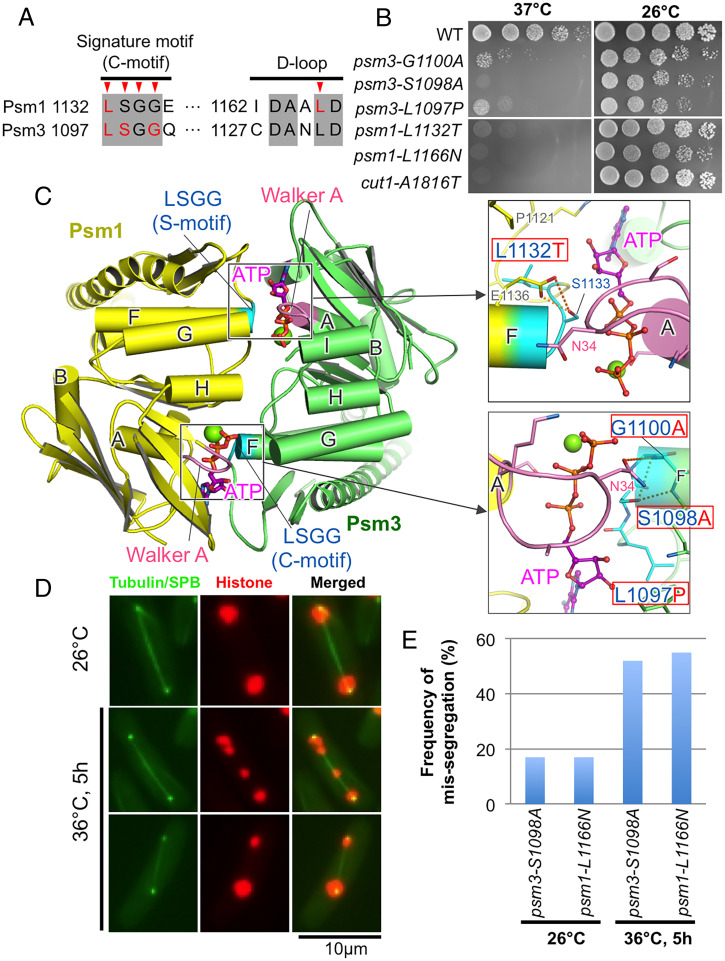
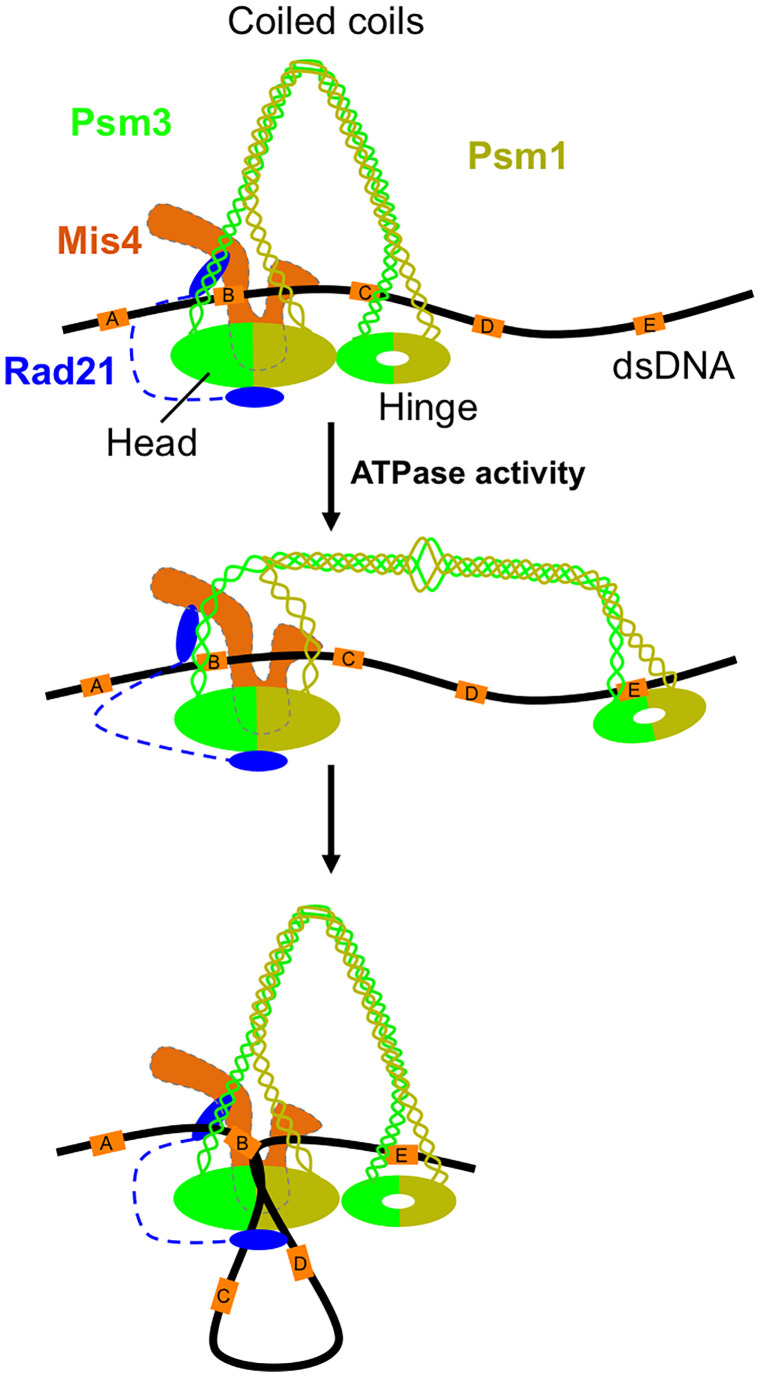
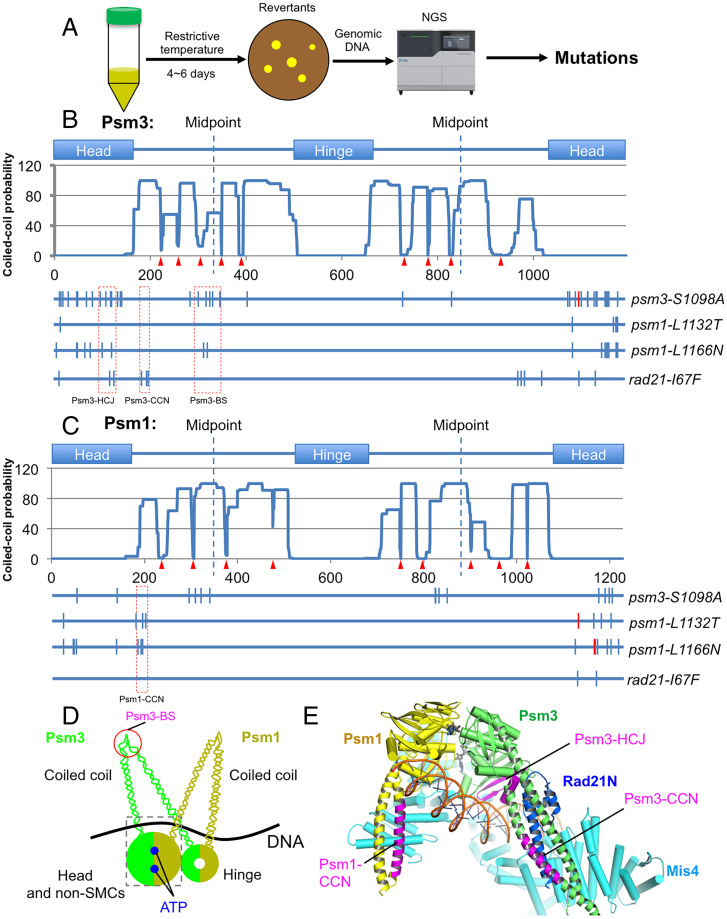
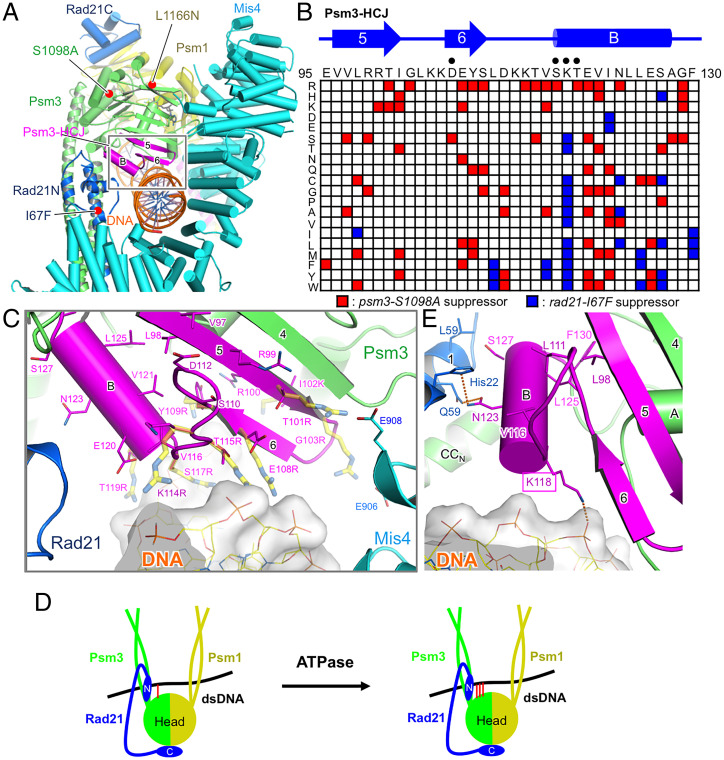
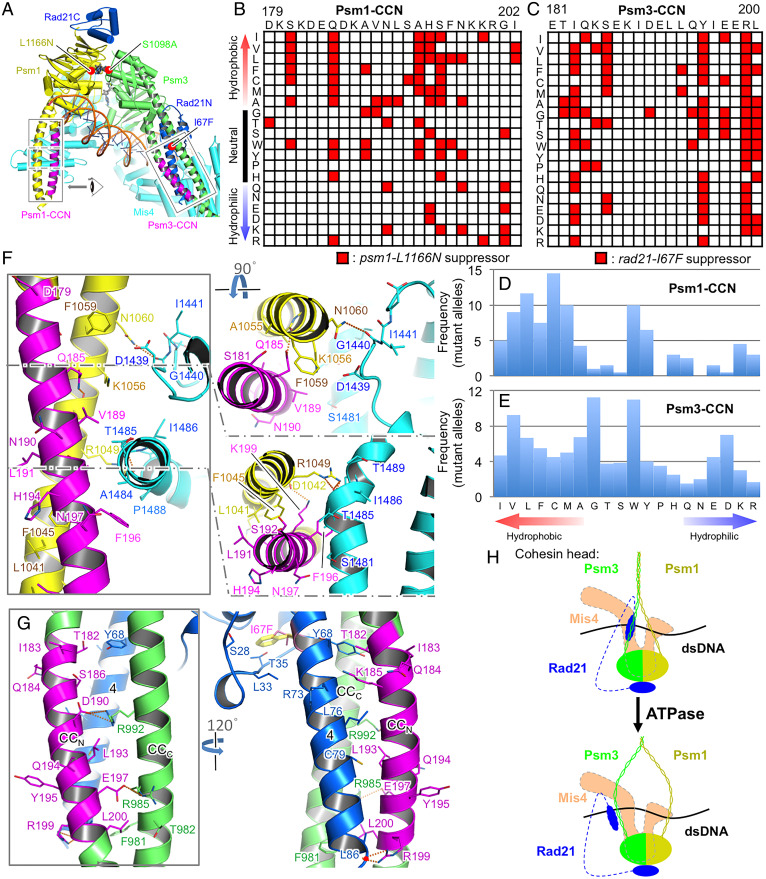
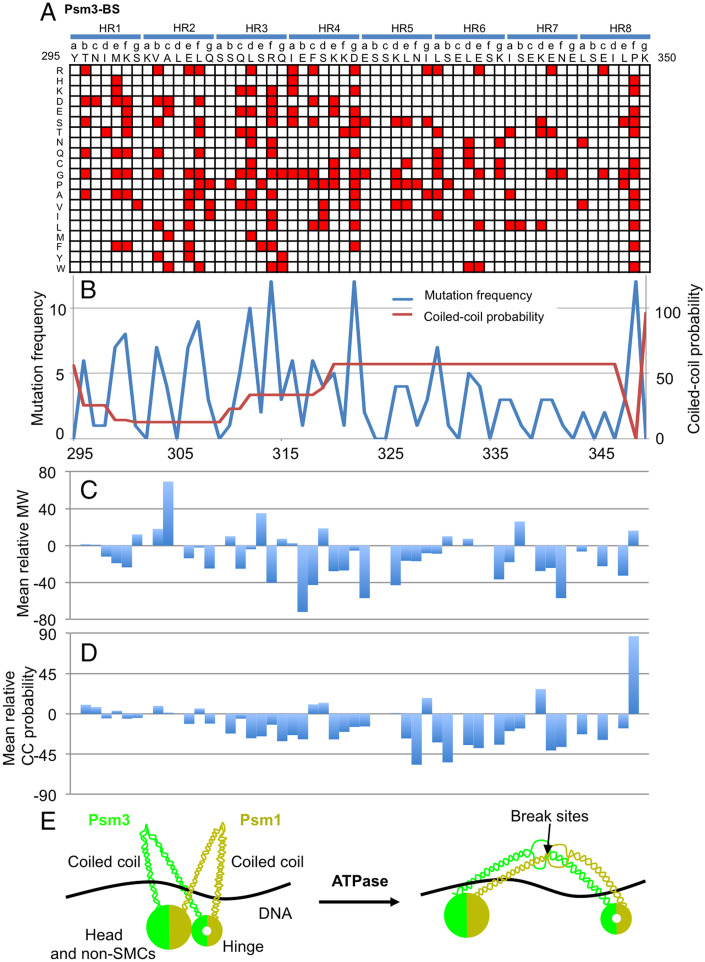
The cohesin complex is required for sister chromatid cohesion and genome compaction. Cohesin coiled coils (CCs) can fold at break sites near midpoints to bring head and hinge domains, located at opposite ends of coiled coils, into proximity. Whether ATPase activities in the head play a role in this conformational change is yet to be known. Here, we dissected functions of cohesin ATPase activities in cohesin dynamics in . Isolation and characterization of cohesin ATPase temperature-sensitive (ts) mutants indicate that both ATPase domains are required for proper chromosome segregation. Unbiased screening of spontaneous suppressor mutations rescuing the temperature lethality of cohesin ATPase mutants identified several suppressor hotspots in cohesin that located outside of ATPase domains. Then, we performed comprehensive saturation mutagenesis targeted to these suppressor hotspots. Large numbers of the identified suppressor mutations indicated several different ways to compensate for the ATPase mutants: 1) Substitutions to amino acids with smaller side chains in coiled coils at break sites around midpoints may enable folding and extension of coiled coils more easily; 2) substitutions to arginine in the DNA binding region of the head may enhance DNA binding; or 3) substitutions to hydrophobic amino acids in coiled coils, connecting the head and interacting with other subunits, may alter conformation of coiled coils close to the head. These results reflect serial structural changes in cohesin driven by its ATPase activities potentially for packaging DNAs.
着丝粒复合物对于姐妹染色单体的黏合和基因组的压缩是必需的。着丝粒的卷曲螺旋(coiled coils)可以在靠近中部的断裂点折叠,使位于卷曲螺旋两端的头和铰链结构域接近。目前尚不清楚头结构域中的 ATP 酶活性是否在这种构象变化中发挥作用。在这里,我们在. 中解析了着丝粒复合物的 ATP 酶活性在其动力学中的功能。着丝粒复合物 ATP 酶温度敏感(ts)突变体的分离和鉴定表明,两个 ATP 酶结构域对于正确的染色体分离都是必需的。自发抑制突变体的无偏筛选可以挽救着丝粒复合物 ATP 酶突变体的温度致死性,这些抑制突变体的热点位于 ATP 酶结构域之外。然后,我们对这些抑制热点进行了全面的饱和诱变。大量鉴定出的抑制突变表明有几种不同的方法可以补偿 ATP 酶突变体:1)在中部附近的断裂点周围的卷曲螺旋中,用较小侧链的氨基酸取代,可以更容易地进行卷曲螺旋的折叠和延伸;2)在头结构域的 DNA 结合区的精氨酸取代可能增强 DNA 结合;3)在连接头和与其他亚基相互作用的卷曲螺旋中的疏水性氨基酸取代,可能改变靠近头的卷曲螺旋的构象。这些结果反映了着丝粒复合物的 ATP 酶活性驱动的一系列结构变化,可能是为了包装 DNA。