Research Center of Chinese Herbal Resource Science and Engineering, Guangzhou University of Chinese Medicine, Guangzhou 510006, China.
Key Laboratory of Chinese Medicinal Resource from Lingnan, Guangzhou University of Chinese Medicine, Guangzhou 510006, China.
Plant Physiol. 2022 Nov 28;190(4):2122-2136. doi: 10.1093/plphys/kiac371.
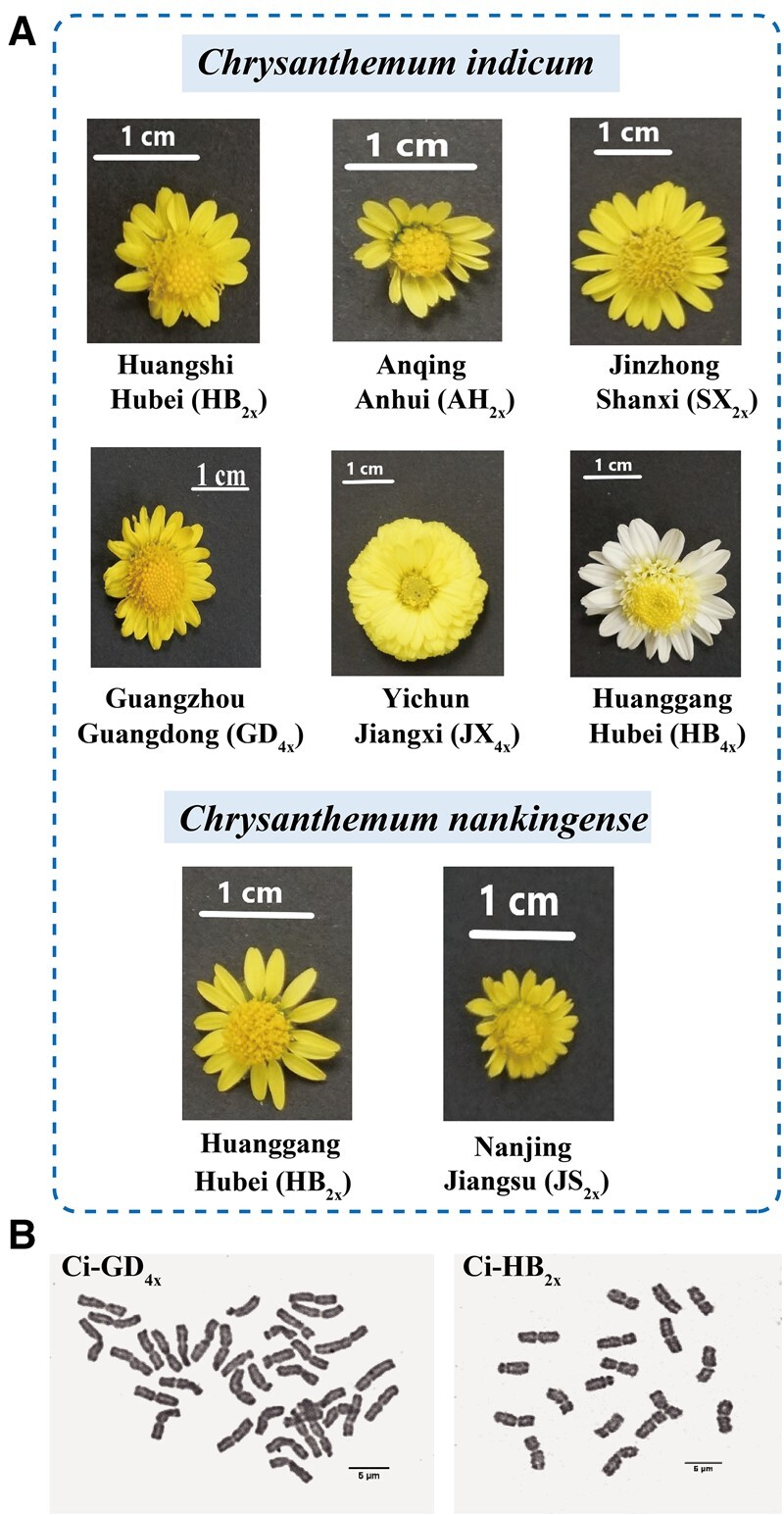
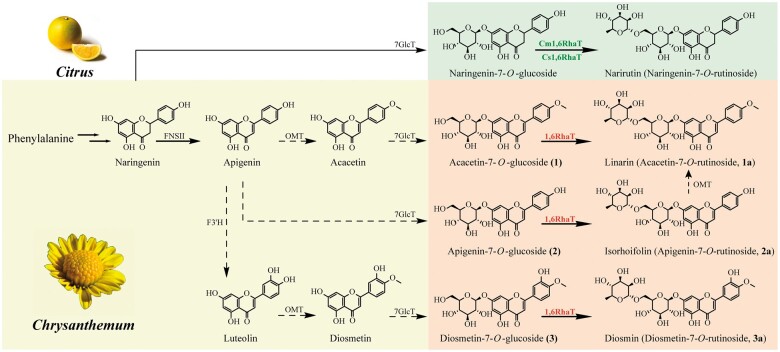
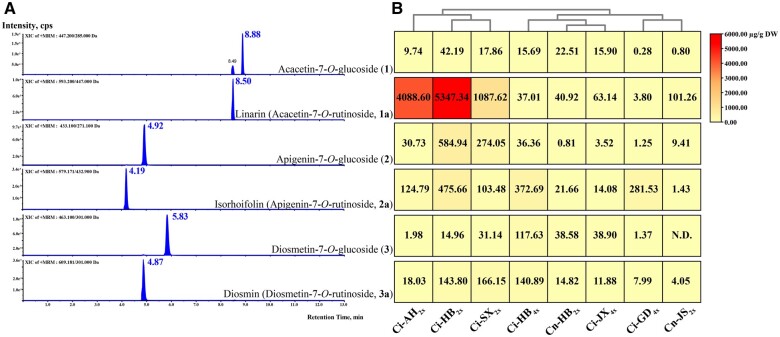
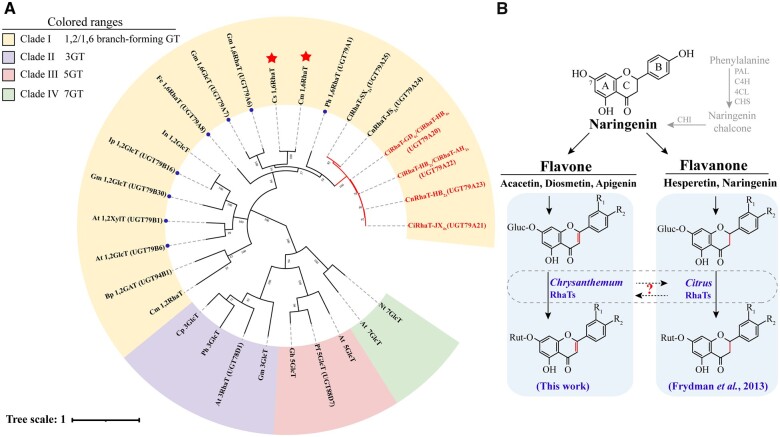
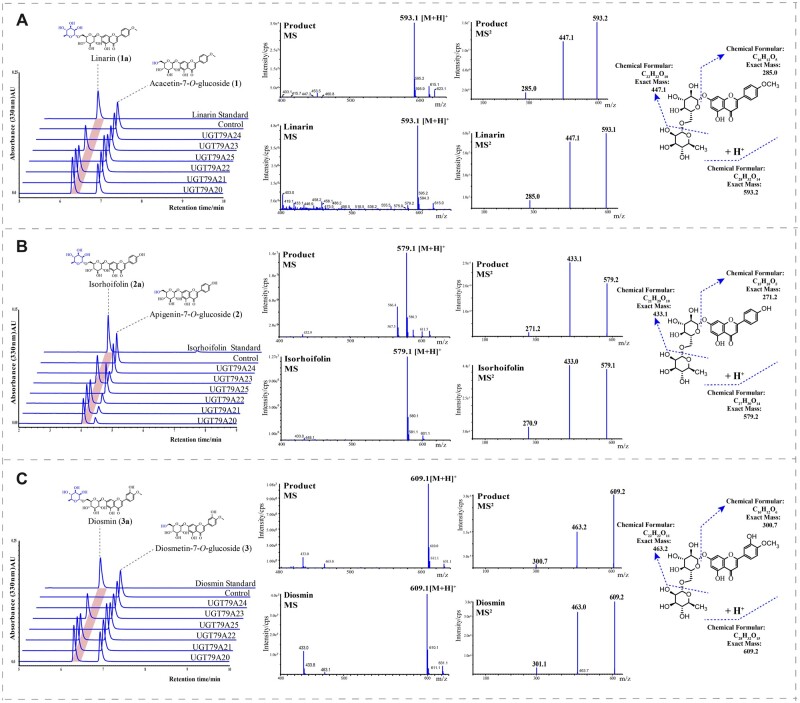
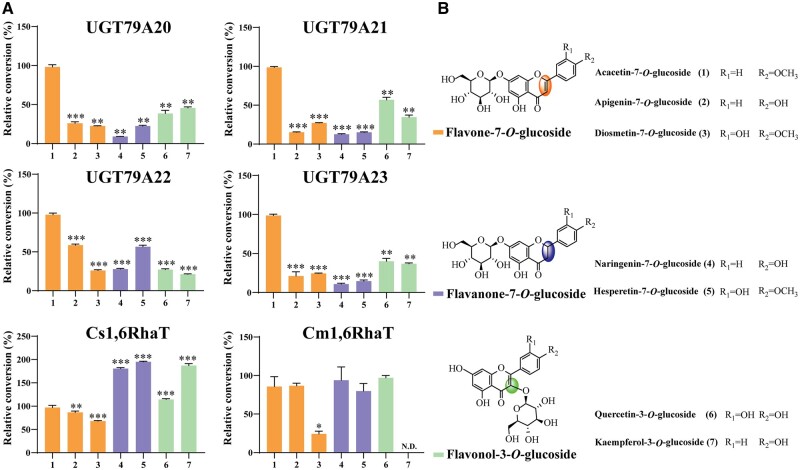
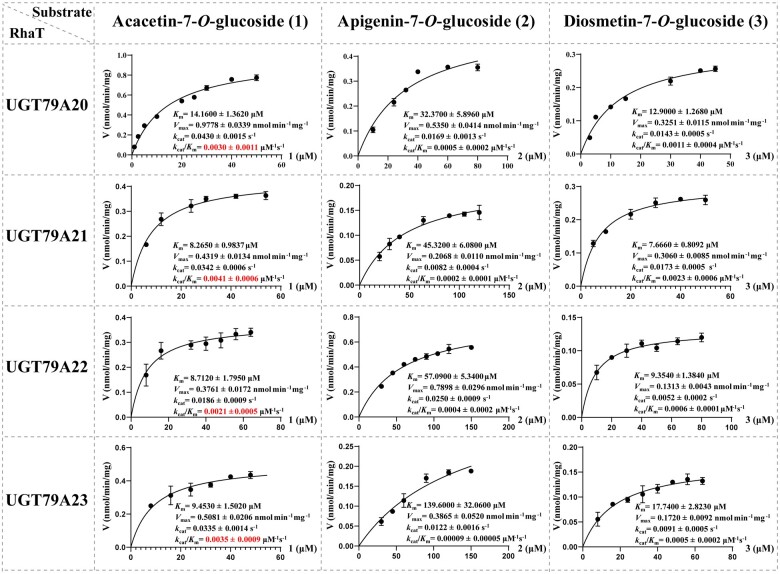
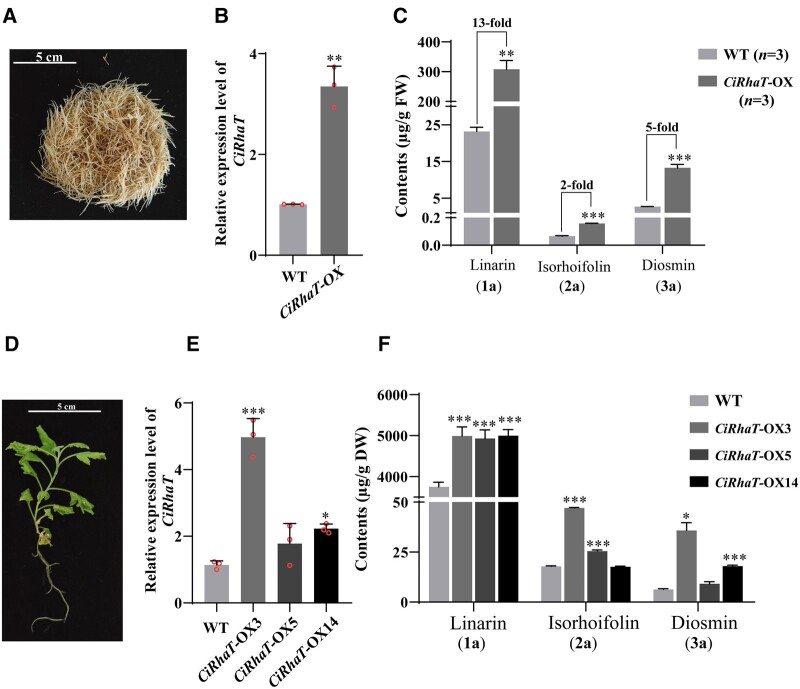
Linarin (acacetin-7-O-rutinoside), isorhoifolin (apigenin-7-O-rutinoside), and diosmin (diosmetin-7-O-rutinoside) are chemically and structurally similar flavone rutinoside (FR) compounds found in Chrysanthemum L. (Anthemideae, Asteraceae) plants. However, their biosynthetic pathways remain largely unknown. In this study, we cloned and compared FRs and genes encoding rhamnosyltransferases (RhaTs) among eight accessions of Chrysanthemum polyploids. We also biochemically characterized RhaTs of Chrysanthemum plants and Citrus (Citrus sinensis and Citrus maxima). RhaTs from these two genera are substrate-promiscuous enzymes catalyzing the rhamnosylation of flavones, flavanones, and flavonols. Substrate specificity analysis revealed that Chrysanthemum 1,6RhaTs preferred flavone glucosides (e.g. acacetin-7-O-glucoside), whereas Cs1,6RhaT preferred flavanone glucosides. The nonsynonymous substitutions of RhaTs found in some cytotypes of diploids resulted in the loss of catalytic function. Phylogenetic analysis and specialized pathways responsible for the biosynthesis of major flavonoids in Chrysanthemum and Citrus revealed that rhamnosylation activity might share a common evolutionary origin. Overexpression of RhaT in hairy roots resulted in 13-, 2-, and 5-fold increases in linarin, isorhoifolin, and diosmin contents, respectively, indicating that RhaT is mainly involved in the biosynthesis of linarin. Our findings not only suggest that the substrate promiscuity of RhaTs contributes to the diversity of FRs in Chrysanthemum species but also shed light on the evolution of flavone and flavanone rutinosides in distant taxa.
蒙花苷(芹糖基芦丁苷)、异槲皮苷(芹糖基柚皮苷)和地奥司明(香叶木苷)是菊科(Anthemideae,菊科)植物中化学结构和性质相似的黄酮类芸香糖苷(FR)化合物。然而,它们的生物合成途径在很大程度上仍然未知。在这项研究中,我们克隆并比较了 8 个菊属多倍体植物中的 FR 及其编码鼠李糖基转移酶(RhaTs)的基因。我们还对菊科和柑橘属(Citrus sinensis 和 Citrus maxima)植物的 RhaTs 进行了生化特性分析。这两个属的 RhaTs 是具有底物杂泛性的酶,可催化黄酮、黄烷酮和黄酮醇的鼠李糖基化。底物特异性分析表明,菊花 1,6RhaTs 偏好黄酮葡萄糖苷(如芹糖基木犀草素-7-O-葡萄糖苷),而 Cs1,6RhaT 则偏好黄烷酮葡萄糖苷。在一些二倍体的细胞型中发现的 RhaTs 非同义取代导致催化功能丧失。RhaTs 的系统发育分析和菊科与柑橘属中主要类黄酮生物合成的特化途径表明,鼠李糖基化活性可能具有共同的进化起源。RhaT 在发根中的过表达导致蒙花苷、异槲皮苷和地奥司明的含量分别增加了 13 倍、2 倍和 5 倍,表明 RhaT 主要参与了蒙花苷的生物合成。我们的研究结果不仅表明 RhaTs 的底物杂泛性有助于菊属植物 FR 的多样性,还揭示了远缘类群中黄酮和黄烷酮芸香糖苷的进化。