MRC Versus Arthritis Centre for Musculoskeletal Ageing Research and NIHR Nottingham Biomedical Research Centre, University of Nottingham, Royal Derby Hospital Centre, Derby, DE22 3DT, UK.
School of Sport, Exercise and Rehabilitation Sciences, University of Birmingham, Birmingham, UK.
Geroscience. 2023 Feb;45(1):331-344. doi: 10.1007/s11357-022-00636-x. Epub 2022 Aug 11.
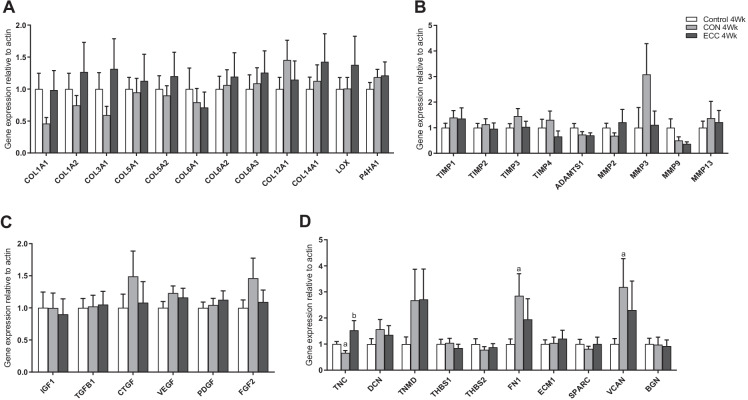
Exercise training can induce adaptive changes to tendon tissue both structurally and mechanically; however, the underlying compositional changes that contribute to these alterations remain uncertain in humans, particularly in the context of the ageing tendon. The aims of the present study were to determine the molecular changes with ageing in patellar tendons in humans, as well as the responses to exercise and exercise type (eccentric (ECC) and concentric (CON)) in young and old patellar tendon. Healthy younger males (age 23.5 ± 6.1 years; n = 27) and older males (age 68.5 ± 1.9 years; n = 27) undertook 8 weeks of CON or ECC training (3 times per week; at 60% of 1 repetition maximum (1RM)) or no training. Subjects consumed DO throughout the protocol and tendon biopsies were collected after 4 and 8 weeks for measurement of fractional synthetic rates (FSR) of tendon protein synthesis and gene expression. There were increases in tendon protein synthesis following 4 weeks of CON and ECC training (P < 0.01; main effect by ANOVA), with no differences observed between young and old males, or training type. At the transcriptional level however, ECC in young adults generally induced greater responses of collagen and extracellular matrix-related genes than CON, while older individuals had reduced gene expression responses to training. Different training types did not appear to induce differential tendon responses in terms of protein synthesis, and while tendons from older adults exhibited different transcriptional responses to younger individuals, protein turnover changes with training were similar for both age groups.
锻炼训练可以在结构和力学上诱导肌腱组织的适应性变化;然而,在人类中,尤其是在衰老的肌腱背景下,导致这些变化的潜在组成变化仍不确定。本研究的目的是确定人类髌腱随年龄的分子变化,以及在年轻和老年髌腱中对运动和运动类型(离心(ECC)和向心(CON))的反应。健康的年轻男性(年龄 23.5±6.1 岁;n=27)和老年男性(年龄 68.5±1.9 岁;n=27)进行了 8 周的 CON 或 ECC 训练(每周 3 次;60%的 1 次重复最大值(1RM))或不训练。受试者在整个方案中消耗 DO,并在第 4 和 8 周后收集肌腱活检,以测量肌腱蛋白合成和基因表达的分数合成率(FSR)。CON 和 ECC 训练 4 周后,肌腱蛋白合成增加(P<0.01;ANOVA 主效应),年轻和老年男性之间或训练类型之间没有差异。然而,在转录水平上,年轻成年人的 ECC 通常比 CON 诱导更大的胶原蛋白和细胞外基质相关基因的反应,而老年人对训练的基因表达反应减少。不同的训练类型似乎不会在蛋白质合成方面引起肌腱的不同反应,虽然老年人的肌腱对年轻人的反应不同,但训练引起的蛋白质周转率变化在两个年龄组中相似。