Tanaka Takuya, Imamura Takahisa, Irie Atsushi, Yoneda Masakazu, Imamura Ryuji, Kikuchi Ken, Kitagawa Saki, Kubo Tatsuko, Ogi Hidenao, Nakayama Hideki
Department of Oral and Maxillofacial Surgery, Faculty of Life Sciences, Kumamoto University, Kumamoto, Kumamoto 860-8556, Japan.
Department of Dentistry and Oral Surgery, Amakusa Central General Hospital, Amakusa, Kumamoto 863-0033, Japan.
Oncol Lett. 2022 Jul 5;24(3):299. doi: 10.3892/ol.2022.13419. eCollection 2022 Sep.
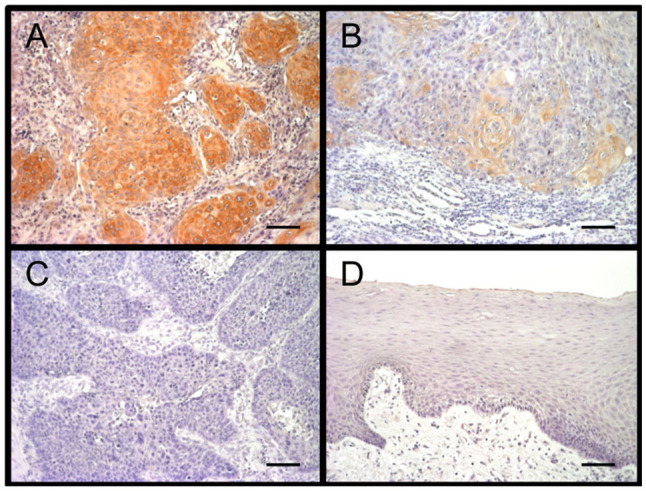
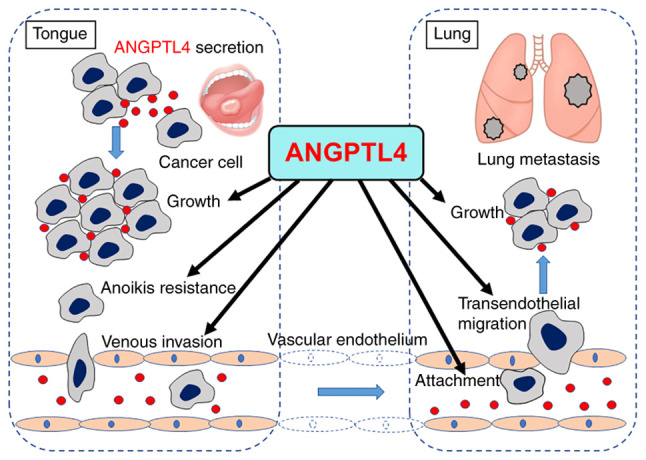
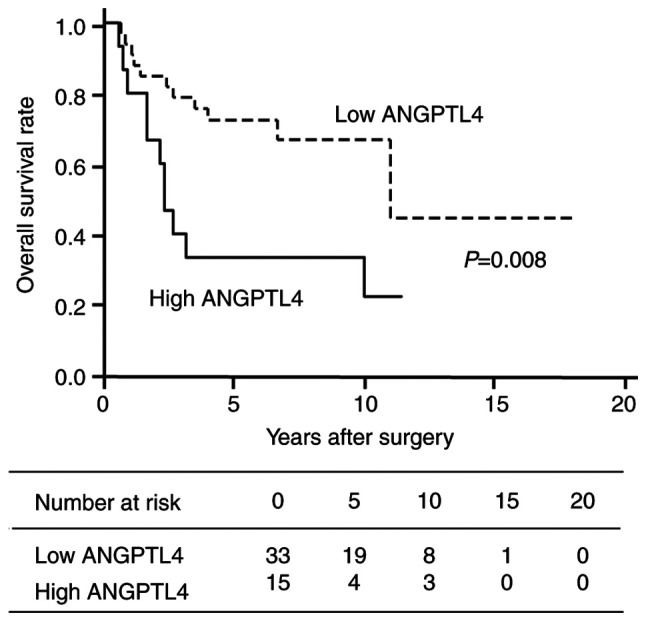
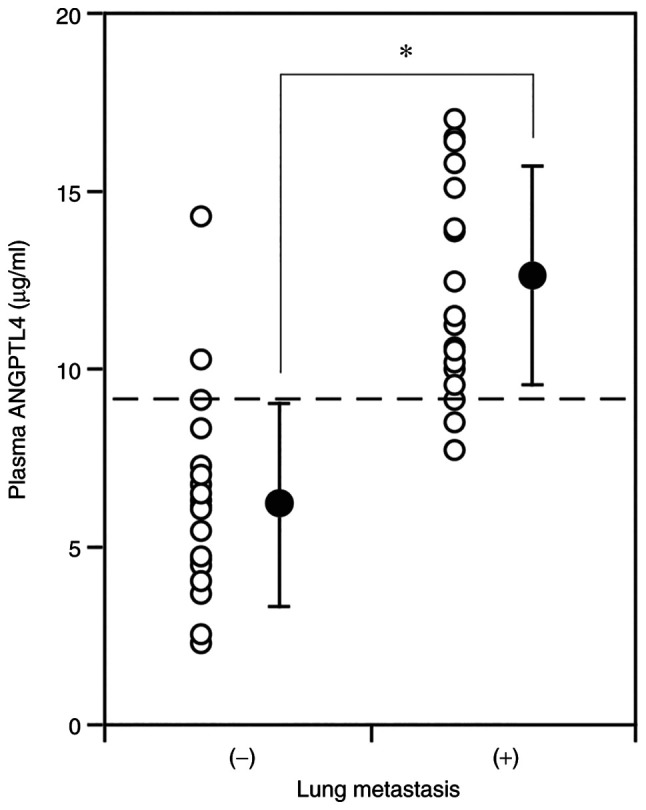
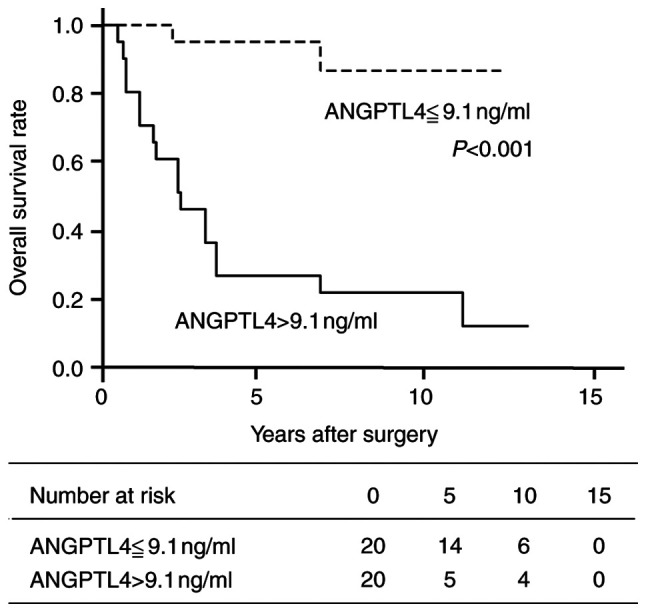
Angiopoietin-like 4 (ANGPTL4) promotes cancer cell migration through vessels and has been implicated in cancer metastasis. Our previous study identified a robust increase in ANGPTL4 mRNA expression in lung-metastasized tongue cancer (TC) cells. Therefore, the present study investigated the association of ANGPTL4 with lung metastasis and outcomes of patient with TC. ANGPTL4 expression in TC cells was investigated by immunohistochemical staining. Patients were classified into 'low (0-30%)' and 'high (>30%)' ANGPTL4-expression groups based on the proportion of ANGPTL4-positive TC cells. The high ANGPTL4-expression group included 15 of 48 patients with TC. Notably, a significantly greater proportion of patients with lung metastasis exhibited a high rate of ANGPTL4-expressing cancer cells compared with patients without lung metastasis (P=0.029). The overall 5-year survival rate was lower in the high (27%) ANGPTL4-expression group compared with the low (68%) ANGPTL4-expression group. Univariate and multivariate analyses revealed that patients with high ANGPTL4 expression in TC cells exhibited significantly lower overall survival (OS) rates [hazard ratio (HR), 2.99; 95% confidence interval (95% CI), 1.34-6.69; P=0.008 and HR, 2.72; 95% CI, 1.14-6.51; P=0.024, respectively]. High plasma ANGPTL4 concentrations as measured by ELISA were associated with lung metastasis (P<0.001). The optimal cut-point for prediction of TC lung metastasis was 9.1 ng/ml (P<0.001; 95% CI, 7.2-10.9). The OS of patients with plasma ANPTL4 above the cut-point was significantly lower than that of patients with plasma ANGPTL4 ≤9.1 ng/ml (P<0.001). These results suggest that a high level of ANGPTL4 in cancer cells and plasma may predict lung metastasis and/or a poor prognosis of patients with TC.
血管生成素样蛋白4(ANGPTL4)促进癌细胞通过血管迁移,并与癌症转移有关。我们之前的研究发现,肺转移舌癌细胞(TC)中ANGPTL4 mRNA表达显著增加。因此,本研究调查了ANGPTL4与TC患者肺转移及预后的关系。通过免疫组织化学染色研究TC细胞中ANGPTL4的表达。根据ANGPTL4阳性TC细胞的比例,将患者分为“低(0 - 30%)”和“高(>30%)”ANGPTL4表达组。48例TC患者中,高ANGPTL4表达组有15例。值得注意的是,与无肺转移的患者相比,肺转移患者中ANGPTL4表达癌细胞的比例显著更高(P = 0.029)。ANGPTL4高表达组(27%)的5年总生存率低于低表达组(68%)。单因素和多因素分析显示,TC细胞中ANGPTL4高表达的患者总生存率(OS)显著更低[风险比(HR),2.99;95%置信区间(95%CI),1.34 - 6.69;P = 0.008及HR,2.72;95%CI,1.14 - 6.51;P = 0.024]。通过酶联免疫吸附测定法(ELISA)测量的高血浆ANGPTL4浓度与肺转移相关(P < 0.001)。预测TC肺转移的最佳切点为9.1 ng/ml(P < 0.001;95%CI,7.2 - 10.9)。血浆ANGPTL4高于切点的患者的OS显著低于血浆ANGPTL4≤9.1 ng/ml的患者(P < 0.001)。这些结果表明,癌细胞和血浆中高水平的ANGPTL4可能预测TC患者的肺转移和/或不良预后。