Department of Bioengineering, Stanford University, Stanford, CA 94305, USA.
Laboratory of Epigenome Biology, Systems Biology Center, National Heart, Lung and Blood Institute NIH, Bethesda, MD 20892, USA.
Science. 2022 Sep 2;377(6610):1077-1085. doi: 10.1126/science.abk3512. Epub 2022 Aug 11.
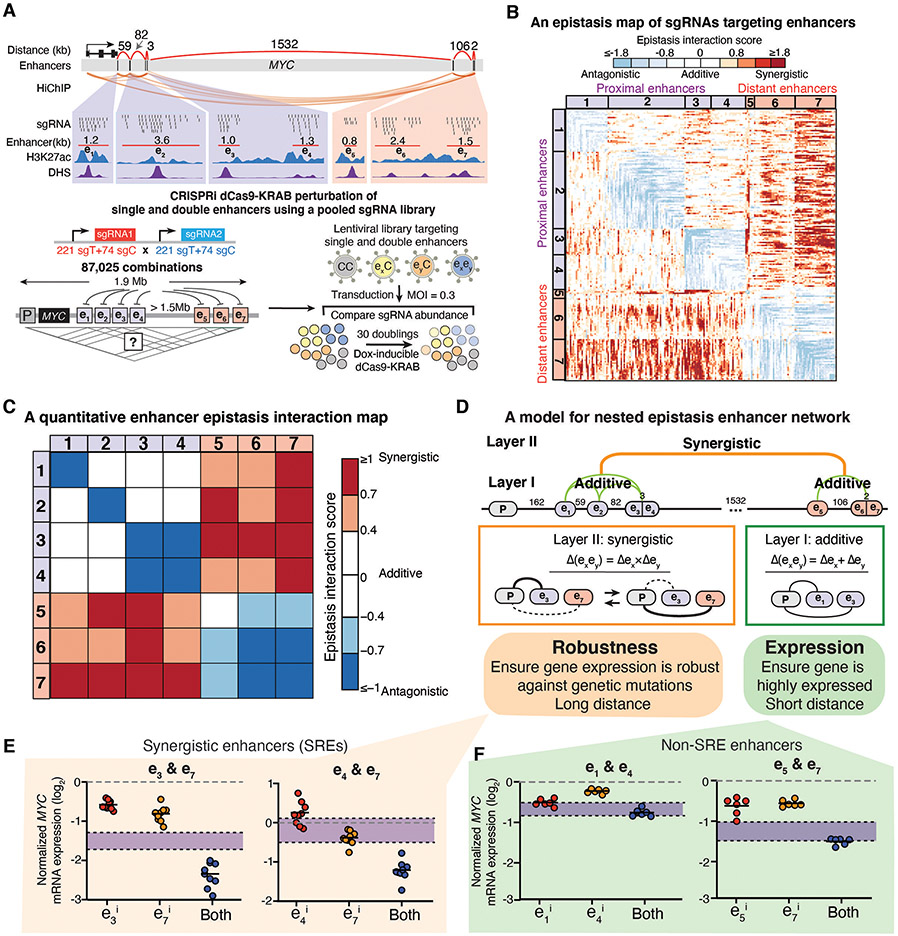
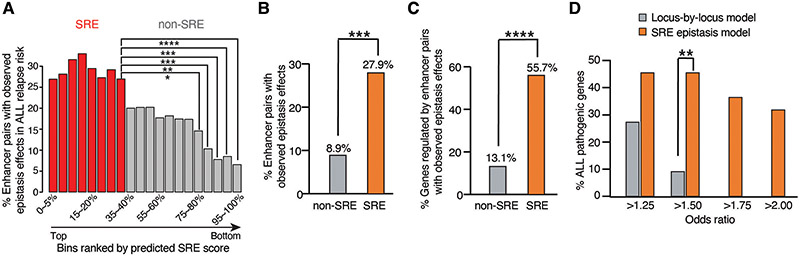
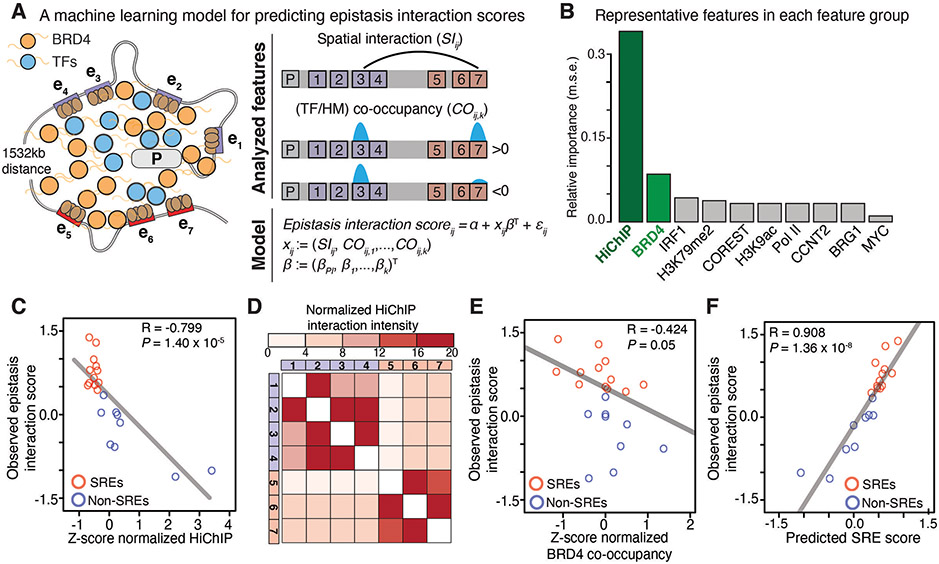
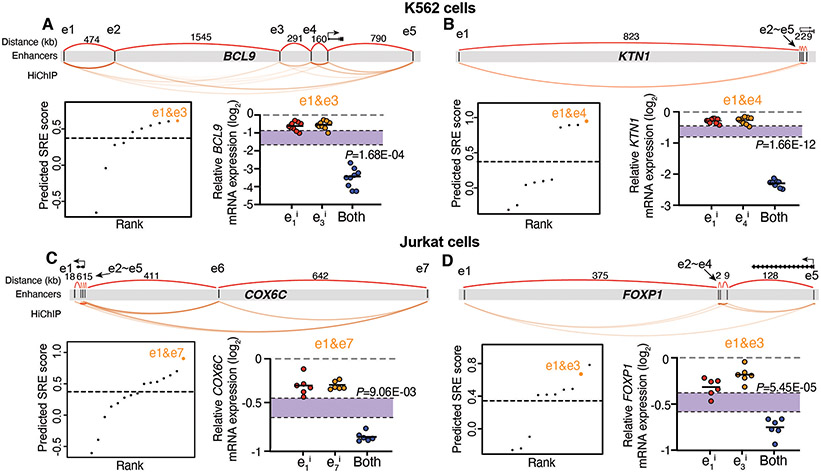
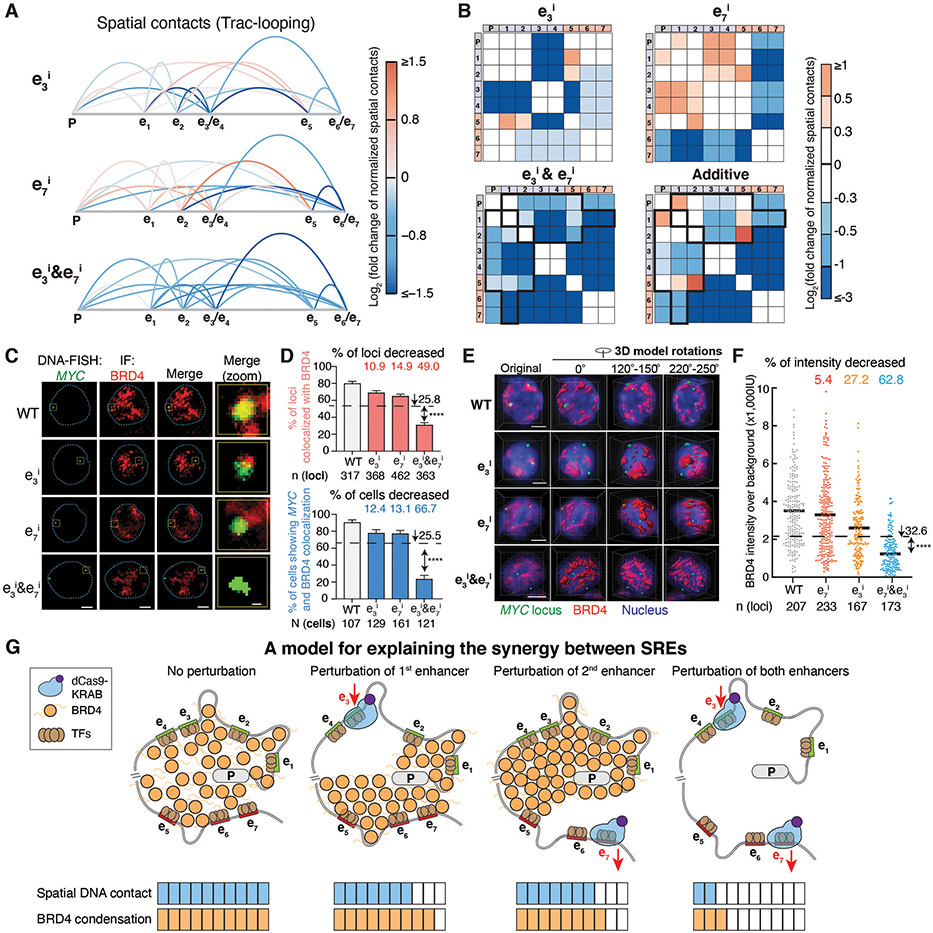
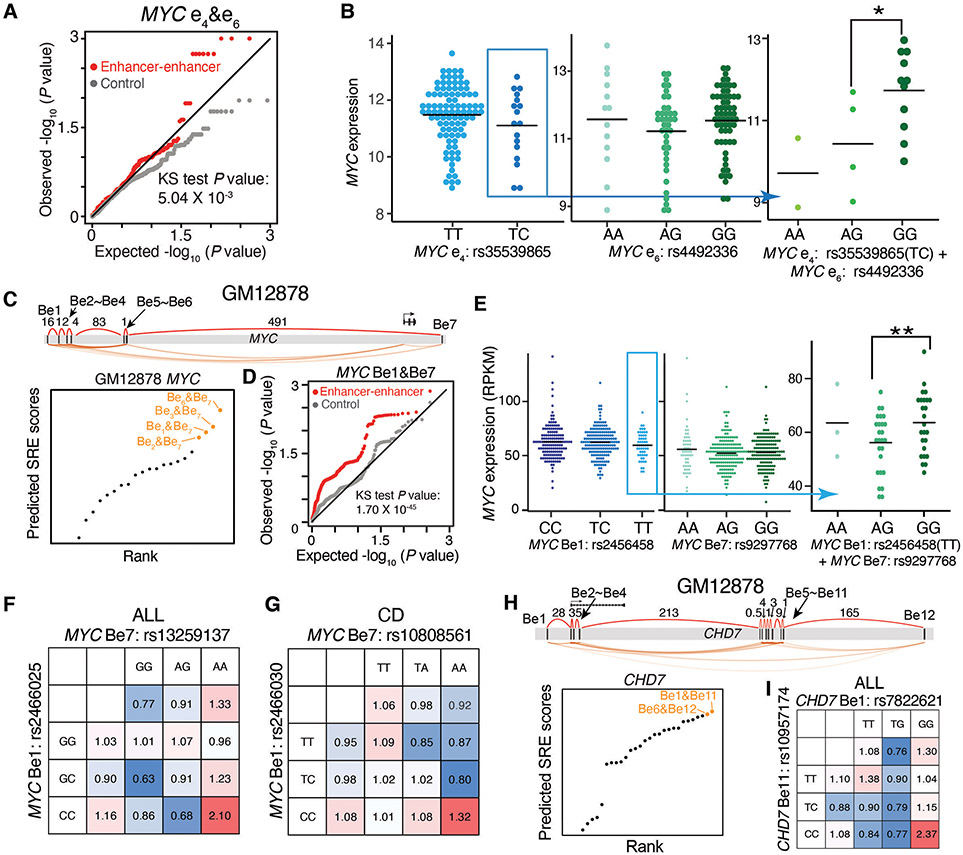
Mammalian genomes have multiple enhancers spanning an ultralong distance (>megabases) to modulate important genes, but it is unclear how these enhancers coordinate to achieve this task. We combine multiplexed CRISPRi screening with machine learning to define quantitative enhancer-enhancer interactions. We find that the ultralong distance enhancer network has a nested multilayer architecture that confers functional robustness of gene expression. Experimental characterization reveals that enhancer epistasis is maintained by three-dimensional chromosomal interactions and BRD4 condensation. Machine learning prediction of synergistic enhancers provides an effective strategy to identify noncoding variant pairs associated with pathogenic genes in diseases beyond genome-wide association studies analysis. Our work unveils nested epistasis enhancer networks, which can better explain enhancer functions within cells and in diseases.
哺乳动物基因组中有多个跨越超远距离(> 兆碱基)的增强子,用于调节重要基因,但这些增强子如何协调以实现这一任务尚不清楚。我们结合多重 CRISPRi 筛选和机器学习来定义定量增强子-增强子相互作用。我们发现,超长距离增强子网络具有嵌套的多层结构,赋予基因表达的功能鲁棒性。实验特征表明,增强子上位性由三维染色质相互作用和 BRD4 凝聚维持。协同增强子的机器学习预测为识别全基因组关联研究分析以外的疾病中与致病基因相关的非编码变异对提供了一种有效策略。我们的工作揭示了嵌套的上位性增强子网络,这可以更好地解释细胞内和疾病中的增强子功能。