Department of Chemistry, University of Swabi, Swabi, Anbar, 23430, Khyber Pakhtunkhwa (KP), Pakistan.
Pharmaceutical Sciences Department, College of Pharmacy, Al Ain University for Science and Technology, Al Ain, United Arab Emirates.
Int J Surg. 2022 Aug;104:106818. doi: 10.1016/j.ijsu.2022.106818. Epub 2022 Aug 8.
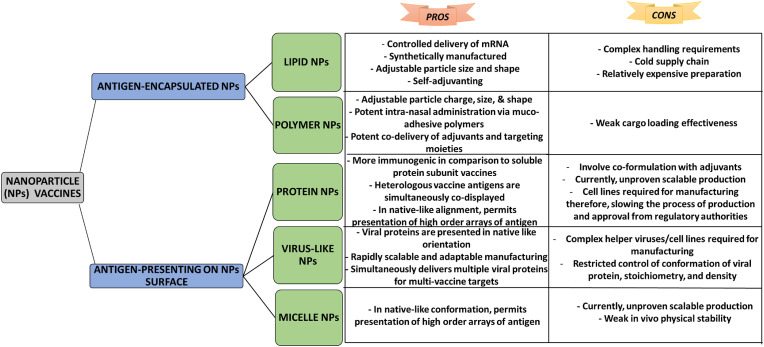
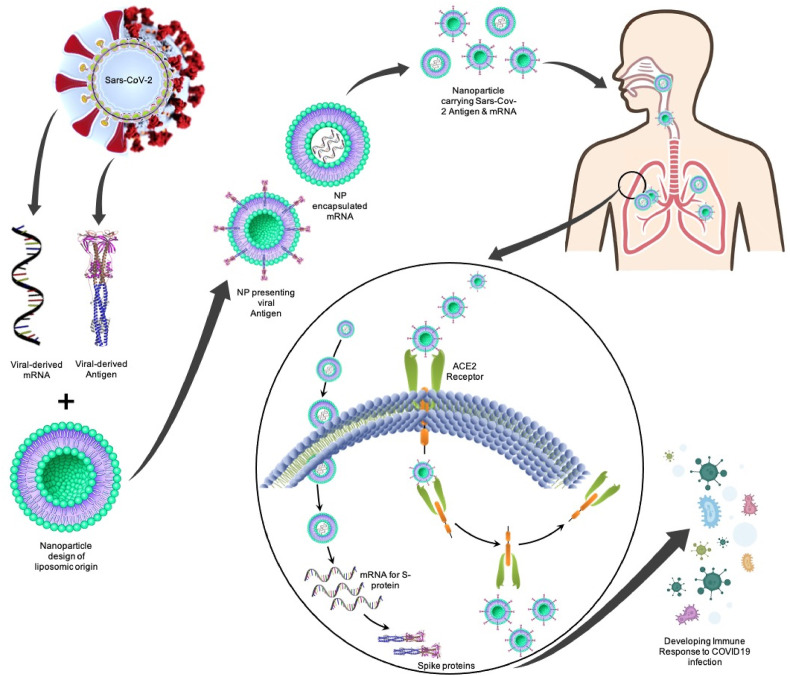
Once the World Health Organization (WHO) declared the COVID-19 (Coronavirus Infectious Disease-19) outbreak to be pandemic, massive efforts have been launched by researchers around the globe to combat this emerging infectious disease. Strategies that must be investigated such as expanding testing capabilities, developing effective medicines, as well as developing safe and effective vaccines for COVID-19 disease that produce long-lasting immunity to human system. Now-a-days, bio-sensing, medication delivery, imaging, and antimicrobial treatment are just a few of the medical applications for nanoparticles (NPs). Since the early 1990s, nanoparticle drug delivery methods have been employed in clinical trials. Since then, the discipline of nanomedicine has evolved in tandem with expanding technological demands to better medicinal delivery. Newer generations of NPs have emerged in recent decades that are capable of performing additional delivery tasks, allowing for therapy via novel therapeutic modalities. Many of these next generation NPs and associated products have entered clinical trials and have been approved for diverse indications in the present clinical environment. For systemic applications, NPs or nanomedicine-based drug delivery systems have substantial benefits over their non-formulated and free drug counterparts. Nanoparticle systems, for example, are capable of delivering medicines and treating parts of the body that are inaccessible to existing delivery systems. As a result, NPs medication delivery is one of the most studied preclinical and clinical systems. NPs-based vaccines delivering SARS-CoV-2 antigens will play an increasingly important role in prolonging or improving COVID-19 vaccination outcomes. This review provides insights about employing NPs-based drug delivery systems for the treatment of COVID-19 to increase the bioavailability of current drugs, reducing their toxicity, and to increase their efficiency. This article also exhibits their capability and efficacy, and highlighting the future aspects and challenges on nanoparticle products in clinical trials of COVID-19.
一旦世界卫生组织(WHO)宣布 COVID-19(冠状病毒传染病-19)爆发为大流行,全球研究人员就发起了大规模努力来对抗这种新发传染病。必须研究的策略包括扩大检测能力、开发有效的药物,以及为 COVID-19 疾病开发安全有效的疫苗,为人体系统产生持久免疫力。如今,生物传感、药物输送、成像和抗菌治疗只是纳米粒子(NP)的几种医疗应用。自 20 世纪 90 年代初以来,纳米颗粒药物输送方法已在临床试验中使用。从那时起,纳米医学领域与扩大技术需求同步发展,以更好地进行药物输送。近几十年来,出现了新一代的 NP,它们能够执行额外的输送任务,通过新型治疗方式进行治疗。这些新一代 NP 及其相关产品中的许多已经进入临床试验,并在当前临床环境中获得了多种适应症的批准。对于全身应用,NP 或基于纳米医学的药物输送系统相对于其非配方和游离药物具有很大的优势。例如,NP 系统能够输送药物并治疗现有输送系统无法到达的身体部位。因此,NP 药物输送是研究最广泛的临床前和临床系统之一。基于 NP 的 SARS-CoV-2 抗原疫苗将在延长或改善 COVID-19 疫苗接种结果方面发挥越来越重要的作用。本文提供了关于使用基于 NP 的药物输送系统治疗 COVID-19 以提高现有药物的生物利用度、降低其毒性并提高其效率的见解。本文还展示了它们的能力和功效,并强调了纳米颗粒产品在 COVID-19 临床试验中的未来方面和挑战。