Institute of Applied Health Research, College of Medical and Dental Sciences, University of Birmingham, Birmingham B15 2TT, UK.
Department of Health Promotion and Community Health, Faculty of Health Sciences, American University of Beirut, Beirut 1107 2020, Lebanon.
Int J Environ Res Public Health. 2022 Jul 31;19(15):9383. doi: 10.3390/ijerph19159383.
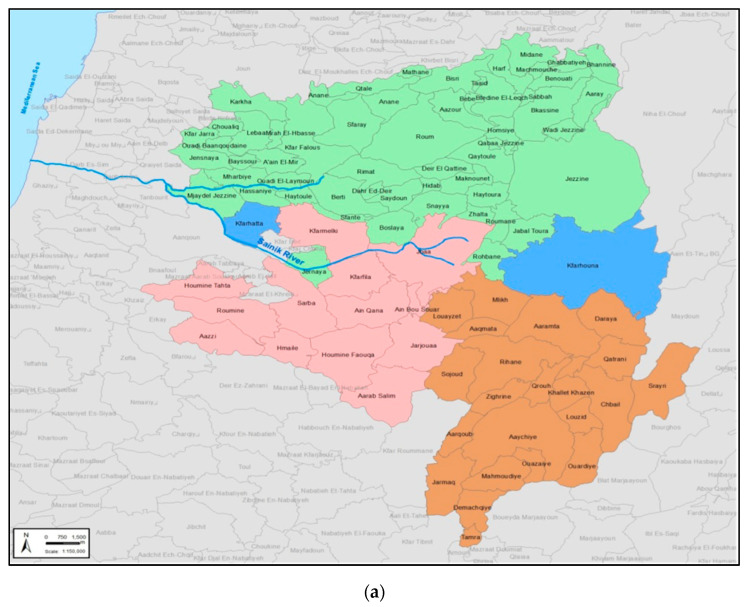
Low- and middle-income countries (LMICs) such as Lebanon have limited technical, economic, and social infrastructures to manage municipal solid waste properly. Understanding what motivates citizens to sort waste at home is paramount to designing effective, efficient, and equitable waste management interventions. Within the solid waste management project “RES-Q” in Southern Lebanon, we investigated the socio-cognitive predictors of waste sorting in a sample of 767 households from the targeted area using the Theory of Planned Behaviour (TPB). Perceived behavioural control (β = 0.96, p < 0.001), perceived norms (β = −0.30, p < 0.001), and current behaviour (β = 0.06, p < 0.001) were the strongest predictors of intention; attitude toward separating waste was not a significant predictor (β = 0.04, p = 0.3881). Consequently, future behavioural interventions should build capability and opportunity to perform the behaviour before normalising it. For example, citizens should receive bins and bags to separate waste and be shown how to perform the behaviour and how easy and convenient it is to increase their behavioural control. In parallel, waste collection and treatment infrastructures must be in place so that citizens can see that sorting waste is a social norm. These actions will ensure the success of future behavioural interventions within the RES-Q project and beyond.
黎巴嫩等中低收入国家(LMICs)在技术、经济和社会基础设施方面有限,难以妥善管理城市固体废物。了解促使公民在家中进行垃圾分类的因素对于设计有效、高效和公平的废物管理干预措施至关重要。在黎巴嫩南部的“RES-Q”固体废物管理项目中,我们使用计划行为理论(TPB)调查了目标地区 767 户家庭中社会认知因素对垃圾分类的影响。感知行为控制(β=0.96,p<0.001)、感知规范(β=-0.30,p<0.001)和当前行为(β=0.06,p<0.001)是意图的最强预测因素;对废物分离的态度不是一个显著的预测因素(β=0.04,p=0.3881)。因此,未来的行为干预措施应该在使行为正常化之前,建立行为的能力和机会。例如,应该向公民提供用于分类废物的垃圾桶和袋子,并向他们展示如何进行这种行为,以及增加行为控制的便利性。同时,必须建立废物收集和处理基础设施,以便公民可以看到垃圾分类是一种社会规范。这些行动将确保 RES-Q 项目和其他项目未来行为干预措施的成功。