• 文献检索
  • 文档翻译
  • 深度研究
  • 学术资讯
  • Suppr Zotero 插件Zotero 插件
  • 邀请有礼
  • 套餐&价格
  • 历史记录
应用&插件
Suppr Zotero 插件Zotero 插件浏览器插件Mac 客户端Windows 客户端微信小程序
定价
高级版会员购买积分包购买API积分包
服务
文献检索文档翻译深度研究API 文档MCP 服务
关于我们
关于 Suppr公司介绍联系我们用户协议隐私条款
关注我们

Suppr 超能文献

核心技术专利:CN118964589B侵权必究
粤ICP备2023148730 号-1Suppr @ 2026

文献检索

告别复杂PubMed语法,用中文像聊天一样搜索,搜遍4000万医学文献。AI智能推荐,让科研检索更轻松。

立即免费搜索

文件翻译

保留排版,准确专业,支持PDF/Word/PPT等文件格式,支持 12+语言互译。

免费翻译文档

深度研究

AI帮你快速写综述,25分钟生成高质量综述,智能提取关键信息,辅助科研写作。

立即免费体验

用于伤口敷料和组织工程的双层水凝胶

Bilayer Hydrogels for Wound Dressing and Tissue Engineering.

作者信息

Luneva Olga, Olekhnovich Roman, Uspenskaya Mayya

机构信息

Center of Chemical Engineering, ITMO University, Kronverkskiy Prospekt, 49, bldg. A, 197101 Saint-Petersburg, Russia.

出版信息

Polymers (Basel). 2022 Aug 1;14(15):3135. doi: 10.3390/polym14153135.

DOI:10.3390/polym14153135
PMID:35956650
原文链接:https://pmc.ncbi.nlm.nih.gov/articles/PMC9371176/
Abstract

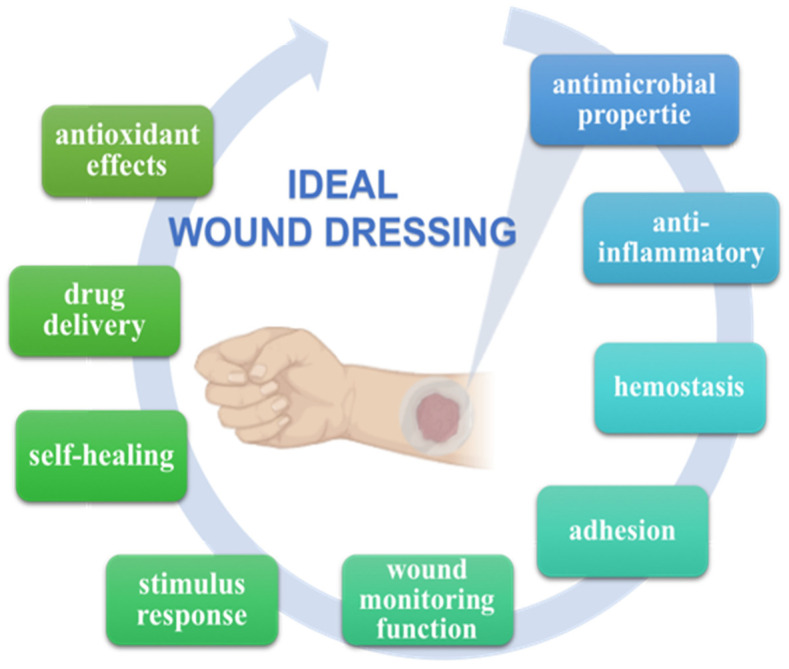
A large number of different skin diseases such as hits, acute, and chronic wounds dictate the search for alternative and effective treatment options. The wound healing process requires a complex approach, the key step of which is the choice of a dressing with controlled properties. Hydrogel-based scaffolds can serve as a unique class of wound dressings. Presented on the commercial market, hydrogel wound dressings are not found among proposals for specific cases and have a number of disadvantages-toxicity, allergenicity, and mechanical instability. Bilayer dressings are attracting great attention, which can be combined with multifunctional properties, high criteria for an ideal wound dressing (antimicrobial properties, adhesion and hemostasis, anti-inflammatory and antioxidant effects), drug delivery, self-healing, stimulus manifestation, and conductivity, depending on the preparation and purpose. In addition, advances in stem cell biology and biomaterials have enabled the design of hydrogel materials for skin tissue engineering. To improve the heterogeneity of the cell environment, it is possible to use two-layer functional gradient hydrogels. This review summarizes the methods and application advantages of bilayer dressings in wound treatment and skin tissue regeneration. Bilayered hydrogels based on natural as well as synthetic polymers are presented. The results of the in vitro and in vivo experiments and drug release are also discussed.

摘要

大量不同的皮肤疾病,如擦伤、急性和慢性伤口,促使人们寻找替代且有效的治疗方案。伤口愈合过程需要综合方法,其中关键步骤是选择具有可控特性的敷料。基于水凝胶的支架可作为一类独特的伤口敷料。在商业市场上,水凝胶伤口敷料在针对特定情况的产品中并不多见,并且存在一些缺点——毒性、致敏性和机械不稳定性。双层敷料正备受关注,根据制备方法和用途,其可兼具多种功能特性,满足理想伤口敷料的高标准要求(抗菌特性、黏附与止血、抗炎和抗氧化作用)、药物递送、自我修复、刺激响应及导电性。此外,干细胞生物学和生物材料的进展使得用于皮肤组织工程的水凝胶材料设计成为可能。为改善细胞环境的异质性,可以使用双层功能梯度水凝胶。本综述总结了双层敷料在伤口治疗和皮肤组织再生中的方法及应用优势。介绍了基于天然和合成聚合物的双层水凝胶。还讨论了体外和体内实验结果以及药物释放情况。
https://cdn.ncbi.nlm.nih.gov/pmc/blobs/c224/9371176/71afe7e3374f/polymers-14-03135-g022.jpg
https://cdn.ncbi.nlm.nih.gov/pmc/blobs/c224/9371176/29b88885043a/polymers-14-03135-g001.jpg
https://cdn.ncbi.nlm.nih.gov/pmc/blobs/c224/9371176/30add548294a/polymers-14-03135-g002.jpg
https://cdn.ncbi.nlm.nih.gov/pmc/blobs/c224/9371176/fddfba6842f1/polymers-14-03135-g003.jpg
https://cdn.ncbi.nlm.nih.gov/pmc/blobs/c224/9371176/3a00c23f5cd3/polymers-14-03135-g004.jpg
https://cdn.ncbi.nlm.nih.gov/pmc/blobs/c224/9371176/fed5e5f5075c/polymers-14-03135-g005.jpg
https://cdn.ncbi.nlm.nih.gov/pmc/blobs/c224/9371176/c50e0bfdd11d/polymers-14-03135-g006.jpg
https://cdn.ncbi.nlm.nih.gov/pmc/blobs/c224/9371176/8ce4fdce37b8/polymers-14-03135-g007.jpg
https://cdn.ncbi.nlm.nih.gov/pmc/blobs/c224/9371176/94432e1e8113/polymers-14-03135-g008.jpg
https://cdn.ncbi.nlm.nih.gov/pmc/blobs/c224/9371176/0656106a8528/polymers-14-03135-g009.jpg
https://cdn.ncbi.nlm.nih.gov/pmc/blobs/c224/9371176/5f93ff3749cf/polymers-14-03135-g010.jpg
https://cdn.ncbi.nlm.nih.gov/pmc/blobs/c224/9371176/5a694275fa6e/polymers-14-03135-g011.jpg
https://cdn.ncbi.nlm.nih.gov/pmc/blobs/c224/9371176/82e84a6a8b72/polymers-14-03135-g012.jpg
https://cdn.ncbi.nlm.nih.gov/pmc/blobs/c224/9371176/c1aca90d9f37/polymers-14-03135-g013.jpg
https://cdn.ncbi.nlm.nih.gov/pmc/blobs/c224/9371176/5dc2aa656b3c/polymers-14-03135-g014.jpg
https://cdn.ncbi.nlm.nih.gov/pmc/blobs/c224/9371176/25cc859508ec/polymers-14-03135-g015.jpg
https://cdn.ncbi.nlm.nih.gov/pmc/blobs/c224/9371176/e0fc763519e4/polymers-14-03135-g016.jpg
https://cdn.ncbi.nlm.nih.gov/pmc/blobs/c224/9371176/9b20a46e6a37/polymers-14-03135-g017.jpg
https://cdn.ncbi.nlm.nih.gov/pmc/blobs/c224/9371176/ea97aedb281f/polymers-14-03135-g018.jpg
https://cdn.ncbi.nlm.nih.gov/pmc/blobs/c224/9371176/0c894e80c938/polymers-14-03135-g019.jpg
https://cdn.ncbi.nlm.nih.gov/pmc/blobs/c224/9371176/873daa1d3ae1/polymers-14-03135-g020.jpg
https://cdn.ncbi.nlm.nih.gov/pmc/blobs/c224/9371176/cca1d041875e/polymers-14-03135-g021.jpg
https://cdn.ncbi.nlm.nih.gov/pmc/blobs/c224/9371176/71afe7e3374f/polymers-14-03135-g022.jpg
https://cdn.ncbi.nlm.nih.gov/pmc/blobs/c224/9371176/29b88885043a/polymers-14-03135-g001.jpg
https://cdn.ncbi.nlm.nih.gov/pmc/blobs/c224/9371176/30add548294a/polymers-14-03135-g002.jpg
https://cdn.ncbi.nlm.nih.gov/pmc/blobs/c224/9371176/fddfba6842f1/polymers-14-03135-g003.jpg
https://cdn.ncbi.nlm.nih.gov/pmc/blobs/c224/9371176/3a00c23f5cd3/polymers-14-03135-g004.jpg
https://cdn.ncbi.nlm.nih.gov/pmc/blobs/c224/9371176/fed5e5f5075c/polymers-14-03135-g005.jpg
https://cdn.ncbi.nlm.nih.gov/pmc/blobs/c224/9371176/c50e0bfdd11d/polymers-14-03135-g006.jpg
https://cdn.ncbi.nlm.nih.gov/pmc/blobs/c224/9371176/8ce4fdce37b8/polymers-14-03135-g007.jpg
https://cdn.ncbi.nlm.nih.gov/pmc/blobs/c224/9371176/94432e1e8113/polymers-14-03135-g008.jpg
https://cdn.ncbi.nlm.nih.gov/pmc/blobs/c224/9371176/0656106a8528/polymers-14-03135-g009.jpg
https://cdn.ncbi.nlm.nih.gov/pmc/blobs/c224/9371176/5f93ff3749cf/polymers-14-03135-g010.jpg
https://cdn.ncbi.nlm.nih.gov/pmc/blobs/c224/9371176/5a694275fa6e/polymers-14-03135-g011.jpg
https://cdn.ncbi.nlm.nih.gov/pmc/blobs/c224/9371176/82e84a6a8b72/polymers-14-03135-g012.jpg
https://cdn.ncbi.nlm.nih.gov/pmc/blobs/c224/9371176/c1aca90d9f37/polymers-14-03135-g013.jpg
https://cdn.ncbi.nlm.nih.gov/pmc/blobs/c224/9371176/5dc2aa656b3c/polymers-14-03135-g014.jpg
https://cdn.ncbi.nlm.nih.gov/pmc/blobs/c224/9371176/25cc859508ec/polymers-14-03135-g015.jpg
https://cdn.ncbi.nlm.nih.gov/pmc/blobs/c224/9371176/e0fc763519e4/polymers-14-03135-g016.jpg
https://cdn.ncbi.nlm.nih.gov/pmc/blobs/c224/9371176/9b20a46e6a37/polymers-14-03135-g017.jpg
https://cdn.ncbi.nlm.nih.gov/pmc/blobs/c224/9371176/ea97aedb281f/polymers-14-03135-g018.jpg
https://cdn.ncbi.nlm.nih.gov/pmc/blobs/c224/9371176/0c894e80c938/polymers-14-03135-g019.jpg
https://cdn.ncbi.nlm.nih.gov/pmc/blobs/c224/9371176/873daa1d3ae1/polymers-14-03135-g020.jpg
https://cdn.ncbi.nlm.nih.gov/pmc/blobs/c224/9371176/cca1d041875e/polymers-14-03135-g021.jpg
https://cdn.ncbi.nlm.nih.gov/pmc/blobs/c224/9371176/71afe7e3374f/polymers-14-03135-g022.jpg

相似文献

1
Bilayer Hydrogels for Wound Dressing and Tissue Engineering.用于伤口敷料和组织工程的双层水凝胶
Polymers (Basel). 2022 Aug 1;14(15):3135. doi: 10.3390/polym14153135.
2
Functional Hydrogels as Wound Dressing to Enhance Wound Healing.功能性水凝胶作为伤口敷料以促进伤口愈合。
ACS Nano. 2021 Aug 24;15(8):12687-12722. doi: 10.1021/acsnano.1c04206. Epub 2021 Aug 10.
3
Pullulan-Based Hydrogels in Wound Healing and Skin Tissue Engineering Applications: A Review.基于支链淀粉的水凝胶在创伤愈合和皮肤组织工程应用中的研究进展:综述
Int J Mol Sci. 2023 Mar 4;24(5):4962. doi: 10.3390/ijms24054962.
4
Injectable thermo-sensitive and wide-crack self-healing hydrogel loaded with antibacterial anti-inflammatory dipotassium glycyrrhizate for full-thickness skin wound repair.负载抗菌抗炎甘草酸二钾的可注射热敏宽裂缝自愈合水凝胶用于全层皮肤伤口修复。
Acta Biomater. 2022 Apr 15;143:203-215. doi: 10.1016/j.actbio.2022.02.041. Epub 2022 Mar 1.
5
Hydrogel Preparation Methods and Biomaterials for Wound Dressing.用于伤口敷料的水凝胶制备方法及生物材料
Life (Basel). 2021 Sep 27;11(10):1016. doi: 10.3390/life11101016.
6
Injectable adaptive self-healing hyaluronic acid/poly (γ-glutamic acid) hydrogel for cutaneous wound healing.用于皮肤伤口愈合的可注射自适应自修复透明质酸/聚(γ-谷氨酸)水凝胶。
Acta Biomater. 2021 Jun;127:102-115. doi: 10.1016/j.actbio.2021.03.057. Epub 2021 Apr 1.
7
Multifunctional hydrogels for wound healing: Special focus on biomacromolecular based hydrogels.用于伤口愈合的多功能水凝胶:特别关注基于生物大分子的水凝胶。
Int J Biol Macromol. 2021 Feb 15;170:728-750. doi: 10.1016/j.ijbiomac.2020.12.202. Epub 2020 Dec 30.
8
[A prospective randomized controlled study of the application effect of hydrogel dressings on deep partial-thickness burn wounds after dermabrasion and tangential excision].[水凝胶敷料在削痂及削痂联合切痂后深Ⅱ度烧伤创面应用效果的前瞻性随机对照研究]
Zhonghua Shao Shang Za Zhi. 2021 Nov 20;37(11):1085-1089. doi: 10.3760/cma.j.cn501120-20210419-00133.
9
Design Considerations for Hydrogel Wound Dressings: Strategic and Molecular Advances.水凝胶创伤敷料的设计考虑因素:策略和分子进展。
Tissue Eng Part B Rev. 2020 Jun;26(3):230-248. doi: 10.1089/ten.TEB.2019.0281. Epub 2020 Feb 28.
10
Design Considerations, Formulation Approaches, and Strategic Advances of Hydrogel Dressings for Chronic Wound Management.用于慢性伤口管理的水凝胶敷料的设计考量、配方方法及策略进展
ACS Omega. 2023 Feb 20;8(9):8172-8189. doi: 10.1021/acsomega.2c06806. eCollection 2023 Mar 7.

引用本文的文献

1
Hydrogel-Based Nitric Oxide Delivery Systems for Enhanced Wound Healing.用于促进伤口愈合的水凝胶基一氧化氮递送系统
Gels. 2025 Aug 8;11(8):621. doi: 10.3390/gels11080621.
2
Research progress on the role and mechanism of magnesium-containing materials in bone repair.含镁材料在骨修复中的作用及机制研究进展
Biomater Transl. 2025 Jun 25;6(2):114-126. doi: 10.12336/bmt.24.00038. eCollection 2025.
3
Exploring the role of two polypeptide nanofiber gels derived from RADA16-I self-assembly in accelerating burn wound healing.探索源自RADA16-I自组装的两种多肽纳米纤维凝胶在促进烧伤创面愈合中的作用。

本文引用的文献

1
Versatile Bilayer Hydrogel for Wound Dressing through PET-RAFT Polymerization.通过PET-RAFT聚合制备的用于伤口敷料的多功能双层水凝胶。
Biomacromolecules. 2022 Mar 14;23(3):1112-1123. doi: 10.1021/acs.biomac.1c01428. Epub 2022 Feb 16.
2
Sprayable methacrylic anhydride-modified gelatin hydrogel combined with bionic neutrophils nanoparticles for scar-free wound healing of diabetes mellitus.可喷涂的甲基丙烯酸酐改性明胶水凝胶与仿生中性粒细胞纳米颗粒联合用于糖尿病无瘢痕伤口愈合
Int J Biol Macromol. 2022 Mar 31;202:418-430. doi: 10.1016/j.ijbiomac.2022.01.083. Epub 2022 Jan 17.
3
Fast Gelation of Poly(ionic liquid)-Based Injectable Antibacterial Hydrogels.
Sci Rep. 2025 Jul 8;15(1):24476. doi: 10.1038/s41598-025-08666-z.
4
Polyurethane/silk fibroin-based electrospun membranes for wound healing and skin substitute applications.用于伤口愈合和皮肤替代应用的聚氨酯/丝素蛋白基电纺膜。
Beilstein J Nanotechnol. 2025 Apr 24;16:591-612. doi: 10.3762/bjnano.16.46. eCollection 2025.
5
Preparation and characterization of nano-silver/graphene oxide antibacterial skin dressing.纳米银/氧化石墨烯抗菌皮肤敷料的制备与表征
Sci Rep. 2025 Apr 11;15(1):12490. doi: 10.1038/s41598-025-93310-z.
6
Antibiotic Nanoparticles-Loaded Wound Dressings Against 's Skin Infection: A Systematic Review.载抗生素纳米粒子的创面敷料治疗皮肤感染:系统评价。
Int J Nanomedicine. 2024 Aug 2;19:7895-7926. doi: 10.2147/IJN.S469724. eCollection 2024.
7
Streamlining Skin Regeneration: A Ready-To-Use Silk Bilayer Wound Dressing.简化皮肤再生:即用型丝质双层伤口敷料。
Gels. 2024 Jun 30;10(7):439. doi: 10.3390/gels10070439.
8
Motion-Accommodating Dual-Layer Hydrogel Dressing to Deliver Adipose-Derived Stem Cells to Wounds.运动适应双层水凝胶敷料将脂肪来源的干细胞递送到伤口中。
Tissue Eng Regen Med. 2024 Aug;21(6):843-854. doi: 10.1007/s13770-024-00651-3. Epub 2024 Jun 8.
9
Nanomaterials in the Wound Healing Process: New Insights and Advancements.伤口愈合过程中的纳米材料:新见解与进展
Pharmaceutics. 2024 Feb 21;16(3):300. doi: 10.3390/pharmaceutics16030300.
10
Hydrogel-Based Skin Regeneration.基于水凝胶的皮肤再生。
Int J Mol Sci. 2024 Feb 6;25(4):1982. doi: 10.3390/ijms25041982.
基于聚离子液体的可注射抗菌水凝胶的快速凝胶化
Gels. 2022 Jan 12;8(1):52. doi: 10.3390/gels8010052.
4
Pristine Gellan Gum-Collagen Interpenetrating Network Hydrogels as Mechanically Enhanced Anti-inflammatory Biologic Wound Dressings for Burn Wound Therapy.作为机械增强型抗炎生物创面敷料的原始结冷胶-胶原互穿网络水凝胶在烧伤创面治疗中的应用。
ACS Appl Bio Mater. 2021 Feb 15;4(2):1470-1482. doi: 10.1021/acsabm.0c01363. Epub 2021 Feb 3.
5
The Influence of Oxidant on Gelatin-Tannin Hydrogel Properties and Structure for Potential Biomedical Application.氧化剂对用于潜在生物医学应用的明胶-单宁水凝胶性质和结构的影响
Polymers (Basel). 2021 Dec 31;14(1):150. doi: 10.3390/polym14010150.
6
Hydrogel based tissue engineering and its future applications in personalized disease modeling and regenerative therapy.基于水凝胶的组织工程及其在个性化疾病建模和再生治疗中的未来应用。
Beni Suef Univ J Basic Appl Sci. 2022;11(1):3. doi: 10.1186/s43088-021-00172-1. Epub 2022 Jan 4.
7
Fabrication of adhesive hydrogels based on poly (acrylic acid) and modified hyaluronic acid.基于聚丙烯酸和改性透明质酸的黏附性水凝胶的制备。
J Mech Behav Biomed Mater. 2022 Feb;126:105044. doi: 10.1016/j.jmbbm.2021.105044. Epub 2021 Dec 11.
8
Mussel-inspired adhesive bilayer hydrogels for bacteria-infected wound healing via NIR-enhanced nanozyme therapy.贻贝启发型黏附双层水凝胶通过近红外增强纳米酶治疗用于感染性伤口愈合。
Colloids Surf B Biointerfaces. 2022 Feb;210:112230. doi: 10.1016/j.colsurfb.2021.112230. Epub 2021 Nov 23.
9
Conductive Biomaterials as Bioactive Wound Dressing for Wound Healing and Skin Tissue Engineering.用于伤口愈合和皮肤组织工程的导电生物材料作为生物活性伤口敷料
Nanomicro Lett. 2021 Dec 2;14(1):1. doi: 10.1007/s40820-021-00751-y.
10
Highly Crosslinked Agar/Acrylic Acid Hydrogels with Antimicrobial Properties.具有抗菌性能的高度交联琼脂/丙烯酸水凝胶
Gels. 2021 Oct 26;7(4):183. doi: 10.3390/gels7040183.