Tariku Yihun, Baye Kaleab
Department of Public Health, Arba Minch College of Health Sciences, Arba Minch, Ethiopia.
Center for Food Science and Nutrition, Addis Ababa University, Addis Ababa, Ethiopia.
J Nutr Metab. 2022 Aug 2;2022:4613165. doi: 10.1155/2022/4613165. eCollection 2022.
Dietary diversity is very critical for fetal growth and development, as well as for the health and wellbeing of the mother. In Ethiopia, 41% of pregnant mothers consume diversified diets. There has been no study assessing whether pregnant women in southwest Ethiopia consume a varied diet.
To estimate the proportion of adequate diversified dietary intake and to determine whether there is an association between diversified dietary intake and mothers' social capital.
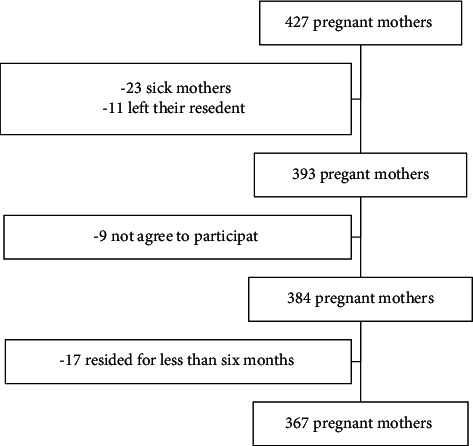
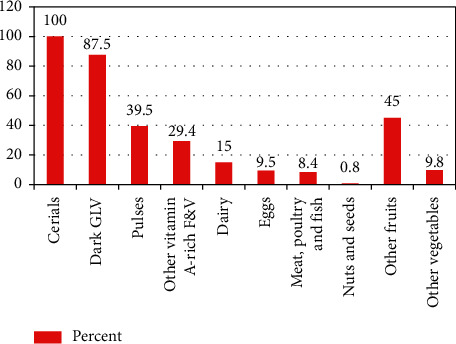
A community-based cross-sectional study was conducted on 367 pregnant women in South West Ethiopia. A 24-hour multiple-pass dietary recall method was used to measure dietary intake and the 10 food groups of FANTA/FAO 2016 were used to analyze dietary diversity. Social capital was assessed based on the number of social networks in which a mother participated.
The proportion of diversified dietary intake was 14.7% (95% CI: 11.1, 18.3). Pregnant mothers who had social capital, had their own income, had emotional support from their husbands, were from a rich family, and had a frequent dietary intake were statistically associated with a diversified dietary intake, with an AOR of 7.8 (95% CI 1.02, 2.3 (95% CI 1.12, 4.44), 4.0, (95% CI 1.16, 13.7), 59.19), 2.3 (95% CI 1.04, 5.26), and 1.5 (95% CI 1.04, 2.07), respectively.
Diversified dietary intake was found to be lower than previously reported, and it was associated with social capital. Methodologically rigorous studies are required to verify the association between social capital and adequate diversified dietary intake.
饮食多样性对胎儿生长发育以及母亲的健康和幸福至关重要。在埃塞俄比亚,41%的孕妇摄入多样化饮食。尚无研究评估埃塞俄比亚西南部的孕妇饮食是否多样。
估计充足多样化饮食摄入的比例,并确定多样化饮食摄入与母亲社会资本之间是否存在关联。
对埃塞俄比亚西南部的367名孕妇进行了一项基于社区的横断面研究。采用24小时多次饮食回顾法测量饮食摄入量,并使用FANTA/粮农组织2016年的10个食物组分析饮食多样性。根据母亲参与的社交网络数量评估社会资本。
多样化饮食摄入的比例为14.7%(95%置信区间:11.1, 18.3)。拥有社会资本、有自己收入、得到丈夫情感支持、来自富裕家庭且饮食摄入频繁的孕妇与多样化饮食摄入在统计学上相关,调整后的比值比分别为7.8(95%置信区间1.02, 59.19)、2.3(95%置信区间1.12, 4.44)、4.0(95%置信区间1.16, 13.7)、2.3(95%置信区间1.04, 5.26)和1.5(95%置信区间1.04, 2.07)。
发现多样化饮食摄入低于先前报告的水平,且与社会资本相关。需要进行方法严谨的研究来验证社会资本与充足多样化饮食摄入之间的关联。