Zhong Guo-Chao, Zhu Qian, Gong Jian-Ping, Cai Dong, Hu Jie-Jun, Dai Xin, Gong Jun-Hua
Department of Hepatobiliary Surgery, The Second Affiliated Hospital of Chongqing Medical University, Chongqing, China.
Department of Epidemiology and Biostatistics, School of Public Health and Management, Chongqing Medical University, Chongqing, China.
Front Nutr. 2022 Jul 22;9:889303. doi: 10.3389/fnut.2022.889303. eCollection 2022.
Whether fried food consumption is associated with the risk of pancreatic cancer remains elusive. We aimed to examine this association in a US population.
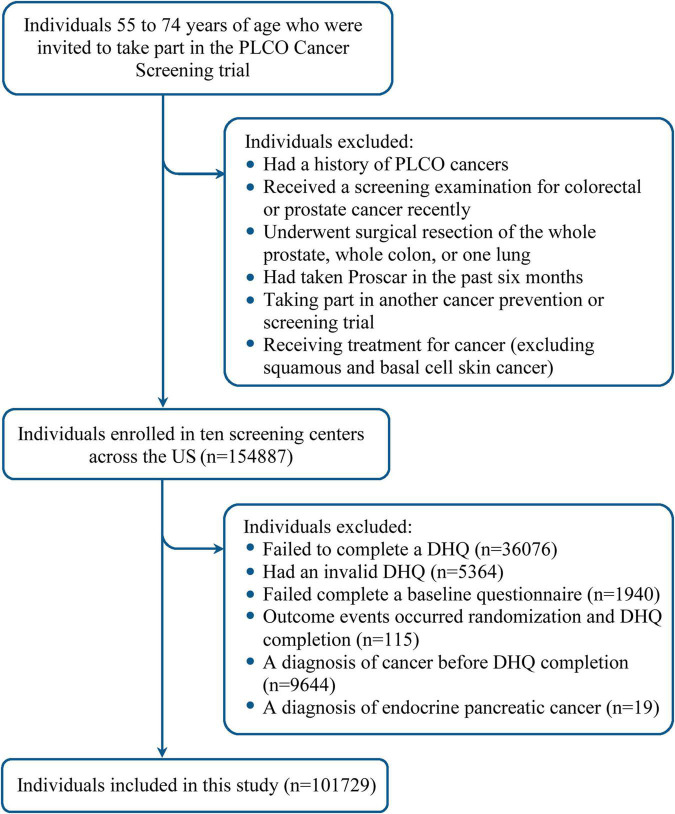
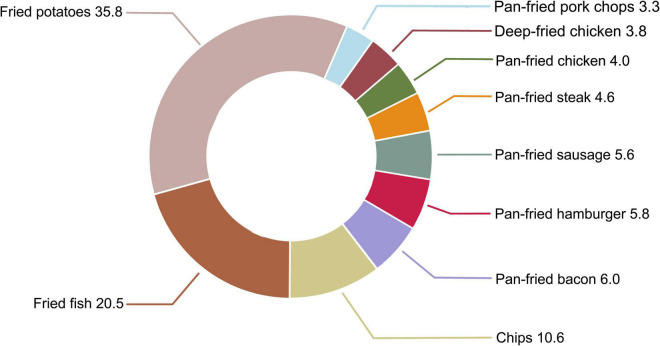
A population-based cohort of 101,729 US adults was identified. Fried food consumption was assessed with a validated food frequency questionnaire. Hazard ratios (HRs) with 95% confidence intervals (CIs) were calculated. Explanatory analyses were conducted to identify main contributor(s) to the observed association.
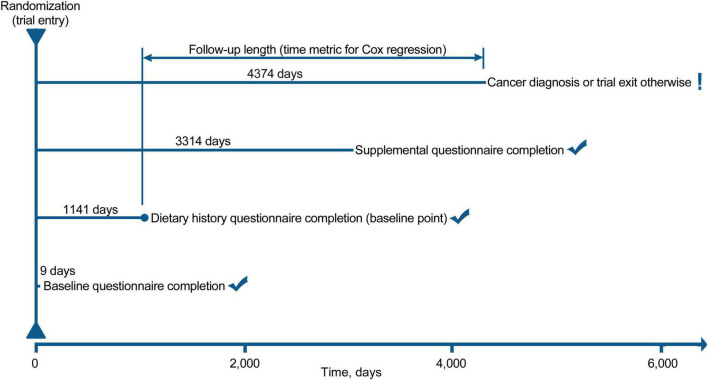
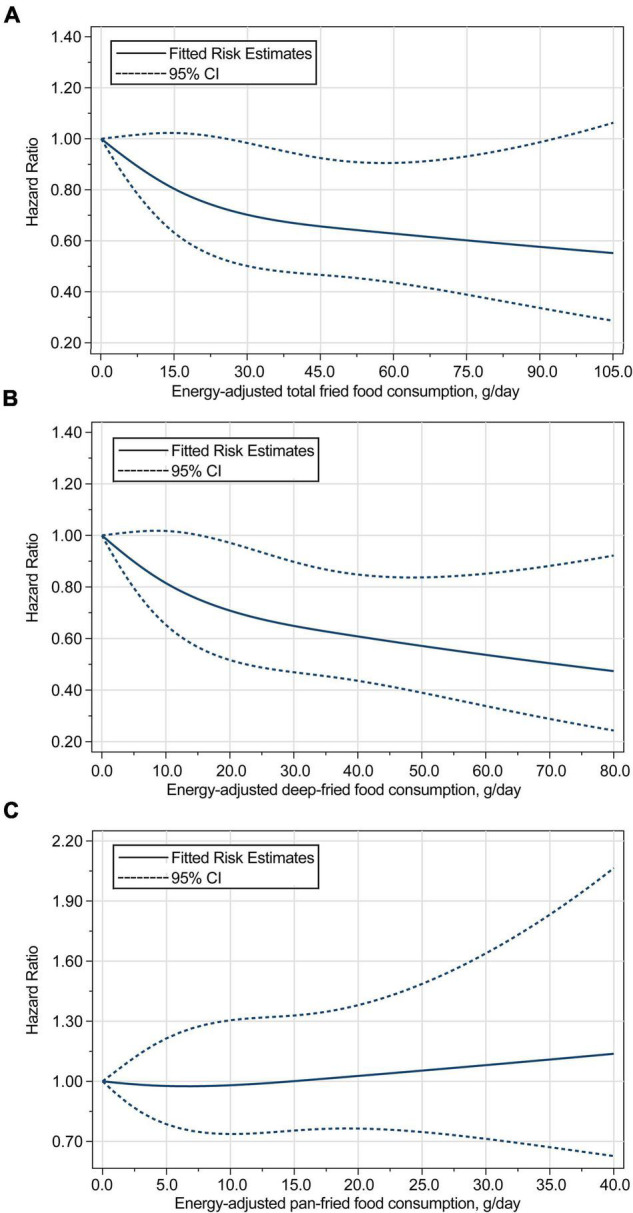
During an average follow-up of 8.86 years (900871.2 person-years), 402 pancreatic cancer cases occurred. High consumption of total fried foods (deep-fried plus pan-fried foods; HR 0.71, 95% CI 0.51-0.99, = 0.047) and deep-fried foods (HR 0.64, 95% CI 0.47-0.88, = 0.011), but not pan-fried foods (HR 0.98, 95% CI 0.73-1.32; = 0.815), was found to be associated with a reduced risk of pancreatic cancer in a non-linear dose-response manner, which was not modified by predefined stratification factors and persisted in sensitivity analyses. In explanatory analyses, only chip consumption was found to be inversely associated with the risk of pancreatic cancer; consistently, the initial significant associations between total fried food and deep-fried food consumption and the risk of pancreatic cancer changed to be non-significant after omitting or further adjusting for chip consumption.
Consumption of deep-fried foods, but not pan-fried foods, is inversely associated with the risk of pancreatic cancer in this US population. The role of deep-fried foods in reducing the risk of pancreatic cancer appears to be mainly attributable to chips. More studies are needed to confirm our findings in other populations and settings.
食用油炸食品是否与胰腺癌风险相关仍不明确。我们旨在在美国人群中研究这种关联。
确定了一个基于人群的队列,包含101729名美国成年人。使用经过验证的食物频率问卷评估油炸食品的摄入量。计算了95%置信区间(CI)的风险比(HR)。进行了解释性分析以确定观察到的关联的主要促成因素。
在平均8.86年的随访期(900871.2人年)内,发生了402例胰腺癌病例。发现高摄入总油炸食品(油炸加煎炒食品;HR 0.71,95% CI 0.51 - 0.99,P = 0.047)和油炸食品(HR 0.64,95% CI 0.47 - 0.88,P = 0.011),但不包括煎炒食品(HR 0.98,95% CI 0.73 - 1.32;P = 0.815),与胰腺癌风险降低呈非线性剂量反应关系,该关系不受预先定义的分层因素影响,且在敏感性分析中持续存在。在解释性分析中,仅发现薯片摄入量与胰腺癌风险呈负相关;一致地,在排除或进一步调整薯片摄入量后,总油炸食品和油炸食品摄入量与胰腺癌风险之间最初的显著关联变为不显著。
在美国人群中,食用油炸食品而非煎炒食品与胰腺癌风险呈负相关。油炸食品在降低胰腺癌风险方面的作用似乎主要归因于薯片。需要更多研究在其他人群和环境中证实我们的发现。