He Jinzhi, Shen Xin, Fu Di, Yang Yutao, Xiong Kaixin, Zhao Lei, Xie Huixu, Pelekos Georege, Li Yan
State Key Laboratory of Oral Diseases & National Clinical Research Center for Oral Diseases, West China Hospital of Stomatology, Chengdu, Sichuan, China.
Department of Cariology and Endodontics, West China Hospital of Stomatology, Sichuan University, Chengdu, Sichuan, China.
J Oral Microbiol. 2022 Aug 4;14(1):2107814. doi: 10.1080/20002297.2022.2107814. eCollection 2022.
The bidirectional association between periodontitis and diabetes mellitus has been well accepted; however, pathways connecting them remain unclear. Some oral bacteria are able to induce immunologic changes favoring insulin resistance individually. However, it is unclear if and how the systemic immune system responds to a disturbed oral microbial community in diabetic sufferers.
This study aimed to investigate the impact of the human periodontitis-associated salivary microbiome on the splenic immune responses of diabetic mice.
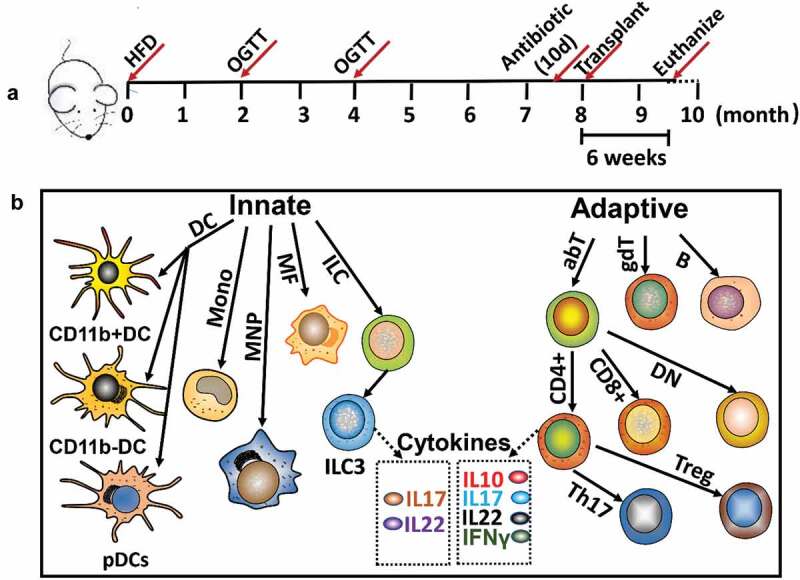
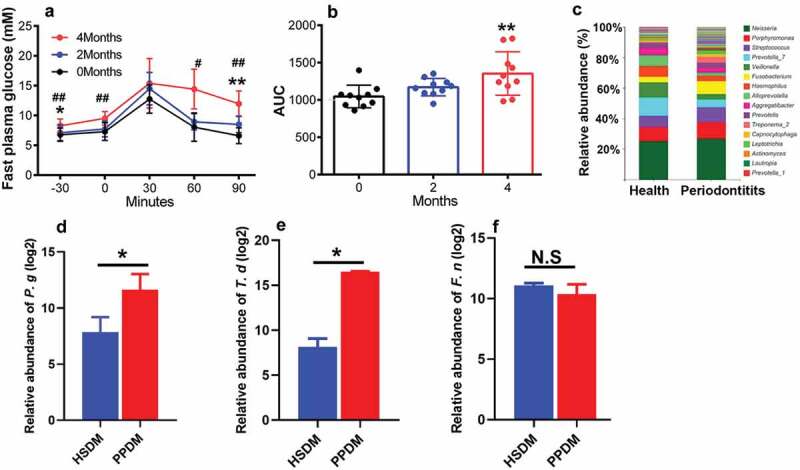
An diabetic animal model was established by feeding high fat food. After microbial depletion with quadruple antibiotic treatment, human saliva from healthy and periodontitis volunteers was transplanted into the mouth of these diabetic mice (N = 3), respectively.
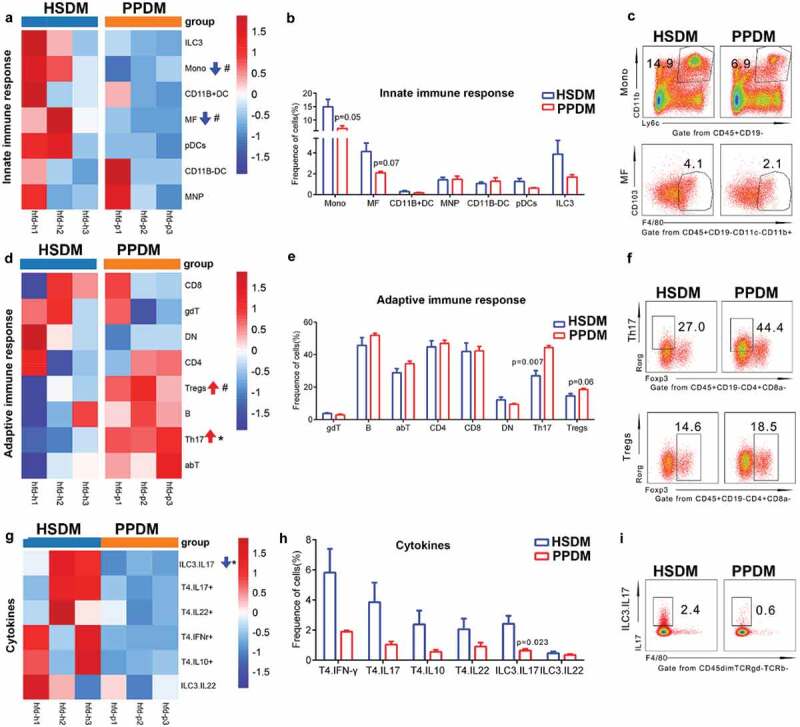
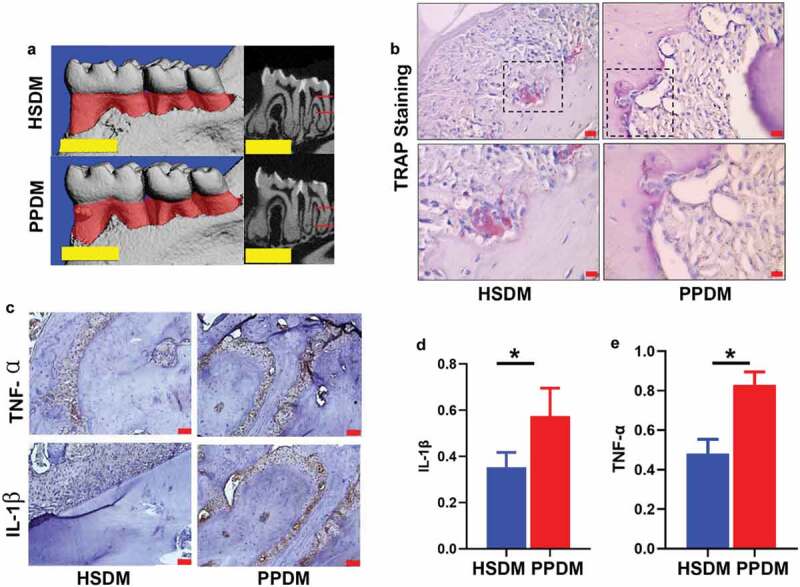
Osteoclasts and expression levels of TNF-α and IL-1β were significantly increased in periodontal tissues of mice receiving periodontitis patients donated microbiome compared to these transplanted with healthy subjects donated microbiome. The proportion of monocyte (an innate immunocyte) decreased in mice receiving periodontitis patients donated microbiome. However, the abundance of an adaptive immunocyte Th17 was up-regulated. The IL17 production of ILC3 cells in human periodontitis-associated salivary microbiome recipient mice was significantly impaired.
A disturbed oral microbiome imposes a stress on the splenic immune responses of diabetic mice.
牙周炎与糖尿病之间的双向关联已得到广泛认可;然而,连接它们的途径仍不清楚。一些口腔细菌能够分别诱导有利于胰岛素抵抗的免疫变化。然而,尚不清楚全身免疫系统是否以及如何对糖尿病患者口腔微生物群落紊乱做出反应。
本研究旨在调查人类牙周炎相关唾液微生物群对糖尿病小鼠脾脏免疫反应的影响。
通过喂食高脂食物建立糖尿病动物模型。在使用四联抗生素治疗消除微生物后,将来自健康和牙周炎志愿者的人类唾液分别移植到这些糖尿病小鼠(N = 3)的口腔中。
与移植健康受试者捐赠的微生物群的小鼠相比,接受牙周炎患者捐赠的微生物群的小鼠牙周组织中的破骨细胞以及TNF-α和IL-1β的表达水平显著增加。接受牙周炎患者捐赠的微生物群的小鼠中单核细胞(一种固有免疫细胞)的比例降低。然而,适应性免疫细胞Th17的丰度上调。人类牙周炎相关唾液微生物群受体小鼠中ILC3细胞的IL17产生明显受损。
口腔微生物群紊乱对糖尿病小鼠的脾脏免疫反应造成压力。