Department of Orthopedics, Orthopedic Research Institute, West China Hospital, Sichuan University, Chengdu, 610041 Sichuan, China.
Engineering Research Center in Biomaterials, Sichuan University, Chengdu, 610041 Sichuan, China.
J Immunol Res. 2022 Jul 31;2022:4450196. doi: 10.1155/2022/4450196. eCollection 2022.
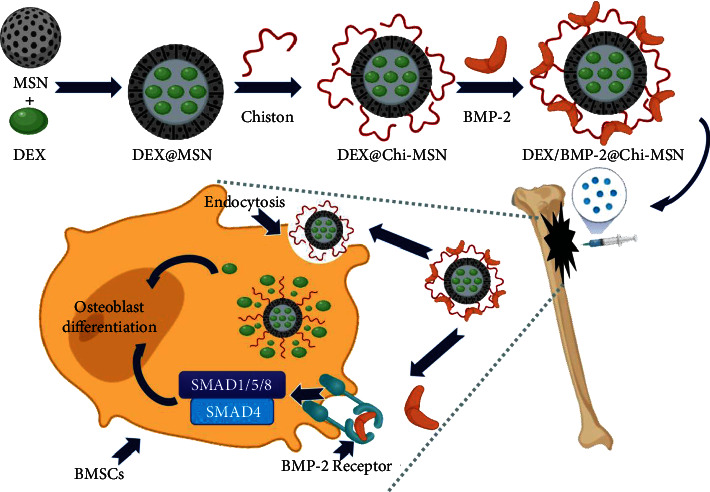
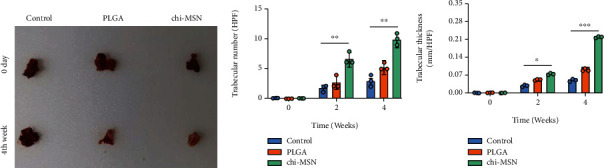
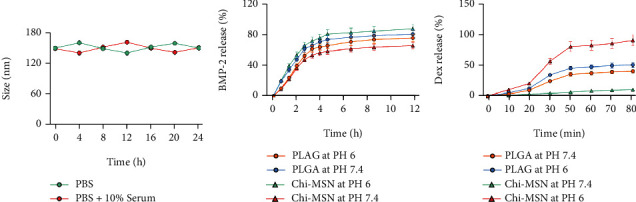
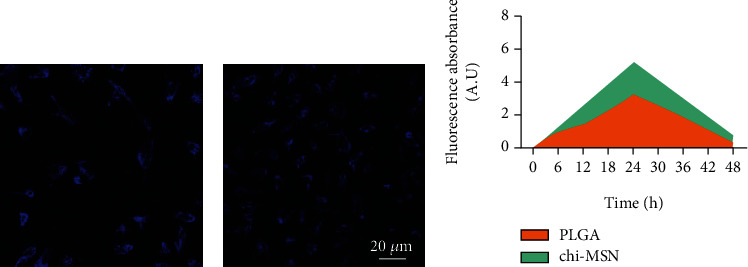
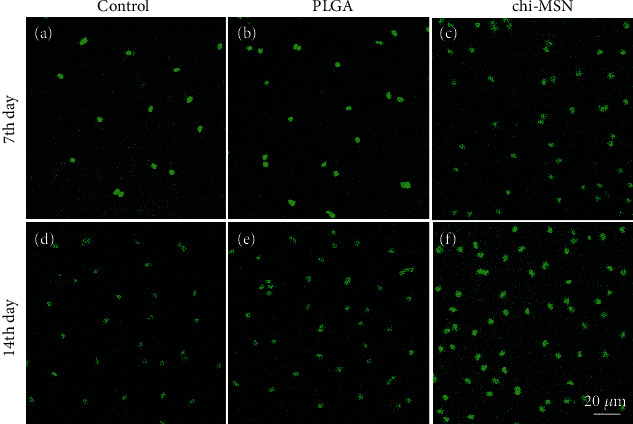
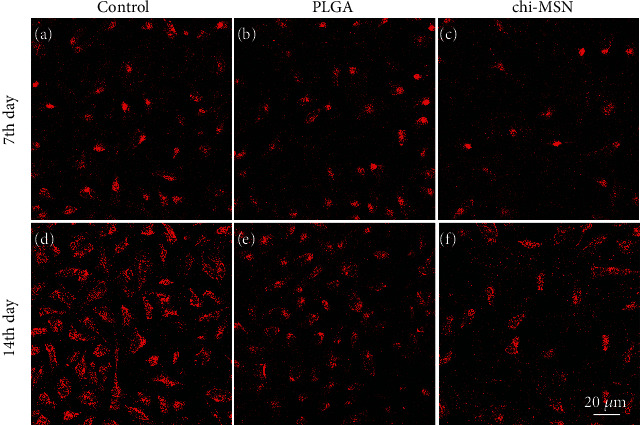
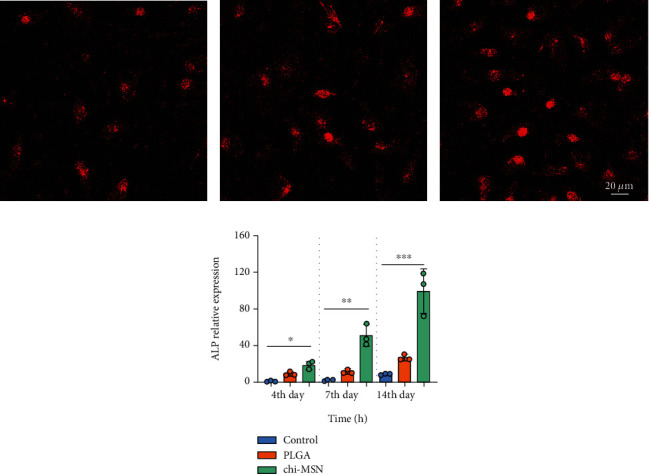
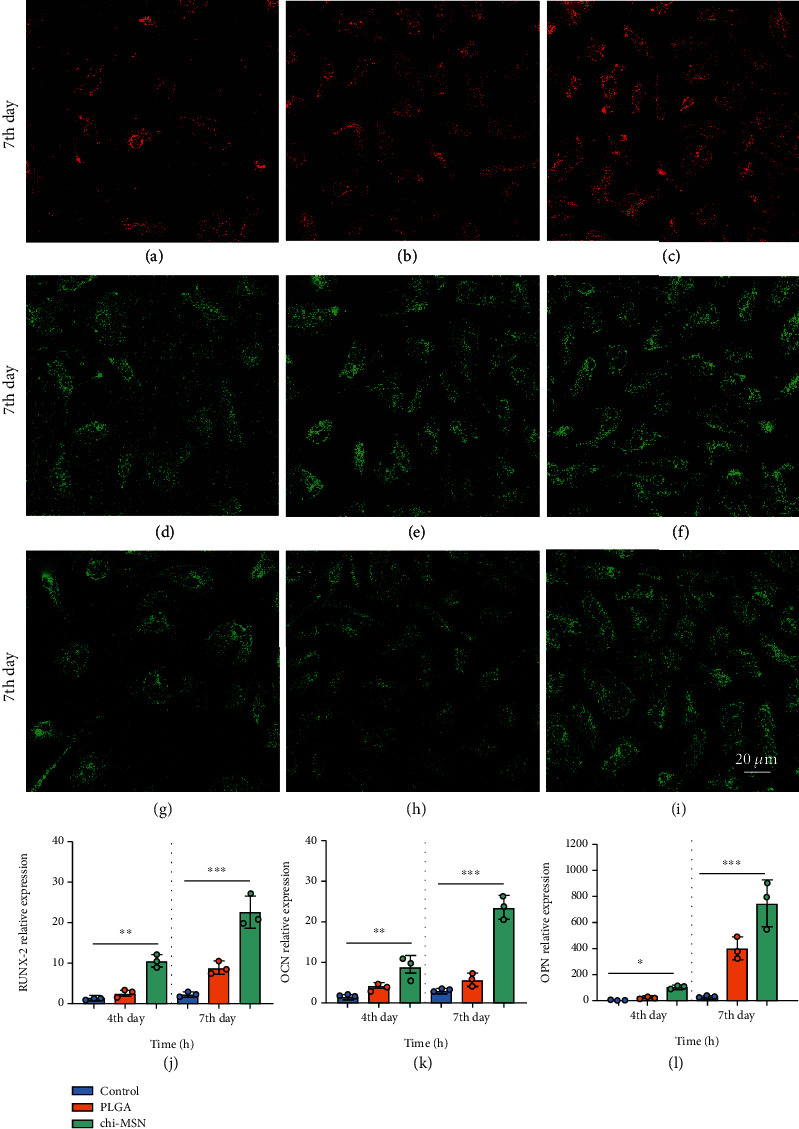
In order to test the effectiveness of nanoparticle- (NP-) loaded bone morphogenetic protein 2 (BMP-2) in chronic osteomyelitis (CO) complicated with bone defect, a new nanodrug delivery system composed of mesoporous silica NP (MSN) and chitosan were used to load BMP-2 and transfer it to the target region. Bone marrow mesenchymal stem cells (BMSCs) were purchased and cultivated to detect the osteogenesis of chitosan-MSN (Chi-MSN) and polylactic acid glycolic acid (PLGA) delivery system. In addition, the osteogenesis of Chi-MSN was further determined by constructing a bone defect mouse model. In physicochemical property test, we found Chi-MSN NPs could effectively maintain stability in vivo and had pH response characteristics. As a result, the release efficiency of dexamethasone (Dex) and BMP-2 in the environment with pH 7.4 was less, while it increased significantly in pH 6, so as to reduce the BMP-2 and Dex loss during transportation in vivo. Otherwise, we found that the permeation efficiency of Chi-MSN was significantly higher than that of PLGA delivery system, so as to effectively transport BMP-2 and Dex to action target. In the BMSC test, we found that Chi-MSN could better promote their activity and osteogenesis, and the expression of osteogenesis-related genes (runt-related transcription factor 2 (RUNX-2), osteopontine (OPN), alkaline phosphatase (ALP), and osteopontine (OCN)) in the Chi-MSN group was higher. In the bone defect mouse model test, we also found obviously increased bone trabecula number and thickness by Chi-MSN, contributing to better repair of bone defects. Therefore, BMP-2@Chi-MSN may be a better choice for the therapy of CO complicated with bone defect in the future.
为了测试载纳米粒子(NP)的骨形态发生蛋白 2(BMP-2)在慢性骨髓炎(CO)合并骨缺损中的有效性,采用介孔硅纳米粒子(MSN)和壳聚糖组成的新型纳米药物递送系统来负载 BMP-2 并将其递送至靶区。购买并培养骨髓间充质干细胞(BMSCs),以检测壳聚糖-MSN(Chi-MSN)和聚乳酸-羟基乙酸(PLGA)递送系统的成骨作用。此外,通过构建骨缺损小鼠模型进一步确定 Chi-MSN 的成骨作用。在理化性质测试中,我们发现 Chi-MSN NPs 能够在体内有效保持稳定性,并具有 pH 响应特性。结果,在 pH 7.4 的环境中,地塞米松(Dex)和 BMP-2 的释放效率较低,而在 pH 6 时显著增加,从而减少体内运输过程中 BMP-2 和 Dex 的损失。此外,我们发现 Chi-MSN 的渗透效率明显高于 PLGA 递送系统,从而能够有效地将 BMP-2 和 Dex 递送至作用靶标。在 BMSC 测试中,我们发现 Chi-MSN 可以更好地促进其活性和成骨作用,并且 Chi-MSN 组中成骨相关基因( runt 相关转录因子 2(RUNX-2)、骨桥蛋白(OPN)、碱性磷酸酶(ALP)和骨桥蛋白(OCN))的表达更高。在骨缺损小鼠模型测试中,我们还发现 Chi-MSN 明显增加了骨小梁的数量和厚度,有助于更好地修复骨缺损。因此,BMP-2@Chi-MSN 可能是未来治疗 CO 合并骨缺损的更好选择。