de Wouters d'Oplinter Alice, Huwart Sabrina J P, Cani Patrice D, Everard Amandine
Metabolism and Nutrition Research Group, Louvain Drug Research Institute (LDRI), Walloon Excellence in Life Sciences and BIOtechnology (WELBIO), UCLouvain, Université catholique de Louvain, Brussels, Belgium.
Front Neurosci. 2022 Jul 25;16:947240. doi: 10.3389/fnins.2022.947240. eCollection 2022.
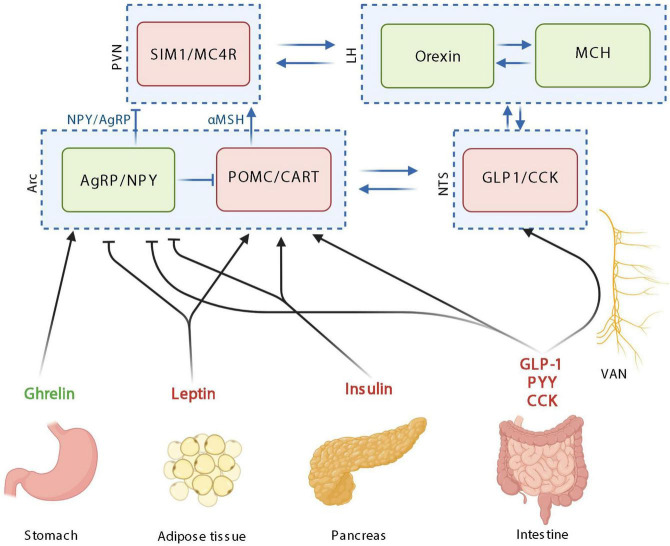
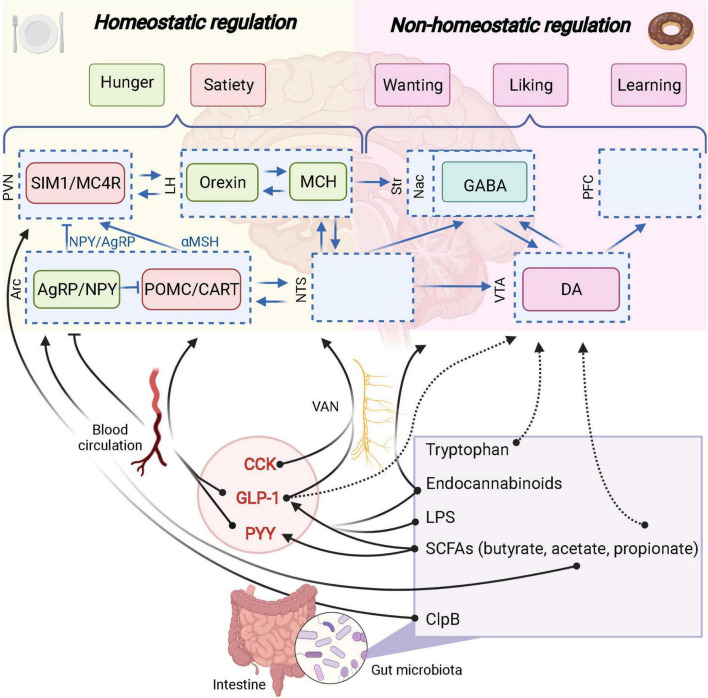
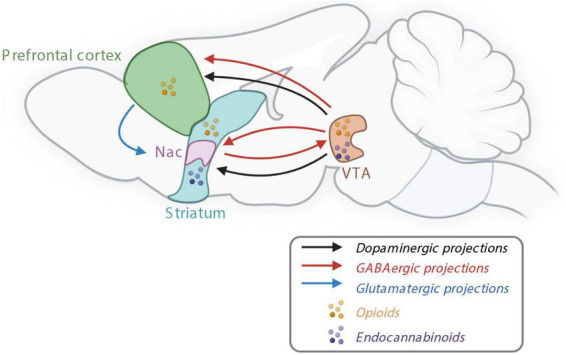
Inappropriate food intake behavior is one of the main drivers for fat mass development leading to obesity. Importantly the gut microbiota-mediated signals have emerged as key actors regulating food intake acting mainly on the hypothalamus, and thereby controlling hunger or satiety/satiation feelings. However, food intake is also controlled by the hedonic and reward systems leading to food intake based on pleasure (i.e., non-homeostatic control of food intake). This review focus on both the homeostatic and the non-homeostatic controls of food intake and the implication of the gut microbiota on the control of these systems. The gut-brain axis is involved in the communications between the gut microbes and the brain to modulate host food intake behaviors through systemic and nervous pathways. Therefore, here we describe several mediators of the gut-brain axis including gastrointestinal hormones, neurotransmitters, bioactive lipids as well as bacterial metabolites and compounds. The modulation of gut-brain axis by gut microbes is deeply addressed in the context of host food intake with a specific focus on hedonic feeding. Finally, we also discuss possible gut microbiota-based therapeutic approaches that could lead to potential clinical applications to restore food reward alterations. Therapeutic applications to tackle these dysregulations is of utmost importance since most of the available solutions to treat obesity present low success rate.
不适当的食物摄入行为是导致肥胖的脂肪量增加的主要驱动因素之一。重要的是,肠道微生物群介导的信号已成为调节食物摄入的关键因素,主要作用于下丘脑,从而控制饥饿或饱腹感/饱足感。然而,食物摄入也受享乐和奖赏系统的控制,导致基于愉悦感的食物摄入(即食物摄入的非稳态控制)。本综述聚焦于食物摄入的稳态和非稳态控制以及肠道微生物群对这些系统控制的影响。肠-脑轴参与肠道微生物与大脑之间的通讯,通过全身和神经途径调节宿主的食物摄入行为。因此,我们在此描述肠-脑轴的几种介质,包括胃肠激素、神经递质、生物活性脂质以及细菌代谢产物和化合物。在宿主食物摄入的背景下深入探讨了肠道微生物对肠-脑轴的调节,特别关注享乐性进食。最后,我们还讨论了基于肠道微生物群的可能治疗方法,这些方法可能导致潜在的临床应用,以恢复食物奖赏改变。解决这些失调的治疗应用至关重要,因为大多数现有的肥胖治疗方案成功率较低。