Department of Neurology, University Medicine Greifswald, Ferdinand-Sauerbruch-Str. 1, Greifswald 17475, Germany.
Department of Neurology, University Medicine Greifswald, Ferdinand-Sauerbruch-Str. 1, Greifswald 17475, Germany.
EBioMedicine. 2022 Sep;83:104211. doi: 10.1016/j.ebiom.2022.104211. Epub 2022 Aug 10.
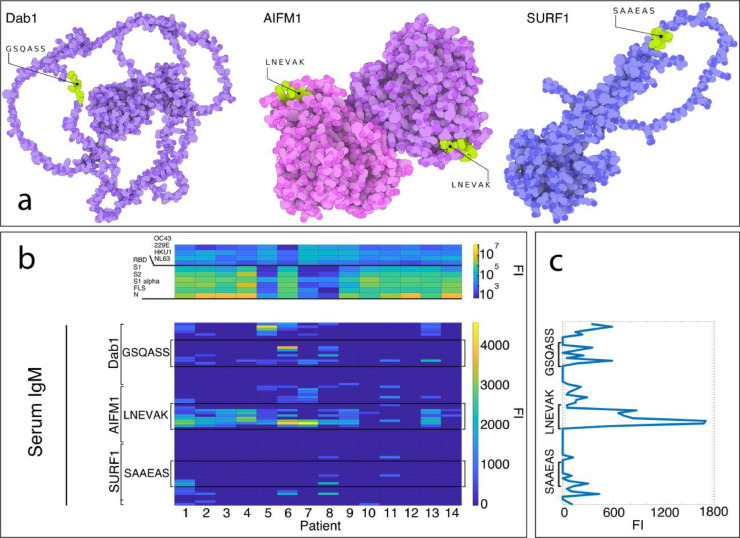
Understanding how SARS-CoV-2 affects respiratory centres in the brainstem may help to preclude assisted ventilation for patients in intensive care setting. Viral invasion appears unlikely, although autoimmunity has been implicated, the responsible antigens remain unknown. We previously predicted the involvement of three epitopes within distinct brainstem proteins: disabled homolog 1 (DAB1), apoptosis-inducing-factor-1 (AIFM1), and surfeit-locus-protein-1 (SURF1).
Here, we used microarrays to screen serum from COVID-19 patients admitted to intensive care and compared those with controls who experienced mild course of the disease.
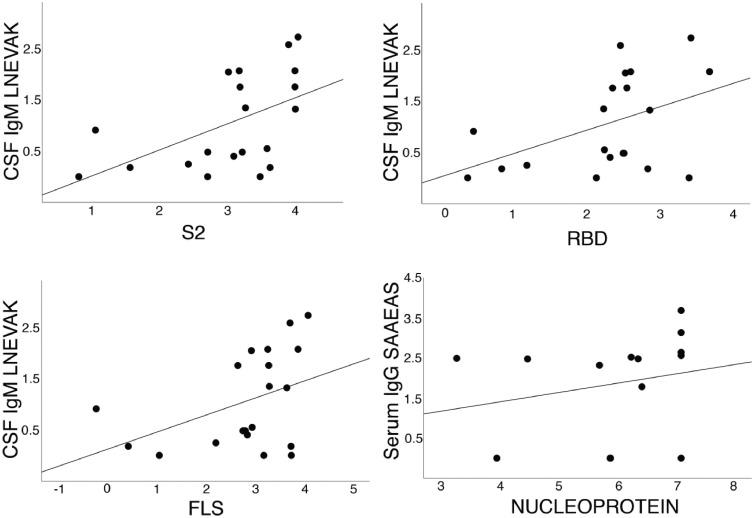
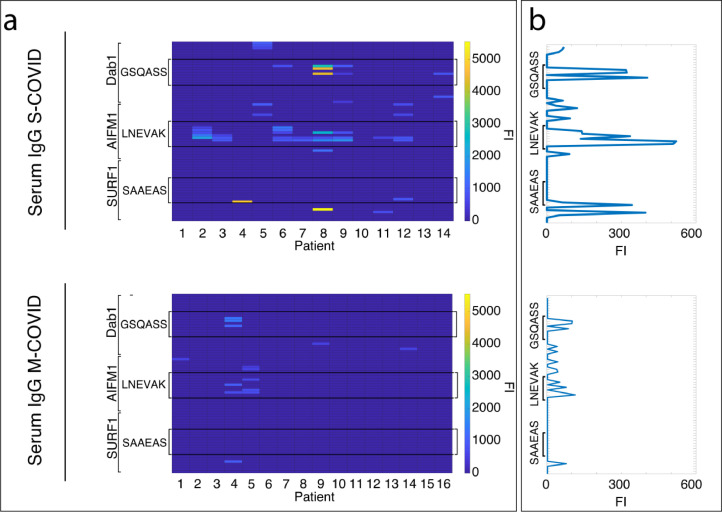
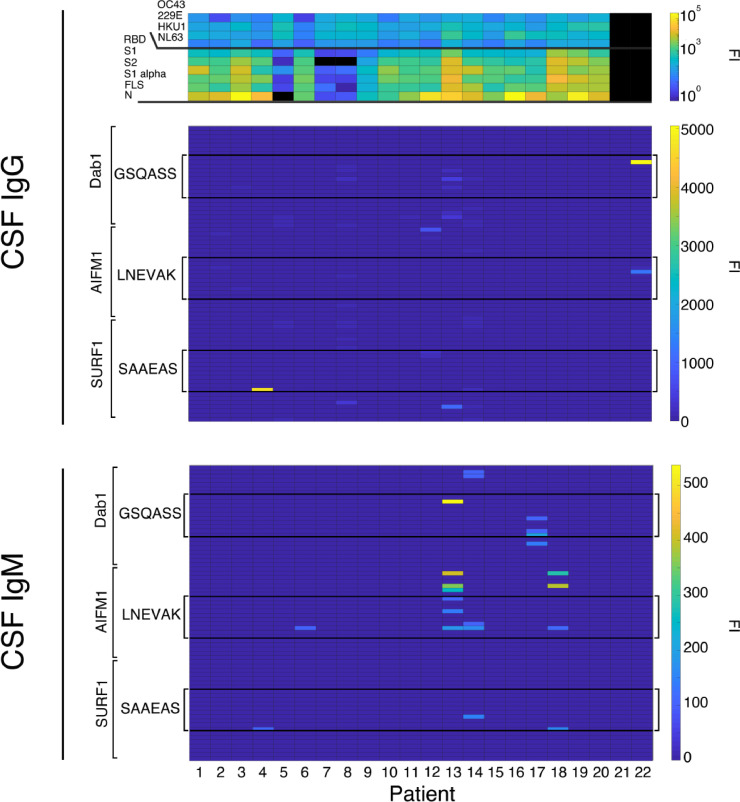
The results confirm the occurrence of IgG and IgM antibodies against the hypothesised epitopes in COVID-19 patients. Importantly, while IgM levels were similar in both groups, IgG levels were significantly elevated in severely ill patients compared to controls, suggesting a pathogenic role of IgG.
The newly discovered anti-neuronal antibodies might be promising markers of severe disease and the targeted peptide epitopes might be used for targeted immunomodulation. Further work is needed to determine whether these antibodies may play a role in long-COVID.
AF, CF and PR received support from the German Research Foundation (grants FL 379/22-1, 327654276-SFB 1315, FR 4479/1-1, PR 1274/8-1). SH, DR, and DB received support from the Ministry of Economy, State of Mecklenburg Western Pomerania, Germany (grant COVIDPROTECT: "Optimisation of diagnostic and therapeutic pathways for COVID-19 patients in MV"). SH received support from the Research Group Molecular Medicine University of Greifswald (FVMM, seed funding FOVB-2021-01). AV received support from the Else Kröner Fresenius Foundation and the Alzheimer Research Initiative.
了解 SARS-CoV-2 如何影响脑干中的呼吸中枢,可能有助于避免对重症监护环境中的患者进行辅助通气。虽然自身免疫已被牵连,但病毒入侵似乎不太可能,而负责的抗原仍然未知。我们之前预测了三个位于不同脑干蛋白内的表位的参与:失活同源物 1(DAB1)、凋亡诱导因子 1(AIFM1)和过剩区域蛋白 1(SURF1)。
在这里,我们使用微阵列筛选了入住重症监护病房的 COVID-19 患者的血清,并将其与经历疾病轻度病程的对照组进行了比较。
结果证实了 COVID-19 患者中针对假设表位的 IgG 和 IgM 抗体的发生。重要的是,虽然两组的 IgM 水平相似,但重症患者的 IgG 水平明显高于对照组,表明 IgG 具有致病性。
新发现的抗神经元抗体可能是严重疾病的有希望的标志物,并且靶向肽表位可用于靶向免疫调节。需要进一步研究以确定这些抗体是否可能在长 COVID 中发挥作用。
AF、CF 和 PR 得到德国研究基金会(FL 379/22-1、327654276-SFB 1315、FR 4479/1-1、PR 1274/8-1 号资助)的支持。SH、DR 和 DB 得到德国梅克伦堡-西波美拉尼亚州经济部的支持(COVIDPROTECT:“优化 MV 中 COVID-19 患者的诊断和治疗途径”)。SH 得到格赖夫斯瓦尔德大学分子医学研究组(FVMM,种子资金 FOVB-2021-01)的支持。AV 得到艾尔弗雷德·克虏伯基金会和阿尔茨海默病研究倡议的支持。