Division of General Pediatrics, Department of Pediatrics, CHU Sainte-Justine, 3175 chemin de la Côte-Sainte-Catherine, Montréal, QC, H3T 1C5, Canada.
Department of Social and Preventive Medicine, School of Public Health, University of Montreal, 7101 avenue du Parc, Third floor (Office 3029), Montréal, QC, H3N 1X9, Canada.
BMC Public Health. 2022 Aug 13;22(1):1547. doi: 10.1186/s12889-022-13933-z.
Vaccination will be instrumental in controlling the COVID-19 pandemic, and vaccination of children will be necessary to achieve herd immunity. Given that children with chronic health conditions may be at increased risk of COVID-19, it is crucial to understand factors influencing parental decisions about whether to have their child vaccinated. The study objectives were to measure parental intent to have their child with asthma vaccinated against COVID-19 and identify the determinants of their vaccination decision.
This study is based on a cross-sectional exploratory observational online survey assessing parents' risk perception in the context of COVID-19.
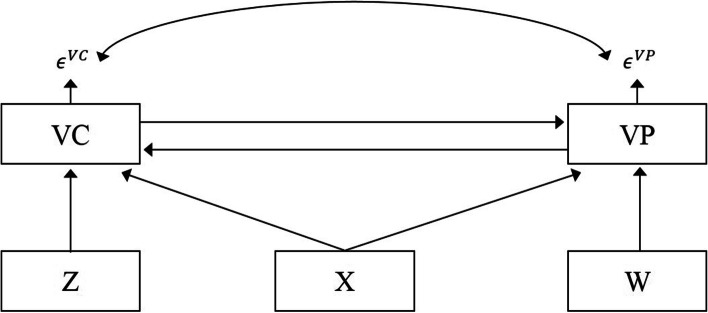
In this study conducted in August 2020, the primary outcome was parent's answer to the question on their intention to get their child vaccinated if a vaccine against COVID-19 was available. Participants were also asked about their intention to get vaccinated themselves. Independent variables studied included sociodemographic, clinical data (e.g. presence of other chronic diseases), psychological, cognitive and risk perception related to COVID-19. Simultaneous equations models (3SLS) and seemingly unrelated regressions model (SUR) were carried out to identify factors associated with intention to have the child vaccinated and participants' intention to get vaccinated themselves against COVID-19.
A total of 305 participants completed the survey. Overall, 19.1% of participants reported being unlikely or very unlikely to vaccinate their child against COVID-19 if a vaccine was available. Similarly, 21.0% were unlikely or very unlikely to get vaccinated themselves. The following factors were significantly associated with parents' decision to have their child vaccinated: parental level of education (p = 0.003), employment status (p < 0.001), sex of the child (p = 0.019), presence of other chronic diseases (p = 0.028), whether or not the child had been vaccinated against influenza in the past (p < 0.001), parental anxiety (p = 0.046), and consultation with a health professional since the beginning of the pandemic (p = 0.009). There was a strong relationship between likelihood of not intending to have one's child vaccinated and personal intent not to get vaccinated.
These findings are essential in planning for the communication and dissemination of COVID-19 vaccination information to parents, especially for children with asthma or other chronic medical conditions.
接种疫苗对于控制 COVID-19 大流行至关重要,为了实现群体免疫,儿童也需要接种疫苗。鉴于患有慢性健康状况的儿童可能面临更高的 COVID-19 风险,了解影响父母决定是否为孩子接种疫苗的因素至关重要。本研究的目的是衡量父母让患有哮喘的孩子接种 COVID-19 疫苗的意愿,并确定他们接种疫苗的决定因素。
本研究基于一项横断面探索性在线调查,评估父母在 COVID-19 背景下的风险感知。
在这项于 2020 年 8 月进行的研究中,主要结果是父母对如果有 COVID-19 疫苗,他们让孩子接种疫苗的意愿的回答。参与者还被问及他们自己接种疫苗的意愿。研究的自变量包括社会人口统计学、临床数据(例如是否患有其他慢性疾病)、与 COVID-19 相关的心理、认知和风险感知。使用三阶段最小二乘法(3SLS)和似不相关回归模型(SUR)来确定与让孩子接种疫苗的意愿以及参与者自己接种 COVID-19 疫苗的意愿相关的因素。
共有 305 名参与者完成了调查。总体而言,19.1%的参与者表示,如果有疫苗,他们不太可能或非常不可能让孩子接种 COVID-19 疫苗。同样,21.0%的参与者不太可能或非常不可能自己接种疫苗。父母让孩子接种疫苗的决定与以下因素显著相关:父母的教育水平(p=0.003)、就业状况(p<0.001)、孩子的性别(p=0.019)、是否患有其他慢性疾病(p=0.028)、孩子过去是否接种过流感疫苗(p<0.001)、父母的焦虑(p=0.046)以及自大流行开始以来是否咨询过卫生专业人员(p=0.009)。父母不愿意让孩子接种疫苗和个人不愿意接种疫苗之间存在很强的关系。
这些发现对于规划向父母传播 COVID-19 疫苗信息至关重要,特别是对于患有哮喘或其他慢性疾病的儿童。