Wang Yanhong, Xue Fangchao, Li Yanzhao, Lin Lin, Wang Yeqin, Zhao Shanlan, Zhao Xingli, Liu Yong, Tan Ju, Li Gang, Xiao Haoran, Yan Juan, Tian Hao, Liu Min, Zhang Qiao, Ba Zhaojing, He Lang, Zhao Wenyan, Zhu Chuhong, Zeng Wen
Department of Cell Biology, Third Military Army Medical University, Chongqing 400038, China.
Department of Anatomy, National and Regional Engineering Laboratory of Tissue Engineering, State and Local Joint Engineering Laboratory for Vascular Implants, Key Lab for Biomechanics and Tissue Engineering of Chongqing, Third Military Medical University, Chongqing 400038, China.
Research (Wash D C). 2022 Jul 19;2022:9826426. doi: 10.34133/2022/9826426. eCollection 2022.
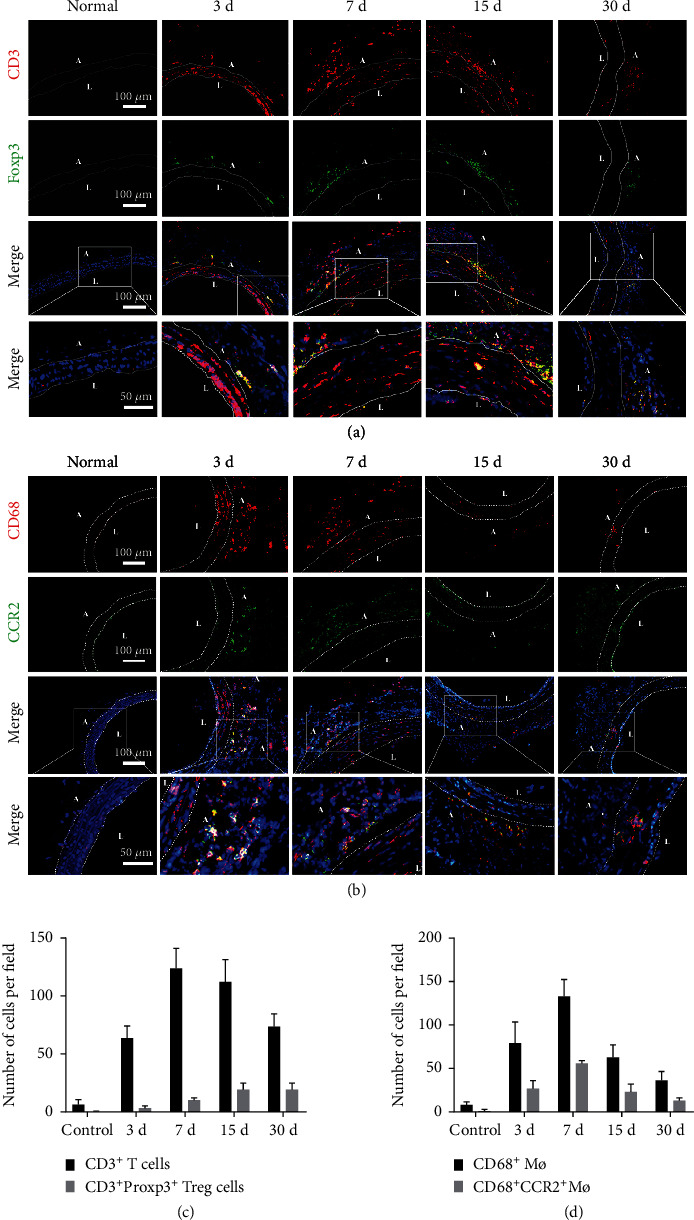
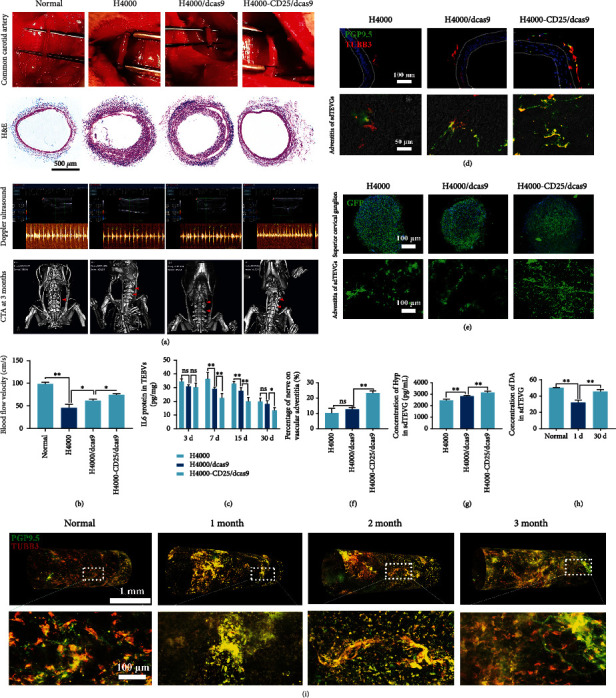
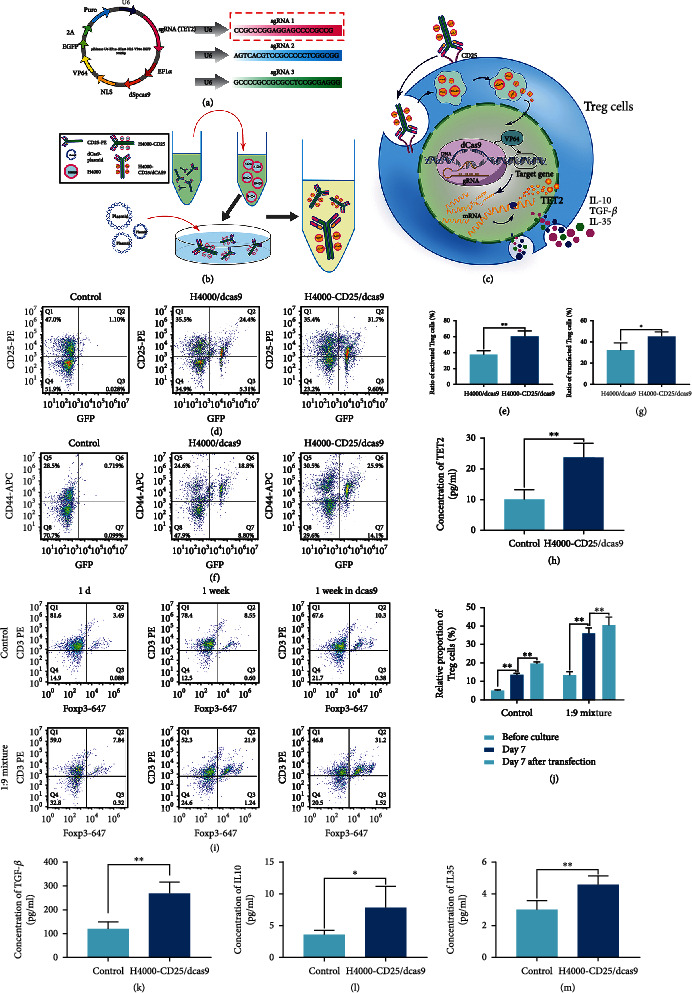
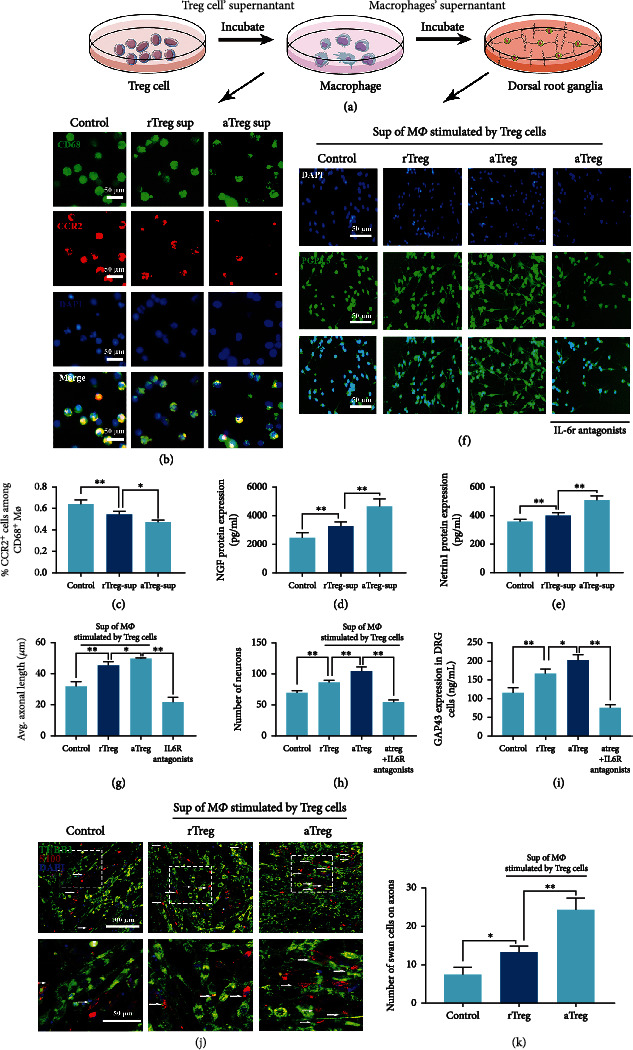
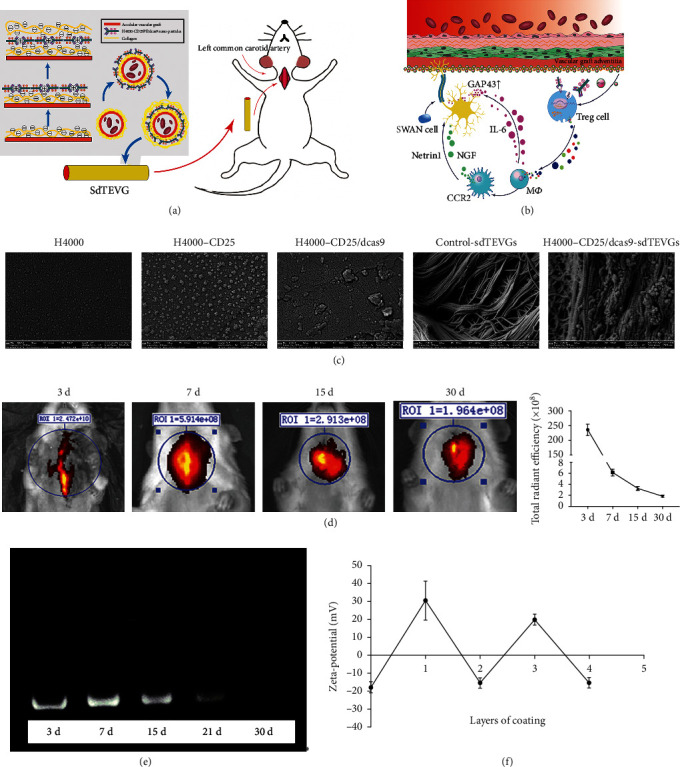
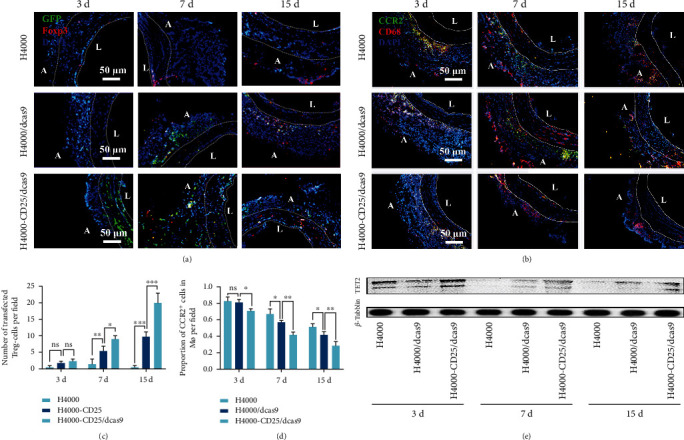
Rapid integration into the host tissue is critical for long-term patency after small diameter tissue engineering vascular grafts (sdTEVGs) transplantation. Neural recognition may be required for host integration and functionalization of the graft. However, immune rejection and inflammation hinder nerve regeneration of sdTEVGs. Here, a CRISPR/dCas9-nanocarrier was used for targeted programming of regulatory T cells (Treg cells) in situ to promote nerve regeneration of sdTEVGs by preventing excessive inflammation. Treg cells and (C-C chemokine receptor) CCR2+ macrophage recruitment occurred after transplantation. The nanodelivery system upregulated ten eleven translocation (TET2) in Treg cells in vitro. Reprogrammed Treg cells upregulated anti-inflammatory cytokines and decreased the proportion of CCR2+ macrophages. IL-6 concentrations decreased to the levels required for nerve regeneration. Implantation of CRISPR/dCas9 nanodelivery system-modified sdTEVGs in rats resulted in Treg cell editing, control of excessive inflammation, and promoted nerve regeneration. After 3 months, nerve regeneration was similar to that observed in normal blood vessels; good immune homeostasis, consistency of hemodynamics, and matrix regeneration were observed. Neural recognition promotes further integration of the graft into the host, with unobstructed blood vessels without intimal hyperplasia. Our findings provide new insights into vascular implant functionalization by the host.
小口径组织工程血管移植物(sdTEVGs)移植后,快速融入宿主组织对于长期通畅至关重要。移植物的宿主整合和功能化可能需要神经识别。然而,免疫排斥和炎症会阻碍sdTEVGs的神经再生。在此,使用CRISPR/dCas9纳米载体对调节性T细胞(Treg细胞)进行原位靶向编程,以通过防止过度炎症来促进sdTEVGs的神经再生。移植后出现了Treg细胞和(C-C趋化因子受体)CCR2+巨噬细胞募集。该纳米递送系统在体外上调了Treg细胞中的十一易位酶(TET2)。重编程的Treg细胞上调了抗炎细胞因子,并降低了CCR2+巨噬细胞的比例。白细胞介素-6浓度降至神经再生所需的水平。将CRISPR/dCas9纳米递送系统修饰的sdTEVGs植入大鼠体内导致Treg细胞编辑、控制过度炎症并促进神经再生。3个月后,神经再生与正常血管中观察到的情况相似;观察到良好的免疫稳态、血流动力学一致性和基质再生。神经识别促进移植物进一步融入宿主,血管通畅且无内膜增生。我们的研究结果为宿主对血管植入物的功能化提供了新的见解。